

📌 Why Your Influencer Marketing Isn't Working
The counterintuitive psychology of follower counts, micro-influencers, and consumer trust.


If you are watching your marketing budget disappear into influencer fees while your direct booking engine stays stagnant, you are in the right place.
In a digital landscape flooded with generic AI content and manufactured reviews, buyers have become deeply sceptical. With discretionary spending under constant pressure, guests aren’t taking chances. They are using creator content as a verification step long before they ever reach your booking page.
By the end of this issue, you will understand the counterintuitive risk psychology behind follower counts, how second-order search masks your true campaign ROI, and how to structure creator partnerships that actually protect your margins.
📄 On the Menu
The Psychology of Influence - Macro or Micro?
Influencer Impact on Trust and Verification
Measurements and Expectations
Let’s Check In ☕

🎭 The Psychology of Influence - Macro or Micro?
Influencer marketing, like any marketing discipline, evolves, and the relationship and perception people have with influencers today is very different from what it was a few years ago.
According to Sprout Social’s 2025 Pulse Survey, 64% of consumers state that when a brand partners with an influencer they like, they are significantly more likely to buy from that brand. Furthermore, 32% of all consumers bought a product directly through a creator’s sponsored post in the past year alone, a figure that climbs to 48% among Millennials and 53% among Gen Z.
However, translating these high conversion rates into actual revenue for hospitality requires a far more nuanced approach than simply hiring creators with high engagement.
In hospitality marketing, standard advice will tell you to work with micro-influencers because they have better engagement rates, and not to worry about follower counts. While that might seem like great advice, it only works under certain circumstances. Context is everything.
If your target audience is living on a low income, every purchase carries significant financial risk. Getting it wrong has a severe impact on them and their family. When it comes to a major decision like an annual holiday, low-income families see it as the biggest expense of the year, and a lot is riding on it.
An influencer with millions of followers provides a safety cue. The underlying psychology is that the creator has too big a reputation to stake on getting caught out with scams, bad products, or terrible venues. They can be trusted.
People with higher incomes are more likely to trust influencers who display niche expertise or a specific level of social status.
🔒 Unlock Thursday’s VIP Edition
Get the exact playbook on sourcing credible creators, setting enforceable deliverables, and bridging the client-influencer gap to guarantee real ROI.
🛡️ Influencer Impact on Trust and Verification
With 81% of travellers reading reviews before booking a hotel and 64% stating they trust influencer content significantly more than traditional corporate ads, creators serve as an independent, third-party Verified Reality.
Because the digital landscape is saturated with AI-generated content and fake reviews, guests no longer accept branded marketing at face value. Guests cross-check TikTok and Instagram specifically to validate that your declared operational reality, from the room layout to the actual vibe and service, matches the marketing promise.
What is Second Order Search?
Conversely, a consumer might see a creator’s post on Instagram or TikTok, but instead of clicking a tracked link, they open Google hours later to search for the venue name directly. Standard analytics fail to attribute that revenue to the influencer, even though the creator triggered the booking.
If you’re judging an influencer’s worth purely by direct link clicks or promo code uses, you are drastically undercounting their impact. You need to look at your broader analytics, tracking the lift in direct web traffic, brand-name search volume, and overall direct bookings during and immediately after a campaign run.
Found this useful? Forward this issue to a colleague navigating creator partnerships and help them protect their marketing margins.

🧮 Measurements and Expectations
When you look at industry data on how marketers measure influencer success, a clear pattern emerges: operators and creators are often measuring completely different outcomes.
These figures tell us that the primary job marketers give influencers is driving traffic directly to landing pages and websites. That is followed by building community through social mentions and follower growth. Meanwhile, brand equity metrics like share of voice and sentiment sit at the bottom.
The mistake hospitality operators make is expecting a single creator campaign to deliver on all of these fronts at once. Some campaigns are built strictly to send immediate traffic, while others exist to build long-term brand awareness and reach net-new audiences.
If you run an isolated campaign and expect it to magically fix both top-of-funnel awareness and bottom-of-funnel conversions simultaneously, you are setting yourself up for wasted spend.
To make influencer marketing actually work, it can’t run in a silo. In Europe, 49% of brands integrate influencer marketing directly into their PR and communications, with 45% connecting creators to seasonal launches. Leading brands aren’t treating creator visits as one-off gifted meals; they are building multi-year, strategic collaborations that form a core part of their commercial marketing mix.

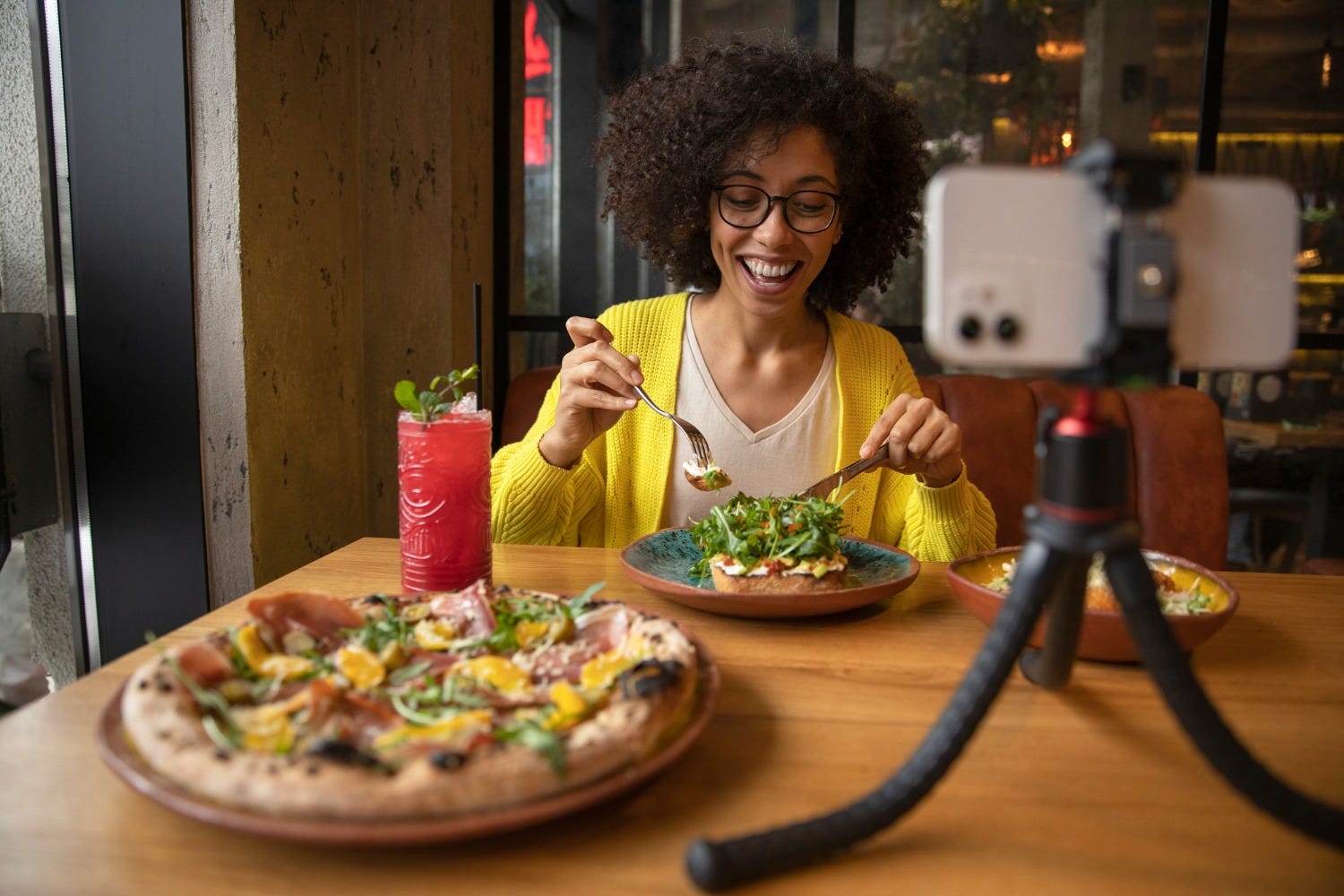
The three biggest roadblocks hospitality operators face with creators aren’t creative—they are operational:
Sourcing credible collaborators who actually drive trust
Managing deliverables and expectations without micromanaging
Measuring true influence ROI beyond surface-level clicks
In Thursday’s VIP Edition, we break down how to bridge the communication gap between both sides—unpacking what creators wish operators understood about production, compensation, and creative freedom, and what hotels and restaurants need creators to deliver to protect real commercial margins.

The moment you stop treating creators as one-off promotional shortcuts and start integrating them as third-party verification, you stop wasting budget and start driving predictable revenue.
Remember: Guests don’t buy from influencers because of an algorithm; they buy because creators reduce the financial risk of getting a decision wrong.
If you found today’s issue valuable, forward it to a colleague or peer who is currently navigating creator partnerships.
Until next time, keep your messaging clear and your margins protected. I look forward to serving you again soon.

Dawn Gribble MIH MCIM
Hospitality Marketing Insight
Here’s to your success! 🥂
I’m an award-winning marketing expert with 25+ years of international experience helping brands like Wagamama, Sysco, Ramada, SIAL and The Institute of Hospitality get clarity and creative insight on their marketing performance.
📊 Need an expert marketing audit? Get in touch at DG Consulting.
🚀 Grow your brand: Download courses, workshops, and campaign plans at the Hospitality Marketing Hub
📚 Sources & Resources
Chowdhury, F., Li, X., & Wang, C., Scarcity, Status, and Social Distance: How Macro Influencers Gain Persuasive Advantage at the Bottom of the Pyramid, Journal of Consumer Marketing (2026)
Hilton’s CMO on why brand marketing is an ‘irrational affinity business’, Marketing Dive (2026)
Nicholson, B., How influencer follower count affects audience expectations, Sprout Social (2026)
Schaefer, A., The economy is reshaping influencer storytelling, Sprout Social (2026)
Sokolova, K., Perez, C., & Besson, E., Narrative Positioning of a Fake Human: The Credibility of Virtual Influencers in Their Communication Styles, Psychology & Marketing (2026)