


If you are looking for sharp, data-backed intelligence to guide your hospitality business through the high-stakes Q4 transition, you are in the right place.
Right now, operators face a critical commercial hurdle: treating autumn marketing as one monolithic push rather than responding to distinct shifts in guest intent. Waiting until November to launch seasonal campaigns, relying on generic holiday tropes, or misinterpreting Q4 booking peaks means burning ad spend, missing high-intent bookers, and risking regulatory friction.
Getting this right matters now because October sets your revenue trajectory for the rest of the financial year. October 11th is statistically the single busiest day for consumer Christmas Day reservations, while corporate party bookers demand an entirely different, high-touch strategy leading into late November.
📄 On the Menu
Strategic Insights for October 2026
Buyer Behaviour Trends October 2026
Marketing Mistakes to Avoid - Domino’s vs KFC HFSS Ads
Let’s Check In ☕

💡 Strategic Insights for October 2026
Here are three critical trends driving Q4 performance: the data behind the Festive Split-Timeline, how to commercialise dark evenings through Noctourism, and how The Early Search Advantage protects your return on ad spend.
🎄 The Festive Split-Timeline Reality Check
Operators routinely miss peak revenue windows by treating festive marketing as one monolithic Q4 push. But consumer reservation data reveals two distinct intent peaks that demand completely separate campaign rollouts:
The B2C Family Surge: Data from Zonal reveals that 11th October is statistically the single most popular day of the year for consumer Christmas Day venue reservations. The 5th of October and the 27th of September take second and third place. If your consumer festive offers are not live and bookable by early October, you miss the highest-intent booking window of the year.
The B2B Corporate Peak: Conversely, corporate and group party organisers book much later. Large festive party reservations peak on 29th November, followed closely by the 28th, 27th, and 22nd of November.
👉 Launch consumer-facing Christmas Day dining and experience packages immediately to catch the October spike, while running targeted B2B outreach through October and November to secure corporate group bookings ahead of their late-November deadline.
✨ Noctourism & The Rise of Star-Bathing
As daylight hours shrink, forward-thinking operators are turning dark evenings into a lucrative revenue channel. Noctourism - after-dark travel and experiences - is becoming a major commercial growth driver:
Market Scale: The global nocturnal tourism market is estimated at $10.29 billion (£8.1bn) in 2025 and is projected to reach $24.8 billion by 2035, with the UK market growing at a 5.9% CAGR.
Consumer Intent: A recent Booking.com survey found that 62% of UK travellers are actively planning trips to experience star-filled skies, citing relaxation, mindfulness, and mental reset as primary drivers.
The Premium Demographic: The 31–50 age bracket currently dominates this market. They possess higher disposable income and a preference for refined, high-margin evening experiences—such as torchlit spa sessions, astro-dining, and dark-sky tours.
The Wellness Tie-In: Research by Prof. Dacher Keltner (UC Berkeley) highlights that nature-inspired awe—such as star-bathing—directly reduces daily stress and builds emotional connection.
👉 Commercialise your outdoor and evening spaces during the shoulder season. Package atmospheric night-time dining, stargazing, or dark-sky wellness retreats, and sync promotions with celestial moments like the supermoons on 24th November and late December.
⏰ The Early Search Advantage
Waiting until late autumn to launch seasonal ad campaigns severely compromises your return on investment. Search and discovery data shows that high-intent consumers research and commit weeks before operators expect them to:
September Intent: Pinterest data confirms that festive shopping, menu, and event planning spikes as early as September. Consumers enter autumn actively seeking inspiration and spending signals.
Ad Performance Gains: Early testing of automated, AI-driven campaign tools like Pinterest Performance+ unlocked a 28% improvement in ROAS for advertisers by capturing early intent before auction costs spike in peak Q4.
👉 Get full seasonal creative and campaign infrastructure live between late September and mid-October. Capturing early search intent allows you to build retargeting pools and secure direct bookings at lower acquisition costs before market noise peaks in November.
Having established the strategic moves required for Q4, let’s examine the psychological shifts and cultural trends driving guest decisions on the ground.

🔍 Is Your Q4 Strategy Set Up to Capture Peak Yield?
Spotting these timeline splits and market shifts is step one.
Ensuring your digital infrastructure, ad accounts, and booking funnels are actually built to capture them is where revenue is lost or won.
If you want an objective, expert review of your current marketing execution, I offer bespoke Hospitality Marketing Audits for operators and senior teams. We review your digital touchpoints, agency performance, ad spend guardrails, and conversion pipelines to eliminate leaks before peak Q4.
Book an Executive Marketing Audit with Dawn Gribble at DG Consulting

🛍️ Buyer Behaviour Trends October 2026
Understanding the psychological triggers and cultural forces influencing your guests right now is critical to converting that demand. In this section, we examine the three core pillars shaping audience actions this autumn: beating theme fatigue with targeted Halloween 2026 Nostalgia, meeting the elevated demands of B2B Corporate Bookers, and navigating the rise of the Verified Economy where authentic user-generated content replaces over-produced marketing.
🎃 Halloween Trends 2026
Halloween represents a massive early-Q4 revenue window, with 36% of consumers beginning their seasonal shopping in September and a further 39.5% engaging in the first half of October. A quarter of consumers (24%) plan at least a month before the event.
However, consumers are exhibiting severe theme fatigue towards predictable, low-effort spooky promos and generic plastic decor. To capture high-margin leisure spend, venues must align with the specific nostalgia cycles and cultural IP driving adult consumer decisions:
The 80s, 90s & Y2K Resurgence: Nostalgia continues to dictate evening event attendance. We are seeing high engagement around 90s retro IP—including Buffy the Vampire Slayer and late-90s Demon Hunter aesthetics.
The Adult Nostalgia Boom: The release of Masters of the Universe proved that 80s/90s nostalgia is overwhelmingly driven by adults with high disposable income - box office data revealed just 4% of the opening weekend audience was under 12.
Villain & Anti-Hero Aesthetics: Major cultural anchors like Avengers: Doomsday and new Spider-Man releases are shaping 2026 costume trends. Dark villain aesthetics—specifically Doctor Doom—offer venues a sleek, high-contrast visual theme for premium, ticketed late-night events. And who could forget Skeletor?
👉 Ditch generic Halloween tropes. Package limited-run, immersive adult experiences around specific retro or cinematic themes—pairing curated 90s/Y2K soundtracks with themed mixology to drive ticket sales and high-margin F&B spend. Consider watch parties for communities to enjoy their favourite entertainment together.
📌Ready for Halloween? Early Engagement = Big Returns!

To stay ahead of the competition, you need to start your Halloween campaign now, capture your market share early and lead the seasonal narrative.
💼 B2B Corporate Bookers: Celebrating People, Not Just Christmas
October is one of the most important months for businesses planning their festive celebrations. Companies that start planning now have the greatest choice, the least stress, and the best opportunity to create an event that genuinely stands out.
The dominant trend among corporate decision-makers is moving away from generic holiday parties towards meaningful employee recognition. After another busy year, organisations are recognising the importance of thanking their teams and creating opportunities for colleagues to connect outside the workplace.
Current corporate Request for Proposal requirements reveal clear preferences:
Food as Entertainment: The traditional three-course meal is evolving into interactive dining experiences that encourage guests to mingle. Popular options include grazing tables, dessert stations, hot chocolate or coffee bars, live chef stations, and late-night street food.
Sophisticated Aesthetics: Event organisers are rejecting cheap tinsel and novelty styling in favour of elegant festive styling that reflects their brand. Expect to see rich forest greens, deep burgundy tones, champagne gold, warm metallic accents, luxurious velvet textures, and layered candlelight mixed with natural foliage.
Subtle Brand Integration: We are seeing more organisations subtly incorporating their brand into the event through colour palettes, signage, menus, and styling rather than relying solely on logos.
👉 Update your corporate MICE collateral immediately. Replace standard sit-down menu packages with modular, experience-led dining options and forwardable one-pagers that make internal sign-off frictionless for busy corporate bookers.
✅ The Verified Economy & UGC Imperative
Consumers are suffering from digital optimisation overload and synthetic AI abundance. The core behavioural shift is that audiences are no longer asking whether an experience is convincing—they are asking whether it is real.
The Death of Automation: Instagram automation and follow bots are officially dead; using them triggers behavioural, IP, and device-detection filters that instantly damage an account’s reach.
The Trust Gap: Nielsen data indicates that 92% of consumers trust personal recommendations over brand-created content, and UGC drives 4x higher conversion rates than branded materials.
Micro-Creator Diversification: Hospitality brands are seeing success by parallel-testing hooks across a diverse pool of 5 to 15 micro-influencers rather than relying on one big partnership.
👉 Audit your digital footprint for authenticity. Move ad spend away from over-produced brand videos towards real guest experiences, and brief micro-creators to capture unedited, atmospheric video content that proves your venue’s atmosphere in real time.
🛠️ Don’t Build Your Q4 Campaigns From Scratch
Tapping into adult nostalgia, structuring modular B2B party packages, and Briefing micro-creators takes time your team doesn’t have.
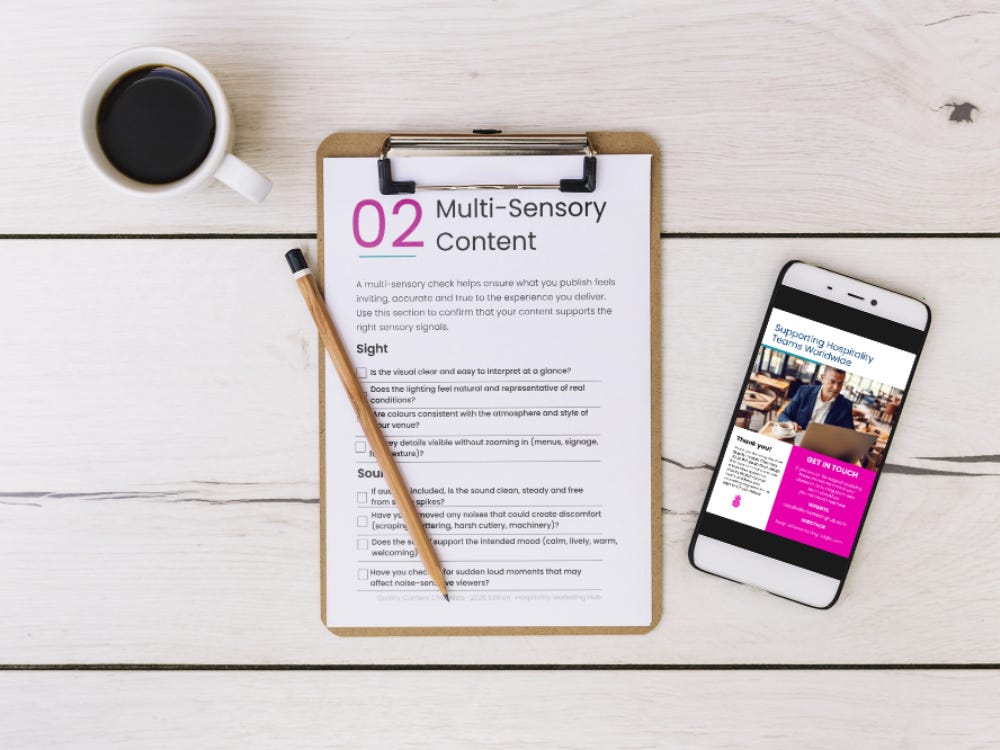
At the Hospitality Marketing Hub, we turn these strategic updates into plug-and-play execution tools. Download complete campaign plans, content calendars, MICE sales templates, and staff workshops designed to get your promotions live in days, not weeks.
🚀 Browse Ready-To-Use Campaign Plans & Toolkits at
Hospitality Marketing Hub

❌ Marketing Mistakes to Avoid - HFSS Ads
On 5 January 2026, new rules in the Committee of Advertising Practice regarding the advertising of less healthy food and drink products came into force. Under these updated regulations, advertisers must not pay for ads for an identifiable less healthy food or drink product to be placed on the internet.
While this is a UK ruling from the Advertising Standards Authority (ASA), it is a critical best-practice benchmark for all hospitality leaders, as the EU and other international markets are rapidly adopting similar legislative frameworks.
To help understand this further, we have two recent, high-profile ASA investigations.
🍕 Case Study 1: The Domino’s Miscalculation
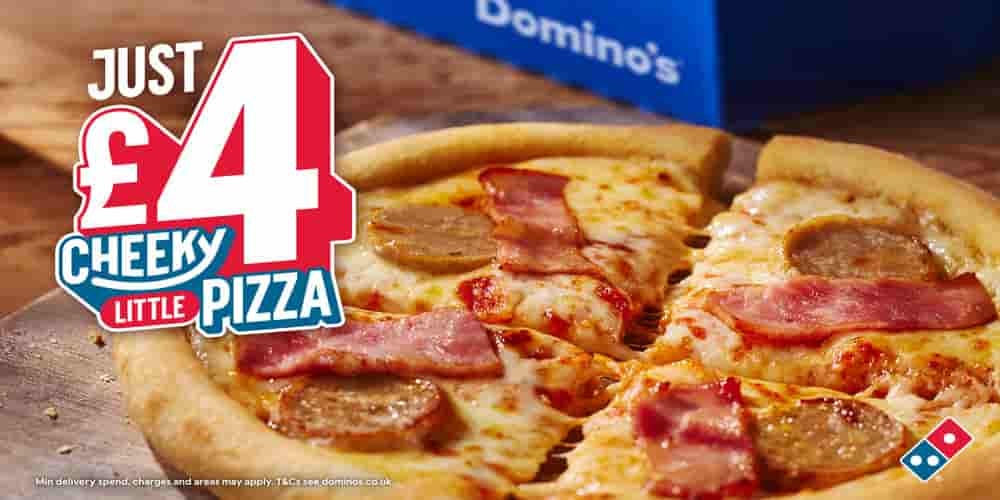
Domino’s ran a paid-for YouTube ad in January 2026 to promote their £4 Cheeky Little Pizza lunch offer. The ad featured an image of a meat pizza cut into four slices, specifically the Sausage and Bacon flavour variant.
Domino’s stated they relied on a third party to provide a nutrient profile for each pizza, which they used when preparing the ads. However, they later realised that the figure for energy used in that calculation was incorrect. Domino’s confirmed that the correct energy figure meant the Sausage and Bacon pizza was, in fact, a high in fat, salt or sugar (HFSS) product.
The Verdict: Because the campaign was a paid ad placed on the internet which depicted a specific less healthy product, the ASA concluded it breached CAP Code rule 15.19. The ad was banned from appearing again, and Domino’s was forced to withdraw all advertising featuring that specific pizza.
Case Study 2: The KFC Brand Advertisement Exemption
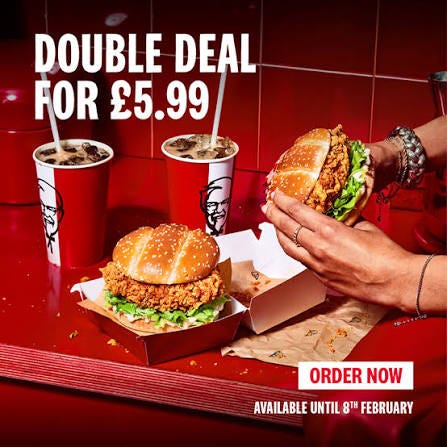
During the same period, KFC ran paid social media ads across Reddit, YouTube, and TikTok promoting The Double Deal for £5.99. The videos featured large on-screen text and imagery of two breaded chicken burgers alongside two KFC-branded cups of a brown-coloured soft drink.
Following complaints, KFC confirmed that the specific items shown—the Fillet Burger and Pepsi Max—were not classified as HFSS. Because they were not HFSS, they were not classified as less healthy foods.
The ASA noted that brand advertisements (those that promote a brand or a range of products) are exempt from the restrictions, provided they do not depict a specific less healthy product. Furthermore, the ASA stated that for an ad to lose its brand exemption, it must include a realistic image of a food or drink that is visually indistinguishable from a specific less healthy product.
The Verdict: Because the realistic images of the burgers and cola drinks in the ads were not visually indistinguishable from any specific less healthy food or drink, the ASA concluded the paid-for ads were brand advertisements. They were deemed out of scope of the less healthy product rule and did not breach the Code.
👉 Do not blindly trust third-party nutritional calculations without rigorous internal audits. If you are paying to place food and beverage imagery on the internet, you must verify that the specific items depicted are not classified as HFSS, or you risk costly campaign takedowns, wasted ad spend, and public reputational damage.

🔒 Upgrade to VIP: Get the Complete 30+ Page Executive Briefing & Team Playbook
What you’ve read today is just the top-level snapshot.
Every month, VIP members receive the complete Hospitality Marketing Strategic Update—a comprehensive, 30+ page executive report and operational playbook delivered in a polished PDF format designed to pass straight to your board, general managers, and marketing leads.
While the free edition gives you the trends, VIP Members get the exact operational infrastructure to execute them:
Complete PDF Report: A fully formatted, executive-ready document complete with data breakdowns, consumer trend maps, and strategic visual assets.
The Monthly Hospitality Action Plan: A complete, printable operational checklist covering everything from Google profile tweaks to ad budget guardrails.
AI Search Questions to Answer: The exact high-intent queries hotel and restaurant guests are asking conversational AI search engines this month—word for word—so your website gets cited first.
Content & Creative Swipe Files: Monthly trending audio files, colour palettes, micro-drama scripts, and short-form video frameworks (like the “My Camera Roll is Full” template) ready for your creative team.
Marketing Calendar & Key Dates: A complete 30-day hospitality planner with awareness days, seasonal shifts, and campaign planning windows mapped out.
Stop spending hours trying to translate high-level trends into team instructions. Get the complete strategy, hand the PDF to your team, and execute with clarity.
Upgrade to VIP Membership & Download the Full Playbook
Need to expense this? Download our 1-click email template to expense your VIP subscription to your business

Momentum in hospitality marketing isn’t built by reacting to peak demand—it is captured by those who prepare for it while the market is still asleep. Whether you are splitting your festive timelines, commercialising shoulder-season evenings, or auditing your ad creatives against the ASA’s new HFSS rules, I hope today’s insights give you the commercial confidence to protect your yield and lead your market this autumn.
How are you handling this at your venue—are your B2C and B2B festive campaigns currently running on separate timelines, or are you still trying to capture both with a single push? Let me know in the comments below, or drop your marketing questions in the comments anytime.
All the best
Dawn Gribble MIH MCIM
Hospitality Marketing Insight
Here’s to your success! 🥂
I’m an award-winning marketing expert with 25+ years of international experience helping brands like Wagamama, Sysco, Ramada, and The Institute of Hospitality get clarity and creative insight on their marketing performance.
📊 Need an expert marketing audit? Get in touch at DG Consulting.
🚀 Grow your brand: Download courses, workshops, and campaign plans at the Hospitality Marketing Hub
📚 Sources
2026 Corporate Christmas Party Decor & Trends, Elizabeth James Events (2026)
ASA (Committee of Advertising Practice), Domino’s Pizza UK & Ireland Ltd, Advertising Standards Authority (2026)
ASA (Committee of Advertising Practice), Kentucky Fried Chicken (Great Britain) Ltd, Advertising Standards Authority (2026)
Dobson, J., The Rise Of Astrotourism: 25 Hotels Leading The Stargazing Trend, Forbes (2026)
Editors, T., Natural Darkness Is Becoming the World’s Most Surprising New Luxury. Here’s Your Guide to Seeing It for Yourself, Outside (2026)
Future Market Insights, Nocturnal Tourism Market Size & Trends 2025-2035, Future Market Insights (2025)
Milsom, K., Star-bathing one of the tourism trends of 2026 you have to get onboard with, Countryfile.Com (2026)
News: Latest figures reveal 11th October as the most popular day to make a Christmas Day booking in 2023, Zonal (2026)
The 2026 festive season starts now: A Pinterest guide to success, Pinterest (2026)