



Welcome to part one of your September Strategic Update. If you want ongoing interpretation of demand patterns, platform movement, and buyer behaviour changes before they affect your revenue, you are exactly where you need to be.
Lately, I’ve been speaking with operators who are watching their conversion rates slip without understanding where the breakdown is actually happening. This isn’t happening by accident; it’s because there’s a massive disconnect between automated marketing tools and what buyers actually expect right now. In a market where younger buyers are intensely sceptical and tech platforms can rapidly drain your resources, relying on old defaults is a massive financial liability.
This September, I am breaking down the critical friction points that cost you bookings—from hyper-personalised chatbots that accidentally drive web traffic away to the hidden operational errors that can lead to massive ad budget overspends. By the end of this update, you will know how to spot these subtle behavioural changes early, protect your reservation margins, and adjust your digital touchpoints to align your strategy with exactly how modern consumers want to buy this month.
📄 On the Menu
How High Digital Personalisation Backfires When Deployed Too Early in the Guest Journey
Why F&B Brands Are Using TikTok as Real-Time Testing Grounds for Menu Innovation
How Intent-Driven Gen Z Mindsets Dictate Spending Across Luxury Travel Markets
Why Clear Pricing is the Only Way to Survive the Wedding Trust Recession
Marketing Mistakes to Avoid - The $104k Overspend
Let’s Check In ☕

♞ Strategic Insights
Don’t let misapplied data cost you bookings this September.
👤 How High Digital Personalisation Backfires When Deployed Too Early in the Guest Journey
Many companies view automated personalisation as a major competitive advantage. However, new research indicates that proactive chatbots can cause unfavourable consumer reactions if they are deployed too early in the decision-making process.
New data completely upends the “more is better” rule for AI tailoring. The study proves that forcing hyper-personalised chatbots onto early-stage web browsers actively alienates them.
The Hospitality Buyer Journey
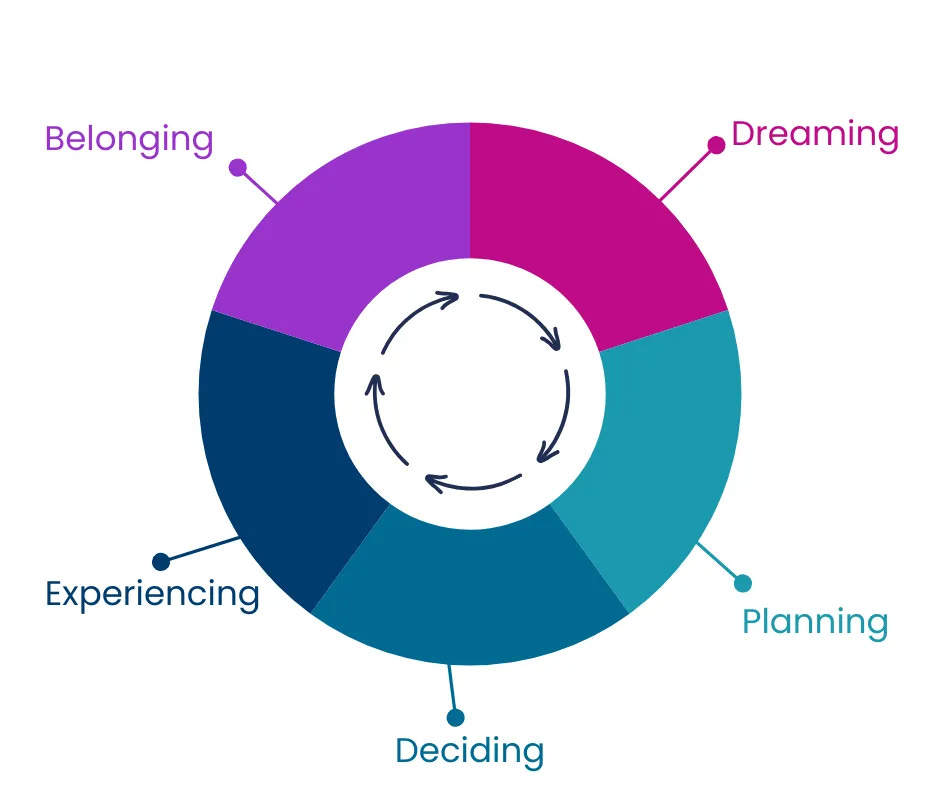
When a potential guest is in the dreaming stage, they want to browse your property freely. A highly personalised chatbot that immediately aggressively filters room packages or dining options limits their choices and feels restrictive. Instead of feeling guided, the user feels pushed and leaves your site entirely. Highly targeted filtering is only welcome when a guest moves close to a final booking decision
Early Warning Signals
High abandonment rates on chatbots deployed across top-of-funnel browsing pages.
A drop in web page dwell time when automated pop-ups appear during initial discovery sessions.
An immediate spike in bounce rates on your main landing or gallery pages.
To protect your reservation margins this September, you need to match your digital touchpoints to how your guests are actually behaving. If your analytics show someone is just casually browsing across different room types or venues, keep things light—use a low-key assistant that offers broad inspiration and lets them control the conversation. Save your highly targeted, proactive help for the exact moment they start lingering on your booking engine or checkout page.
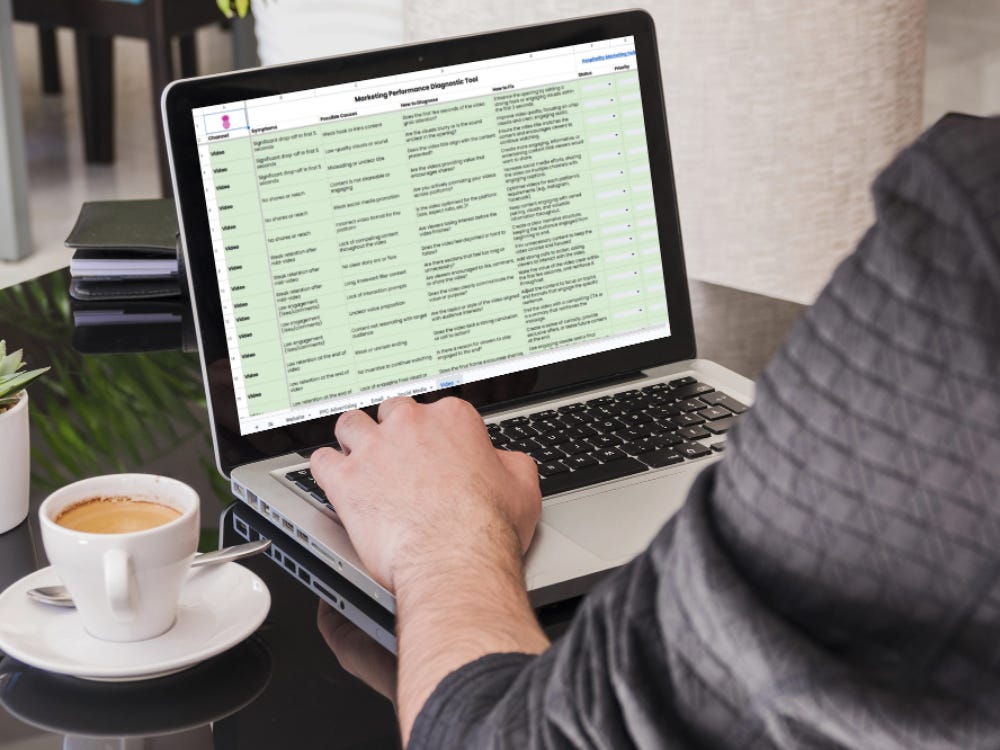
If you want to pinpoint exactly where your digital touchpoints are breaking down, use our Marketing Performance Diagnostic Tool over at the Hospitality Marketing Hub to stop wasting effort on underperforming campaigns.
🌶️ Why F&B Brands are using TikTok as Real-Time Testing Grounds for Menu Innovation
Over 103 billion purchase-intent searches were logged on TikTok in 2025 alone, alongside an 80% surge in total transaction volume.
With the platform’s food and beverage sales more than doubling year on year, TikTok Shop has officially evolved from a video-sharing app into a direct-transaction powerhouse. This evolution of discovery commerce has forced major household brands like PepsiCo, Mars, and Hershey to actively monitor the app to guide their product pipelines.
To capture attention on camera, your dishes now need to be designed with visual theatrics in mind. This means building menu items around intense sensory experiences—think ultra-spicy or intensely sour profiles—and highly tactile textures, like a cheese pull or a dessert designed to be cracked open on screen.
Rather than relying entirely on slow, traditional consumer research panels, operators are now using TikTok Shop as a real-time testing ground to trial limited-time concepts and collect instant feedback. It is why enterprise brand sales on the app have climbed 97% year on year.
This rapid cycle directly influences menu development and packaging layout. The highest conversions come from keeping it simple: promote a single hero item to grab attention, backed by multi-flavour variety bundles to lower the barrier to initial trial.
Hospitality and F&B brands will increasingly operate like media houses, relying on network-driven affiliate creators rather than traditional ad agencies to drive volume. Future revenue will be dictated by a brand’s ability to coordinate armies of micro-influencers to co-create and test products live on camera.

🛍️ Buyer Behaviour
Forget traditional demographics when planning your September strategy.
🌏 How Intent-Driven Gen Z Mindsets Dictate Spending Across Luxury Travel Markets
According to a Marriott study of modern luxury travellers, younger consumers are moving away from traditional demographic groupings. They now distribute across four distinct intent-driven profiles:


The takeaway for your shoulder season is clear: stop marketing luxury as a one-size-fits-all demographic. To capture these high-margin bookings, operators must tailor their digital messaging directly to specific mindsets, whether that means highlighting certified wellness medical tracks for the Future Proofer or promoting strict digital-detox packages for the Quiet Luxurist.
💒 Why Clear Pricing is the Only Way to Survive the Wedding Trust Recession
The wedding sector is experiencing a clear trust recession, driving a dramatic shift where up to 90% of modern couples now approach venues with deep scepticism. Exhausted by aggressive sales tactics and false scarcity packaging, these highly analytical buyers are significantly slower to commit to bookings than in previous years.
Generation Z is entering the wedding market and changing consumer expectations entirely. These younger buyers are media-savvy and detect marketing manipulation instantly. A major friction point is a lack of pricing transparency. Hiding baseline costs forces couples to submit manual enquiries simply to check budget alignment. This practice fuels a persistent suspicion that venues add an unverified hidden tax to wedding services.
Across the sector, I’m seeing consumers rejecting polished, staged photoshoots that mimic real events. Buyers now value authenticity over perfection. They heavily scrutinise contracts, digital review history, and corporate values before making an initial deposit decision.
This is where Instagram’s new grid tool can help. Swapping a highly curated grid for raw, behind-the-scenes content builds immediate verification and showcases your team’s real personality, a factor that 71% of couples state directly influences their final booking decision.
With 78% of couples now using social media to find their suppliers, making the enquiry process as frictionless as possible is essential. The average couple researches 14 different suppliers and shortlists 3 per category, generating over 40 individual enquiries during their planning journey. Expecting them to schedule dozens of meetings or phone calls just to get basic pricing is unrealistic. Adapting to their preferences by allowing them to enquire directly via WhatsApp or direct messages delivers the responsive, human experience these modern buyers demand.

📅 Marketing Mistakes to Avoid - The $104k Overspend
How would you feel if your Ad agency told you they overspent on your account to the tune of $104,000 USD?
Unfortunately, one Redditor found herself in this situation.
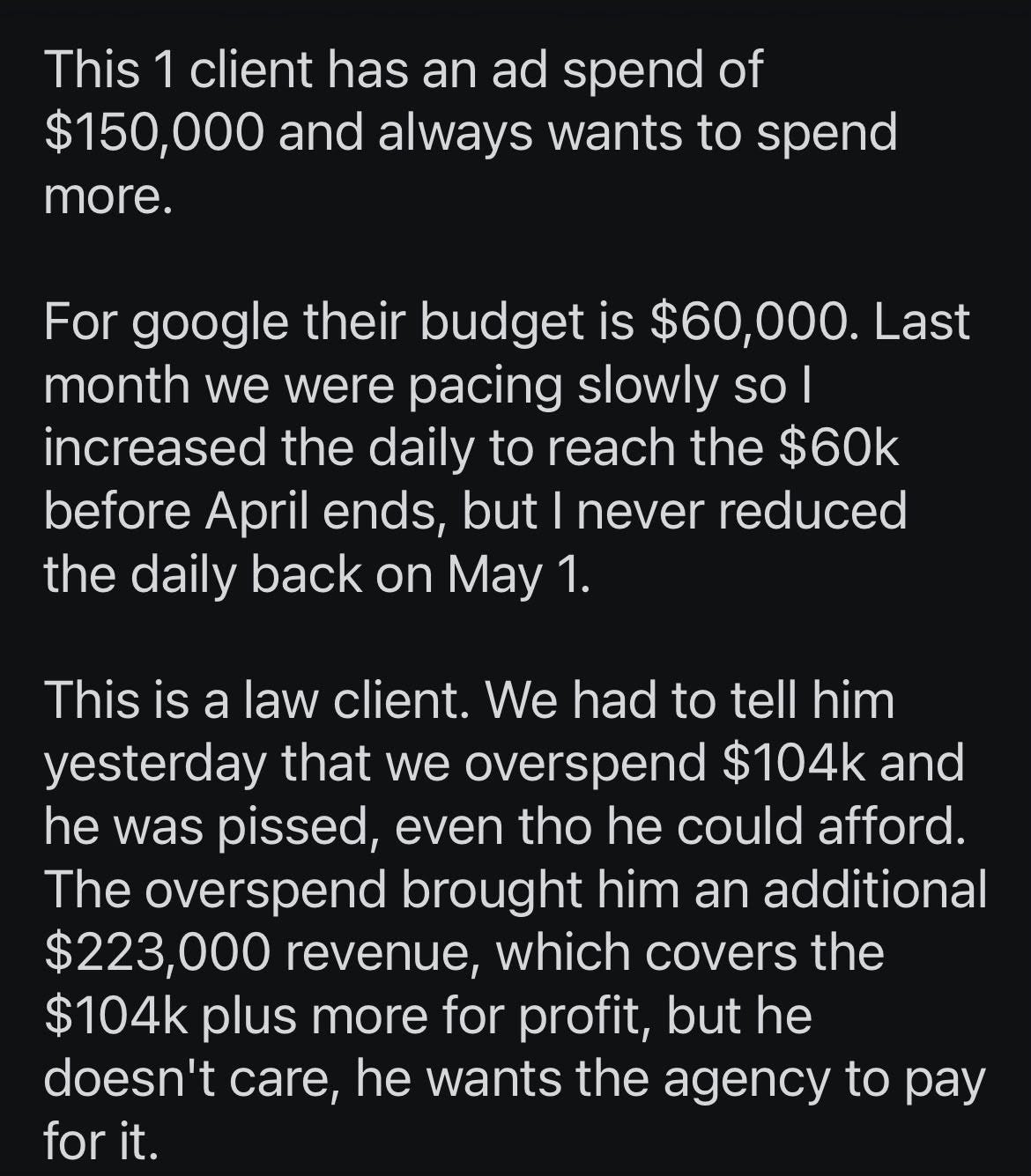
A common problem in digital ad management is unexpected budget overspend. In this case, the error happened because a temporary daily budget increase was not reset at the start of the next calendar month.
Now, while this example comes from the legal industry, it is an issue that occurs with agencies, freelancers and account managers managing Ad accounts more often than marketers would like, but it does happen - we’re only human after all.
It usually boils down to a mix of human limitations and automated system settings:
If an employee is handling too many accounts simultaneously, manual oversight breaks down.
When a company credit card links directly to these ad platforms, a runaway account can drain thousands of pounds before anyone notices.
Many people learn the hard way that fine print on modern search platforms gives advertising engines the right to spend up to 30x your daily budget on any given day.
It’s important to note that even if the excess spend generates an incremental return on ad spend (ROAS), clients can rightfully refuse to cover the unapproved baseline cost. The agency is often held legally liable for the financial overage.
Check with your legal team to see if this is the case in your country.
These budget overruns are particularly lethal when you consider the escalating cost of client acquisition. Recent data shows that CAC has risen by 222% over the past eight years, meaning the average brand now loses $29 per new customer on the front end. With margins already this tight, you simply cannot afford unapproved platform spend.
Before you commit funding to high-value ad campaigns, ensure your internal team or marketing agency uses a multi-person approval process supported by technical guardrails:
Set hard monthly budget caps directly within the platform billing dashboard to halt all ads automatically when specific thresholds are met.
Install dynamic scripts or automated checking tools that monitor daily budgets across all active accounts in one master spreadsheet.
Require the paid search manager to execute a top-level account rundown with your account directory every seven days to catch allocation errors early.
Before you commit to your September campaign budgets, take a moment to review your current ad account setups and agency terms. Ask your marketing provider what budget pacing scripts and automated anomaly alerts they have active to protect your linked payment cards from runaway platform spending this autumn.

Move From Insight to Execution
This free strategic update is just the tip of the iceberg.
Every month, our VIP Members get the exact execution blueprints
required to turn these trends into revenue.
Inside the VIP Monthly Planner for September, you’ll unlock:
September Shoulder Season Strategy
Expert Strategic Tactics and Intelligence
Content Creation Swipe File and Calendar
Plus 10 Questions you need to answer for September AI Searches
True digital innovation isn’t about letting tech take the wheel; it’s about using human insight to know exactly when to step in and guide it.
I hope today’s insights gave you the clarity you need to confidently refine your strategy for September. Remember, automated tools are only as good as the human creativity guiding them. You’ve got the insights—now go create something remarkable. I look forward to serving you again soon.
All the best
Dawn Gribble MIH MCIM
Hospitality Marketing Insight
Here’s to Your Success 🥂


❓ Got a question about this issue?

📚 Sources
bernadette., The Trust Recession in the Wedding Industry: Why Bookings Feel Harder in 2026 -, bernadettechapman.co.uk (2026)
Chen, X., Huang, M., & Xie, X., Do Not Think Ahead of Me: High‐Personalization Chatbots Can Backfire During the Goal Formation Stage, mar.70189 (2026)
Four Gen Z Mindsets Reshape Luxury Travel in Asia Pacific, Hotel News Resource (2026)
How TikTok Shop is changing innovation for food and beverage brands, Food Dive (2026)
I overspent on a clients google ads account by $104,000- what’s going to happen to me?, R/PPC (2026)