


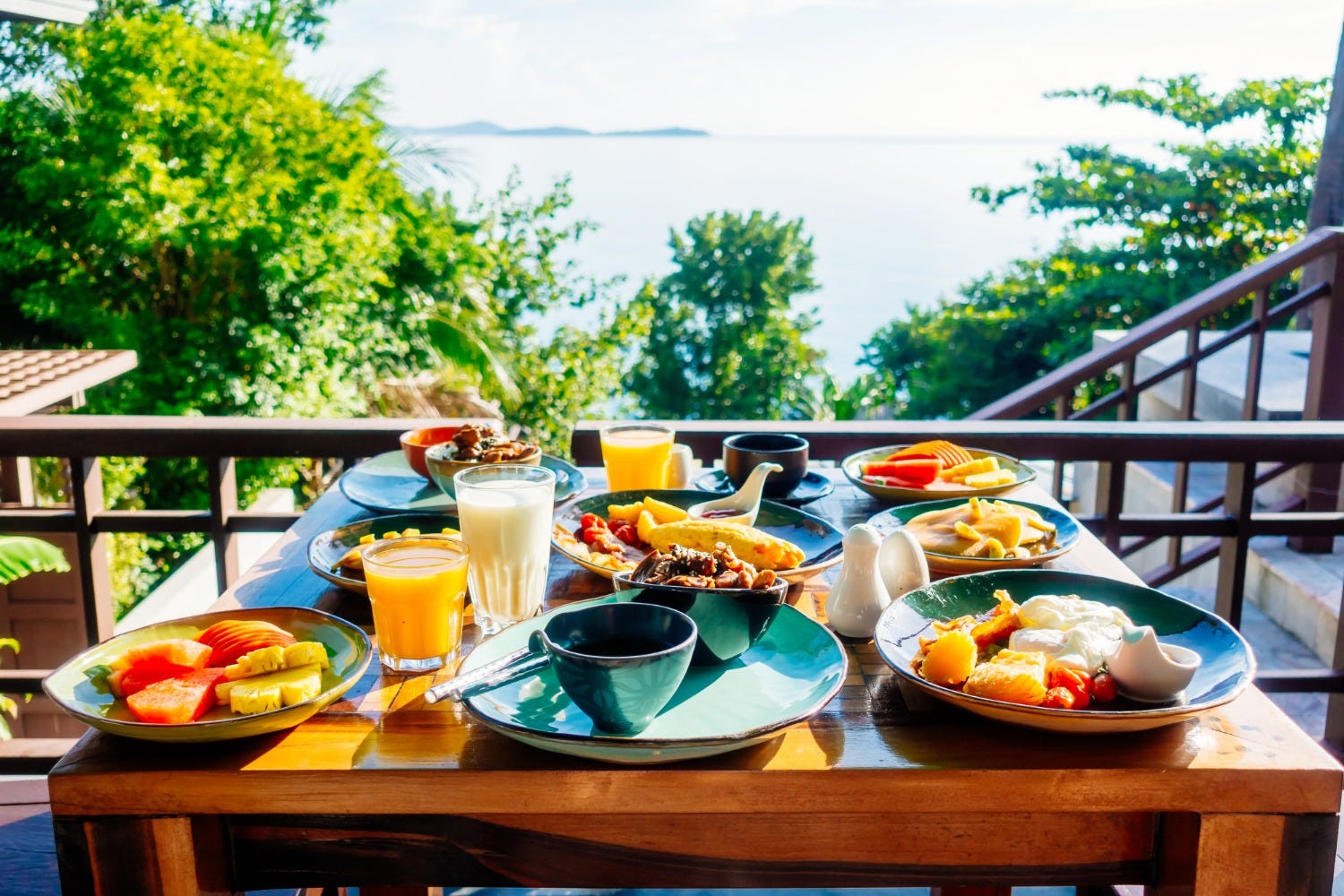
Welcome to your August 2026 strategic update. If you are a restaurant operator or hospitality business leader looking to grow your sales and protect your profits this summer, you are in the right place.
Today, we look at a major business problem: customer habits are changing much faster than standard marketing plans. Customers now trust small, local social media creators more than expensive advertisements. At the same time, younger guests use apps like TikTok instead of regular search engines to find places to eat. If your business keeps using old, rigid plans, you will lose customers to faster competitors before the summer ends.
By the end of this guide, you will know exactly what shifts are happening with short-form video apps, why these trends are driving table bookings, and the critical data behind recent artificial intelligence marketing mistakes.
📄 On the Menu
Strategic Insights - Influencer Marketing
Summer Restaurant Trends
Inclusive Multi-Sensory Innovation
Marketing Mistakes to Avoid
Let’s Check In ☕

♞ Strategic Insights - Influencer Marketing
Did you know that 64% of consumers are more likely to buy from a brand when it partners with a creator they follow? This data from Sprout Social demonstrates a direct link to booking intent. Guest behaviour is moving away from traditional channels. In fact, 36% of consumers now trust channels like Reddit, Threads, TikTok, and Instagram posts more than traditional search engines or AI chatbots. For Gen Z, that figure rises to 51%.
The market has moved away from high-cost, polished production. Guests trust budget-conscious, niche creators who share real experiences over corporate media. This behaviour directly impacts the P&L. Recent data shows that 83% of marketers agree that creator posts deliver more conversions than content posted from a venue’s own account. Furthermore, 49% of marketers say video is now the most important content type for driving guest engagement.
Successful European operators are changing how they allocate budget based on these changes. According to Kolsquare data, brands are multi-layering their strategy: 49% integrate creator marketing directly with PR and communications, while 45% also connect it to seasonal activities and venue launches. Because organic production costs with these creators are lower.
62% of marketing teams plan to redirect those savings into paid media amplification of creator content before the next trading quarter to protect margins.
The risk of inaction is significant. The move toward integration leaves only 26% of businesses still operating creator marketing in a silo. If your venue treats creator spend as an isolated task, your campaigns will fail to register. Standing still means your marketing budget will be wasted on disconnected activity.


🛍️ Summer Restaurant Trends
Your delivery app is now the front door to your dining room. Data shows that 74% of consumers say an in-venue visit led them to later order delivery from that same restaurant, while 62% say a delivery order prompted them to later dine in. For hospitality operators, these channels are no longer separate businesses; they form a continuous revenue loop dictated by the guest’s immediate routine.
While 86% of consumers demand the physical dining room for celebrations, weekday revenue relies on convenience. According to CGA’s consumer insights, 63% of consumers view dining out as a fundamental part of daily life. To capture this spend, Bidfood’s 2026 food and drink trends report shows that experience-led elements are required to boost summer footfall—leveraging their trending Whole Lotta Goodness profiles like gut-loving wholefoods alongside FastForward Flavours like sweet-heat hot honey.
Across London hubs like Soho and Shoreditch, businesses now actively design limited-time specials with TikTok in mind. Highly visual presentations, dramatic cheese pulls, colourful drinks, and oversized desserts are increasingly built into agile summer activations because they perform well on short-form video platforms. This captures the 66% of 18–34-year-olds who track viral trends, while 65% of these guests return when a venue tracks preferences for personalised follow-ups.
This social-driven dining culture directly overlaps with the broader experience economy, where consumers increasingly prioritise visually memorable experiences over traditional dining routines. Because TikTok compresses trend lifecycles from years into days, standard operational cycles are proving too slow to capture this demand. If your venue relies solely on rigid, static menu planning instead of flexible weekly features, you miss the window to align with these fast-moving consumer preferences.
🎨 Inclusive Multi-Sensory Innovation
Data from Mintel shows that 57% of adults agree that food and drink engaging multiple senses boosts mood more effectively than taste alone. During the summer trading window, multi-sensory innovation acts as a direct driver of spend-per-head. Furthermore, 30% of adults aged 18–44 state that social media directly influences the on-the-go snacks and light bites they select while moving through urban hubs during the warmer months.
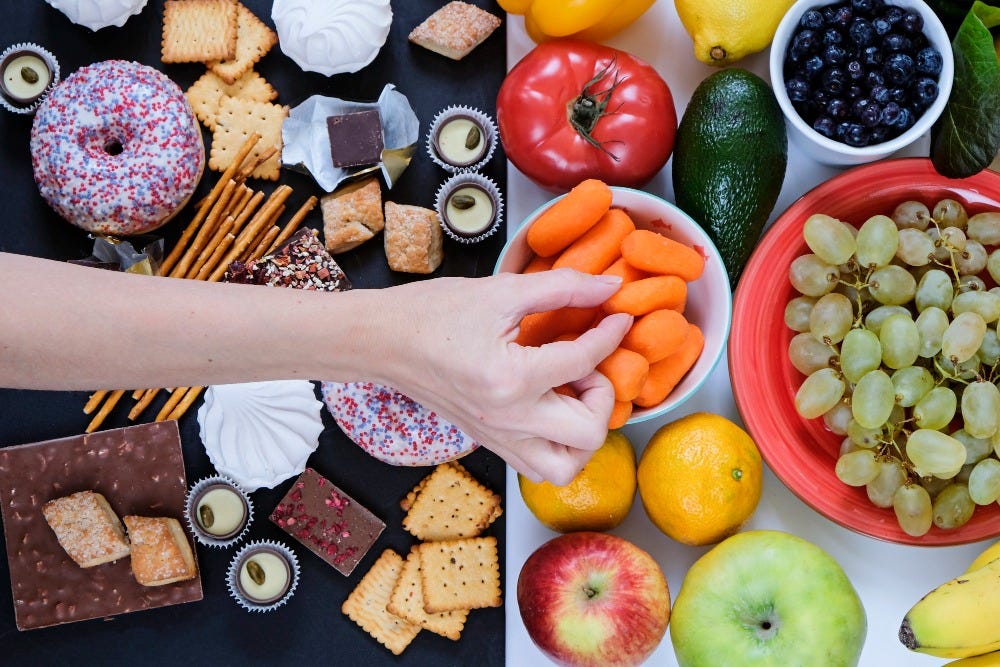
Capturing this seasonal footfall requires active culinary innovation rather than standard menu updates. Summer hospitality relies on re-engineering dishes so guests slow down to evaluate the aroma, vibrant colours, and distinct textures of a presentation. This tactical use of contrasting ingredients allows venues to innovate naturally, using the plate to amplify the positive, sunny mindset that drives premium impulse spend.
This structural innovation is also a commercial necessity for inclusive hospitality, provided operators design for two distinct consumer needs. For GLP-1 medication users who experience suppressed appetites, intense multi-sensory elements are vital to make smaller, nutrient-dense portions highly satisfying. Conversely, accommodating neurodivergent guests requires clear menu mapping so they can choose between these high-sensory innovations and options that offer sensory predictability. Designing your summer menu to deliberately address both ends of this spectrum ensures your venue remains accessible to these affluent, health-conscious consumer groups.
Failing to adapt your portion structures and sensory profiles to these changing guest requirements means your summer rollout will alienate a highly loyal consumer base. If your seasonal planning remains rigid, this valuable on-the-go and inclusive cover spend will migrate to more empathetic competitors.

🚫 Marketing Mistakes to Avoid
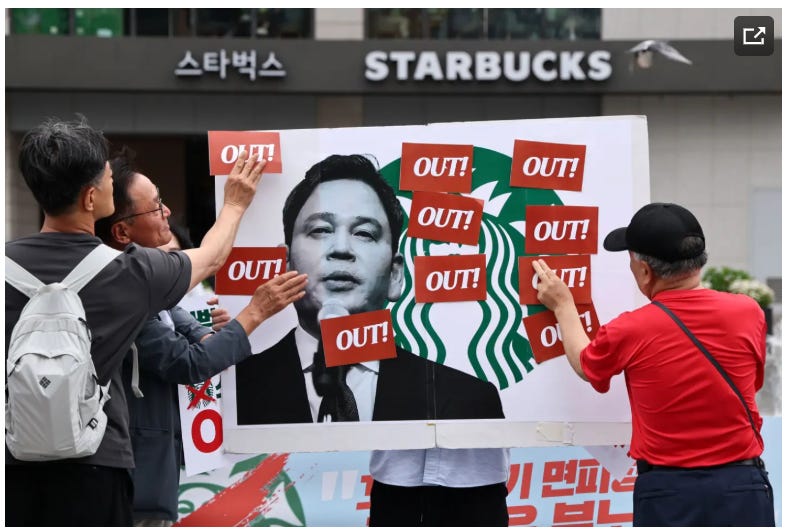
A blind reliance on generative AI recently triggered a massive commercial crisis for Starbucks Korea. Hours after debuting a summer promotion for its new Tank coffee tumbler line on 18 May, the brand sparked a national cultural backlash. The fallout was immediate: the parent company’s billionaire chairman issued a televised apology, the chief executive was dismissed, and the controversy reached the highest levels of the South Korean government.
While the Tank Series campaign was intended to highlight large-volume beverages, its timing and branding collided disastrously with national history.
The 18th of May marks the anniversary of the 1980 Gwangju massacre, a sensitive historical tragedy where military forces violently suppressed pro-democracy protests. Naming a promotion Tank Day on this specific date reopened severe historical wounds.
The crisis was worsened by an AI-generated campaign slogan: “Thwack on the desk.” The marketing team had used an artificial intelligence tool to source concepts and copy suggestions. However, the software pulled a phrase that mirrored a notorious 1987 police cover-up, where authorities claimed a tortured student activist had died of shock after an officer simply hit a desk with a thwack.
Compounding this technical failure was a severe lack of human oversight. Internal managers approved the entire strategy without ever opening the email attachments containing the final creative assets.
Although Starbucks pulled the promotion within hours and immediately fired CEO Son Jeong-hyun, the reputational damage had already gone viral, with consumers filming themselves destroying Starbucks merchandise.
The financial impact hit the P&L instantly. Weekly card transactions at the stores plummeted by 26%, contributing to a 10% month-on-month revenue drop for May. Furthermore, furious consumers boycotted the brand by demanding refunds on an estimated 400 billion won (£230 million / $260 million) stored in Starbucks prepaid accounts.

Dropping This Thursday: The August VIP Strategic Toolkit
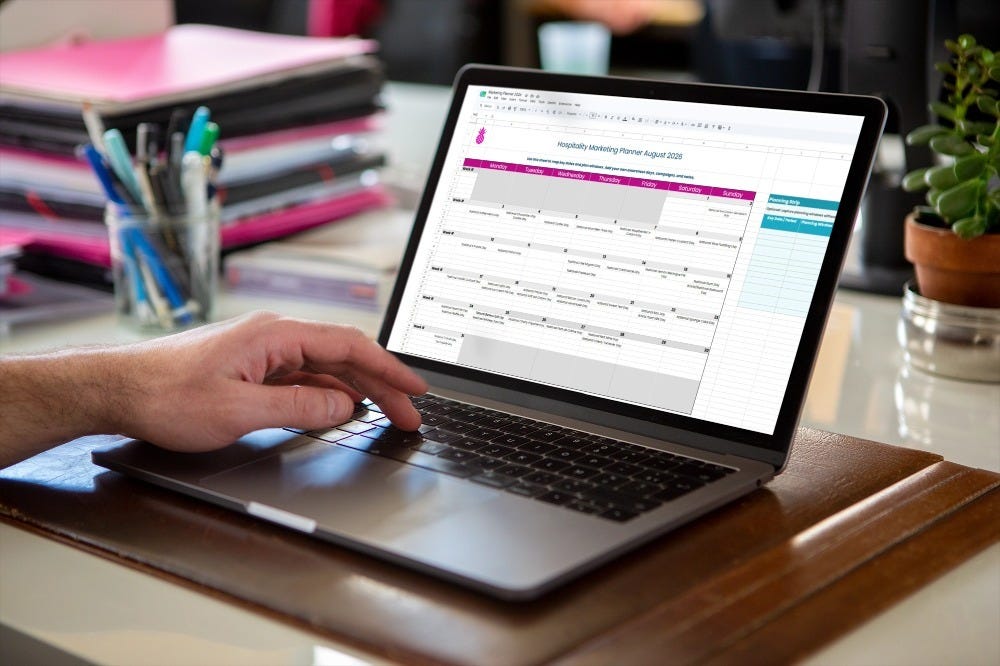
If you are tired of staring at a blank screen, wondering what to post, or worrying that your marketing is reactive rather than strategic, the VIP Lounge is designed to fix that.
Here is a breakdown of what VIP members are unlocking this month to stay ahead of the competition:
The August VIP Content Planner & Downloadable Calendar: Every major hospitality event, date, and activation pre-mapped out for you. No last-minute scrambles.
Cross-Platform Intelligence: Critical updates tracking what is changing right now across Google, YouTube, Meta, TikTok, and LinkedIn—so you know exactly where to focus your organic and paid attention.
The August Social Swipe File: Immediate access to high-traction food and beverage trends, trending audio links, current colour palettes, and visual themes driving actual bookings across social.
AI Persona Prompt of the Month: A plug-and-play prompt built to help you step inside your exact buyer personas’ heads, figure out what makes them hesitate, and build campaigns that convert.
Quick Wins & Recommendations: Rapid-fire, high-impact tweaks you can apply to your messaging and campaigns this week.
Direct Expert Support: Unlimited access to the VIP Chat Lounge and direct private messaging with me to answer your specific marketing, campaign, or platform questions in real-time.

Whether you are reallocating your budget toward budget-conscious creators, transforming your menu presentation to capture visual social search habits, or insulating your booking pipelines against the zero-click realities of generative AI, the requirement remains the same—adapt your operations to match the immediate, daily routines of your consumer segments.
That’s it for this edition. I hope you’ve enjoyed the newsletter. I look forward to serving you again soon.
All the best
Dawn Gribble MIH MCIM
Hospitality Marketing Insight
Here’s to Your Success 🥂

❓ Got a question about this issue?

📚 Sources
Coley, B., AI Is Reshaping How Diners Discover Restaurants, DoorDash Study Finds, QSR Magazine (2026)
Coley, B., The Marketing Playbook Fueling Dutch Bros’ National Expansion, QSR Magazine (2026)
Collaborator, L. D. N., How TikTok is reshaping London food trends faster than ever, London Daily News (2026)
Experience-led menus tipped to boost summer footfall, The Caterer (2026)
Go beyond viral fads with multisensory innovations that are inclusive, Mintel (2026)
How McDonald’s is serving up culture as part of its new strategic plan, Marketing Dive (2026)
How spicy food drives customer loyalty at restaurants, Restaurant Business (2026)
I Tried TikTok’s Viral Kool-Aid Pineapple—Here’s My Review, Parade (2026)
Introducing Instagram Plus: More of What You Love, About Instagram (2026)
Meta tests ‘Series’ for episodic Reels on Instagram and Facebook, TechCrunch (2026)
Pinterest Summer 2026 Trend Report, Pinterest (2026)
Pride Month 2026: Celebrating the LGBTQIA+ Community Through #PrideTikTok, Newsroom | TikTok (2026)
Rashid, R., How a Starbucks marketing stunt spiralled into mass boycotts in South Korea, The Guardian (2026)
Report: Affluent Travelers Favor Personalization and Experience Over Status, Hotel News Resource (2026)
Restaurants turn to towers and sauce flights, Restaurant Business (2026)
Schaefer, A., The economy is reshaping influencer storytelling, Sprout Social (2026)
Travel Passions and Local Behaviors Are Reshaping Hotel Loyalty Across Asia Pacific Excluding China, Breaking Travel News (2026)
Why marketers must rethink loyalty as AI reshapes consumer connections, Marketing Dive (2026)
Interesting we are trusting small creators more than polished big brands and productions 🙌🏼
Great heads-up on the video trends. Staying human while navigating AI in marketing is the big challenge right now.