



If you are looking for ways to protect your profitability without constantly raising prices, you are in the right place. We need to address a common commercial drain: the disproportionate volume of low-margin offers currently being served.
With food and labour costs rising, every plate leaving your pass and every offer made must contribute its fair share to the bottom line. Allowing guests to default to your least profitable items or channels is not just a missed opportunity; it is a risk to your long-term sustainability. By the end of this guide, you will understand what Demarketing is and how to use it to steer demand toward your high-margin stars and more profitable outcomes.
📄 On the Menu
Demarketing Defined
When & Why You Should Demarket
5 Ways to Demarket Low-Profit Dishes & Protect Your Margins
Demarketing Mistakes to Avoid
Let’s Check In ☕
Last Updated 14th August 2026
If you are tired of bland ineffective marketing and want a clear path to higher margins, the VIP Vault is for you
Here’s a template to expense a subscription

📉 Demarketing Defined
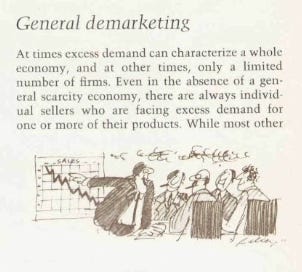
Demarketing is a strategic marketing approach focused on intentionally reducing or discouraging consumer demand for a product or service, rather than attempting to expand it. The concept was developed in 1971 by Philip Kotler and Sidney Levy, who argued that.
Coping with excess demand is just as much a marketing problem as dealing with excess supply.
While the theory focuses on reversing the marketing mix, the practical application for hospitality is about maintaining the balance between volume and value.
As over 64% of consumers express a negative reaction to restaurant surge pricing—with 81% stating they would alter their habits or stop visiting a venue that raises prices during peak hours demarketing provides a far safer alternative for P&L protection. Instead of dynamically spiking prices during peak demand, which risks severe brand backlash and lost loyalty, operators use demarketing to quietly guide guest choices toward higher-margin menu items through strategic choice architecture.
❓ When & Why You Should Demarket
Hotels and restaurants typically use demarketing strategies in 3 main scenarios:
To increase profitability by shifting demand away from low-margin dishes
Apply this when rising food and labour costs mean specific items are no longer contributing enough to your bottom line.
For example, a restaurant notices a popular pasta dish has become a loss leader due to ingredient inflation. A hotel identifies that inclusive breakfast packages sold via third-party agents are yielding zero net margin after commission and labour costs.
To manage chronic overpopularity and preserve the customer experience
Use this tactic when consistent excess demand threatens to overwhelm your team or degrade the atmosphere of your venue.
When a venue’s demand consistently exceeds its capacity, it may demarket to reduce the strain on management and maintain its desired atmosphere.
For instance, mirroring destination demarketing tactics seen across European tourism hubs where entry fees and doubled tourist taxes are being deployed to curb overcrowding, high-demand venues are introducing peak-hour minimum spends and non-refundable deposits. This eliminates low-yield table squatting during prime covers while preserving capacity for high-margin guests.
A restaurant might introduce a more formal dress code or adjust the lighting and music levels to subtly signal the intended atmosphere and discourage segments that do not fit the brand profile. A luxury hotel may implement a higher minimum stay requirement, such as a three-night minimum during peak periods, to discourage party-weekend guests and ensure the property remains a calm retreat for its primary demographic.
Unlock the full library of practical playbooks and strategic updates, including:
The No-Show Recovery Playbook Strategies to reclaim lost revenue.
Ethical Upsell Frameworks Techniques to increase guest spend without compromising trust.
2026 Strategic Intelligence Monthly updates on platform shifts, AI search risks, and guest psychology.
The VIP Vault A comprehensive archive of high-impact strategies for hotels, restaurants, and foodservice operators.

🛡️ 5 Ways to Demarket Low-Margin Offers & Protect Your Margins
If your margins are being squeezed by rising costs, consider these demarketing tactics.
Move low-margin items out of visual hotspots.
In a restaurant, move low-profit dishes away from the top or bottom sections of the menu. For hotels, ensure low-margin packages are removed from the homepage hero banner or the top of your digital booking engine.
Remove words that inflate appeal.
Terms like special, signature, or chef’s choice create value and should be avoided for low-margin items. Instead, tone down the description, place the item below a divider, or label it as limited to reduce its pull. For hotels, avoid using exclusive or must-try for basic room-only stays that carry high OTA commissions.
Apply scarcity cues to lower demand
Use phrases like limited availability or seasonal special to move diner or guest expectations. These cues signal that the offer may not always be available, which turns down demand without devaluing the item. Scarcity reframes the offer as an occasional option rather than a core feature, reducing repeat orders while maintaining a perception of quality.
Restrict distribution channels
Selective unlisting is essential on delivery apps like Uber Eats or Deliveroo, where fully loaded take-rates, factoring in ad-boosts, mandatory promotions, and processing fees frequently push effective delivery costs to 25%–35% per order. Rather than inflating prices across the board, remove labour-intensive, low-margin items from aggregator feeds entirely and keep them exclusive to direct, commission-free channels. For hotels, apply this by closing out low-margin inventory on third-party sites during peak windows, ensuring your most profitable rooms remain available for direct bookings.
Focus marketing on high-margin offers
Avoid promoting low-profit offers in your digital or print marketing; focus entirely on high-margin items. A leaner, clearer selection reduces decision fatigue, making guests feel more confident and less overwhelmed.
Demarketing works best when paired with strong promotion of your high-margin offers. By drawing attention to the offers that contribute the most to your profit, you guide diners towards choices that benefit them and your venue.

🚩 Demarketing Mistakes to Avoid
Implementing a demarketing strategy requires a delicate hand and a clear head. If executed poorly, you risk damaging your brand and alienating the very guests you want to keep.
Avoid these common traps:
The Ivory Tower Effect occurs when demarketing efforts become too intense, which creates a perception of arrogance and exclusion because you stop being a host and start acting like a gatekeeper, deciding who is worthy of your service.
For example, a restaurant introduces a booking system so complex and restrictive that regular local guests feel excluded and move their custom elsewhere. A city hotel becomes so focused on vetting guests that residents feel monitored rather than hosted, leading to a sharp drop in brand sentiment.
The Backfire Effect occurs when you attempt to lower demand for a low-margin offer by making it scarce, but accidentally increase its desirability instead. This occurs if you apply scarcity cues like strictly limited but fail to remove evocative, high-value language; you end up marketing the product as a must-have.
A kitchen tries to limit a labour-intensive dessert by labelling it only 10 per night, but leaves it as a Signature Chef’s Special, causing every table to demand it. Similarly, an operator tries to reduce the high volume of low-margin Staycation Packages by limiting them to only 5 rooms per weekend while keeping the marketing copy ‘The Ultimate Signature Escape.’ Instead of turning demand away, the limited tag creates a booking frenzy, leading to guests getting frustrated when they cannot secure the exclusive deal.
Crossing Ethical Boundaries can create a toxic brand image and raise serious social and legal issues. The risk occurs when an organisation attempts to turn away specific, unwanted customer segments in a way that feels like discrimination.
For example, a restaurant might try to discourage families or younger groups by telling them there is a “£50 per head minimum spend” for those specific tables, while letting a couple sit next to them with just a coffee and a starter.
A hotel tries to discourage “budget” travellers by intentionally restricting their access to the main pool or providing significantly slower check-in service for guests who booked via a specific discount OTA. When these guests realise they are being treated as “second-class” compared to direct-booking guests, it can lead to viral negative reviews and potential legal claims of unfair treatment.
Stop guessing and start engineering.
If you are tired of marketing that doesn’t add value and want a clear path to higher margins, the VIP Edition is your next step. This week, I am releasing the Demarketing Implementation Kit to help you turn these insights into immediate P&L protection.
By joining the VIP community for just £15/month or £150/year, you gain immediate access to:
The 30-Second Margin Audit: A simple formula to identify exactly which offers are leaking profit.
The FOH Service Scripts: Practical pivots for your team to steer guests toward high-margin stars without sounding like a salesperson.
The 21-Day Demarketing Sprint: A structured testing window to move your margins by 5% to 9% while avoiding the Backfire Effect.
The Ethical Case Study: How to use Choice Architecture to protect your core demographic without crossing ethical lines.
The VIP Vault: Immediate access to the full archive of playbooks, including the No-Show Recovery and Review Risk Management guides.

Implementing a demarketing strategy requires a delicate hand and a clear head. While it might feel counter-intuitive to actively turn demand away, remember that a leaner, more intentional offering is often a more profitable one.
By moving low-margin offers out of the spotlight and refocusing your marketing on your high-margin offers, you aren’t just protecting your profits; you are improving the guest experience by reducing decision fatigue.
Keep a close eye on your Backfire Effect and the Ivory Tower trap. If you act as a gatekeeper rather than a host, you risk losing the trust of the very guests you want to keep. Balance is everything here.
That is it for this edition. I hope you have found these insights from the VIP Vault useful for your own operations. I look forward to serving you again soon.
All the best
Dawn Gribble MIH MCIM
Hospitality Marketing Insight
Here’s to Your Success 🥂

📚 Sources & Resources
Brands, Consumers, Symbols, & Research, SAGE Publications, Inc. (1999)
Gietmann, A. L., & Hach, F. A., AUTHENTICITY THROUGH SELECTIVE DEMARKETING PRACTICES, Publication Unknown (2026)
Gribble, D., The Menu Mistakes Draining Your Margins, Hospitality Marketing Insight (2025)
Many tourism hotspots are ‘de‑marketing’ – with mixed success, The New Daily (2026)
Modern Restaurant Management, Diners Have Negative Reaction to Surge and Dynamic Pricing, MRM Research (2024)
Palmedo, P. C., Dorfman, L., Garza, S., Murphy, E., & Freudenberg, N., Countermarketing Alcohol and Unhealthy Food: An Effective Strategy for Preventing Noncommunicable Diseases? Lessons from Tobacco, Annual Review of Public Health (2017)
Saedi, A., Developing a demarketing model to improve environmental sustainability behaviours in the electricity company, New Marketing Research Journal (2025)
The Food Foundation, Food Prices & Inflation Tracker, Food Foundation Briefing (2026)
TripProf, Europe Overtourism Backlash & Tourism Tax Index, Tourism Economics (2026)
Insightful post. The best demarketing strategies protect the guest experience and brand value without making guests/customers feel unwelcome or misled.
Demarketing low-margin offers is such a sharp move for brand integrity. Protecting the margin is ultimately protecting the magic of the guest experience.