


We all know that the weather affects consumer mood, but in this edition, you’ll discover how daily and weekly audience mood patterns impact your hospitality booking volumes - plus you’ll learn to avoid common timing pitfalls.
Large-scale behavioural data show that factors like day length and temperature influence daily energy levels. Higher temperatures and sunlight reduce feelings of fatigue. However, the weather is only one small variable in a much larger commercial mechanism.
Major digital platforms are already capitalising on these emotional fluctuations to protect their ad margins. For example, YouTube uses automation tools to identify the most emotionally engaging moments in a video. The system then places advertisements immediately after those peaks.
Brand teams do not wait for a positive mood to appear naturally. They actively engineer it. Data indicates that creating a small moment of joy makes a consumer more receptive. This directly increases their likelihood of buying from your venue.
📄 On the Menu
Why Mood Marketing Dictates Your Booking Volume
Why Audience Mood Governs Your Media Value
The Mood Marketing Pitfall Matrix
Let’s Check In ☕

📈 Why Mood Marketing Dictates Your Booking Volume
Mood marketing, or emotion-driven segmentation, is a strategy where brands tailor their messaging, content, and ad placements. The system aligns campaigns to match or change the emotional state of your audience.
This approach focuses on how content feels to the consumer. It uses emotions to trigger engagement. This replaces traditional demographic segmentation.
Large-scale data analysis of millions of social media posts reveals a clear pattern. Human emotions follow distinct daily and weekly cyclical patterns.
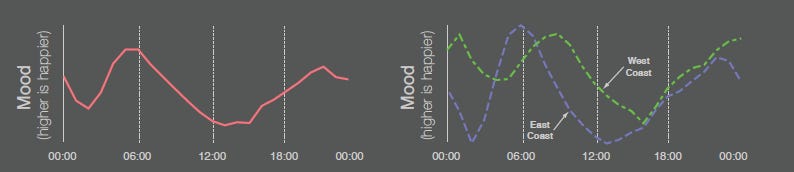
Daily Mood Cycles
Morning and Evening Peaks: People experience the highest levels of happiness during the early mornings and late evenings.
Afternoon Slumps: High energy in the morning turns into low energy in the afternoon.
Evening Relaxation: People typically have more free time in the evening. They are much more likely to be in a positive mood.
Geographic Variances: These daily cycles move by time zone and geography. For example, the U.S. West Coast generally registers a happier mood than the East Coast. However, its emotional cycle runs consistently three hours behind.
Weekly Mood Cycles
Weekend Highs: Weekends are significantly happier than weekdays. People also report much more positive moods on public holidays.
The Sunday Peak: The absolute peak of collective positive mood occurs on Sunday mornings.
The Thursday Trough: The lowest point of the week for collective mood typically hits on Thursday evenings.
Serving an advertisement to a highly frustrated consumer damages brand sentiment. Conversely, reaching an individual during a peak positive emotional state maximises ad conversion.
🎟️ 30-Day Daypart Content Planner

In What’s Actually Working in Restaurant Marketing Right Now (And What’s Not), we covered the latest digital channel performance, creative-driven Meta Ads, and how to respond to the Instagram Aggregator collapse. In this VIP edition, you’ll learn how to
📊 Why Audience Mood Governs Your Media Value
Research shows that people are much more observant and receptive when they are in a good mood. Happy individuals recall 52% of the ads they see. Unhappy people recall 35% of the ads they see. Similarly, relaxed viewers notice 54% of ads, whereas stressed viewers notice 36%.
Reaching a consumer in a positive mood improves brand favourability by 7%. It also makes them 17% less likely to mentally counter-argue your claims.
Positivity acts as a direct route to believability.
Authentic, mood-native marketing costs less while performing better. For instance, user-generated creative that matches a specific mood delivers roughly four times higher click-through rates. It also delivers a 50% lower cost-per-click than heavily polished brand ads.
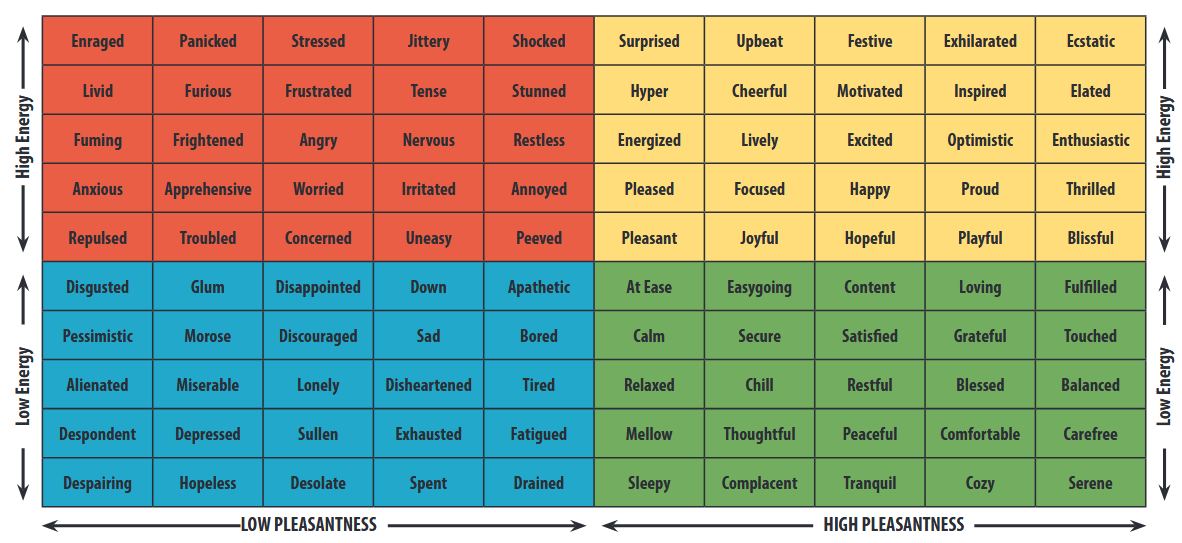
Tailoring messages based on emotional clusters increases engagement and purchase intent. This method outperforms standard demographic targeting. Messages become timely and relevant when you meet a person where they are emotionally.
Consumers want brands to help them feel safe, calm, confident, or inspired. Consistently delivering content that creates these emotional states establishes stability.
Upgrade to VIP: This Thursday, we break down the
operational frameworks to target, measure, and market
directly to fluctuating guest moods.
🛑 The Mood Marketing Pitfall Matrix
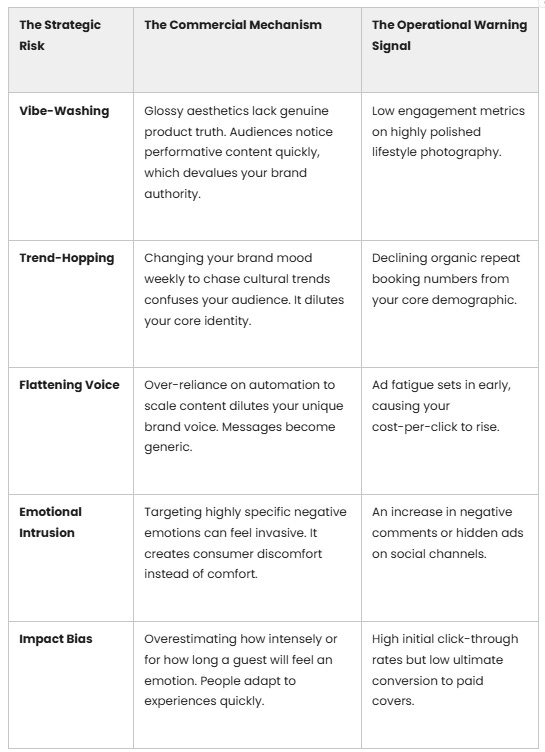


This Thursday, we deliver a full operational toolkit.
Each VIP newsletter functions as a standalone consultancy session, giving you the exact steps needed to execute mood marketing in your business.
Customer Mood Profiling: A clear method to cluster your target audience by emotional states rather than outdated demographic data.
The Measurement Framework: The precise metrics you need to track to see exactly how emotion-driven targeting impacts your actual booking volumes.
The Engagement Strategy: A practical breakdown of how to tailor your messaging for each distinct mood type to capture immediate attention.
Audience mood governs your media value. Reaching a consumer when they are receptive protects your margins and reduces your acquisition costs.
In Thursday’s exclusive VIP edition, we look at the immediate mechanics of execution. You will learn how to capture a consumer within the critical 1.5-second attention window using mood-native marketing.
I hope you’ve enjoyed the newsletter. I look forward to serving you again soon.
All the best
Dawn Gribble MIH MCIM
Hospitality Marketing Insight
Here’s to Your Success 🥂

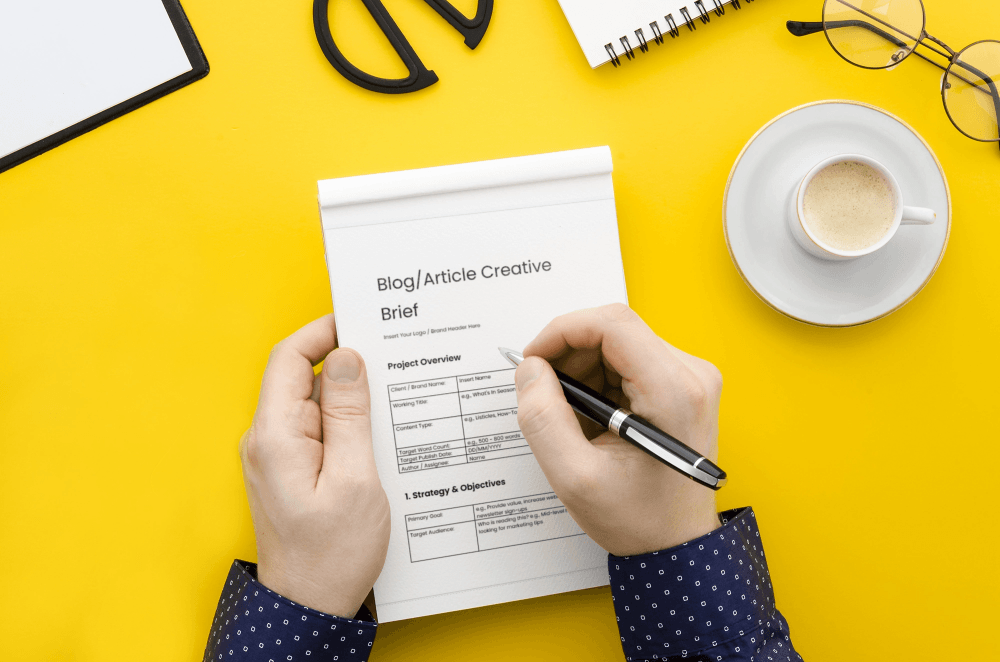
Stop wasting time on misaligned creative campaigns and use this
professional brief pack to give your marketing team a clear,
Revenue-focused direction from day one.
📚 Sources & Resources
Bryant, F. B., Chadwick, E. D., & Kluwe, K., Understanding the Processes that Regulate Positive Emotional Experience: Unsolved Problems and Future Directions for Theory and Research on Savouring, International Journal of Wellbeing (2011)
Mislove, A., Lehmann, S., Ahn, Y.-Y., Onnela, J.-P., & Rosenquist, J. N., College of Computer and Information Science † Center for Complex Network Research, Publication Unknown (2026)
Paz-Arbaizar, L., Lopez-Castroman, J., Artés-Rodríguez, A., Olmos, P. M., & Ramírez, D., Emotion Forecasting: A Transformer-Based Approach, Journal of Medical Internet Research (2025)
Predicting Human Emotions Using Weather Forecast Models: AI-Driven Mood Tracking & Analysis, LinkedIn (2026)
If you enjoyed my work, you can Buy Me a Coffee Here☕
Mood patterns directly impact booking volumes. The properties that design for how people feel before they arrive will always make a lasting impact.
The Thursday evening trough made me laugh, mostly because it feels less like data and more like a weekly confession.
This is a useful piece. It reframes timing as part of the creative work itself, which is easy to overlook when everyone is busy polishing the message.