


Part of our Hospitality Marketing Techniques series
🌞 Hello and Welcome To Hospitality Marketing Insight, I’m your host, Dawn Gribble.
Data from the hospitality industry estimates that revenue losses from abandoned bookings amount to $10 billion over the course of a full year. Each unnecessary decision, pre-ticked add-on, or late-stage price increase contributes to that total. If your booking engine pre-selects the wrong add-ons, guests do not simply untick them; many abandon the booking altogether.
This week, we are examining how default options in choice architecture directly influence conversion, trust, and revenue. This edition will help you identify where defaults are assisting the guest and where they are costing you money.
📄 On the Menu
How Defaults Protect or Erode Conversion
Default Mistakes in Content Architecture
Avoidance is a Design Outcome

Let’s Check In ☕
Choice architecture allows businesses to intentionally design how service and product options are presented in marketing material. They gently steer customers toward desired decisions, such as higher-margin purchases or healthier choices, while still preserving their freedom to choose.
By understanding how people actually make decisions, marketers can shape environments where certain choices feel natural, intuitive, and rewarding rather than forced.
On a menu or website, options might be strategically grouped or visually prioritised. In a physical space, layouts can be arranged to draw attention to particular dishes or promotions. The way categories are labelled or sequenced shapes which option feels like the obvious choice.
The same principle applies in hotels. Guests are often presented with recommended room types, highlighted packages, pre-selected dates, or suggested add-ons during the booking process.
While alternative options are available, the way those options are framed and presented subtly shapes what feels standard, sensible, or expected. These design decisions may appear neutral. In reality, they are anything but.
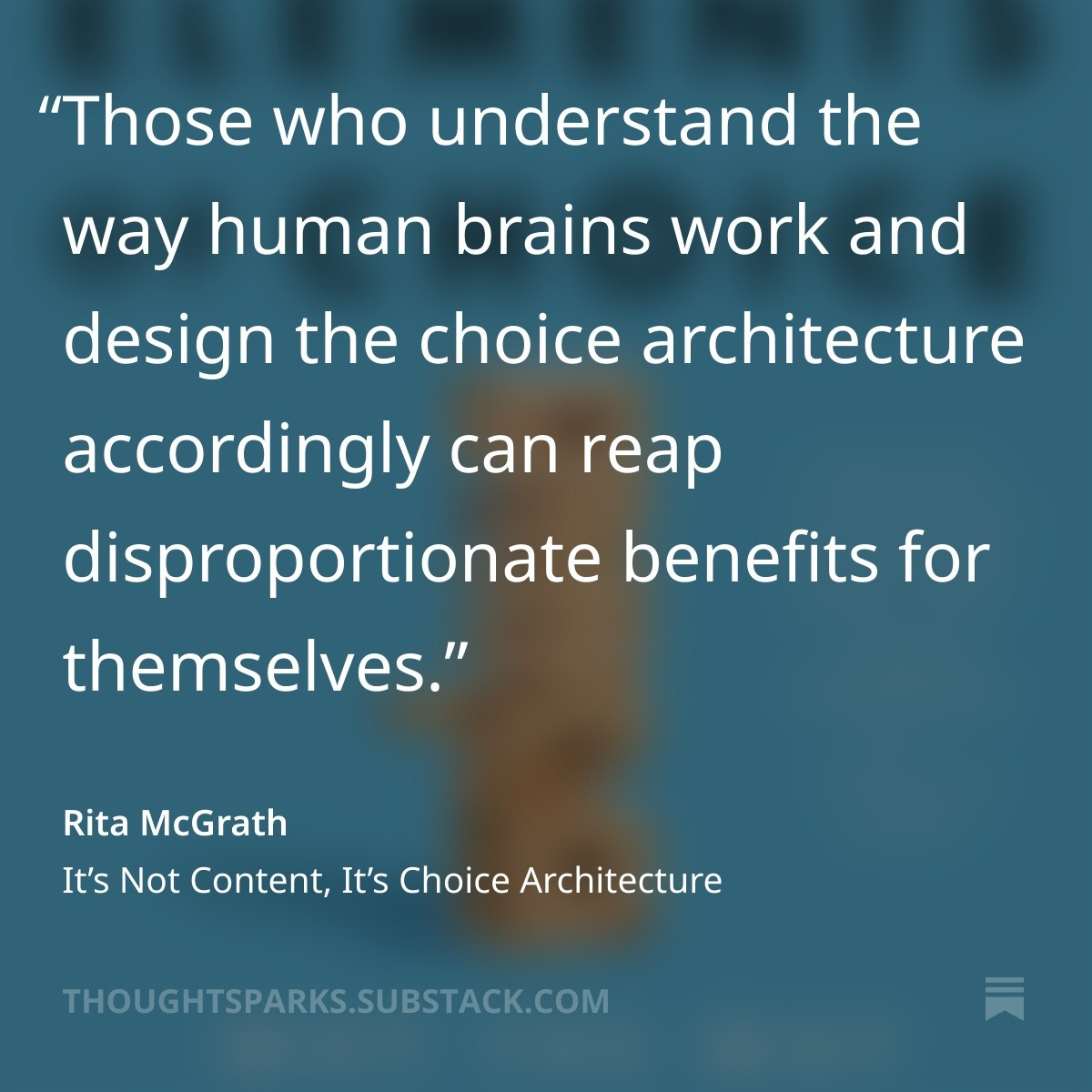
Defaults are among the most powerful tools in choice architecture, with field studies reporting adoption rates of up to 82%. Unlike other design cues, a default determines the outcome when no active choice is made.

📉 How Defaults Protect or Erode Conversion
🧠 Effort Determines Outcome
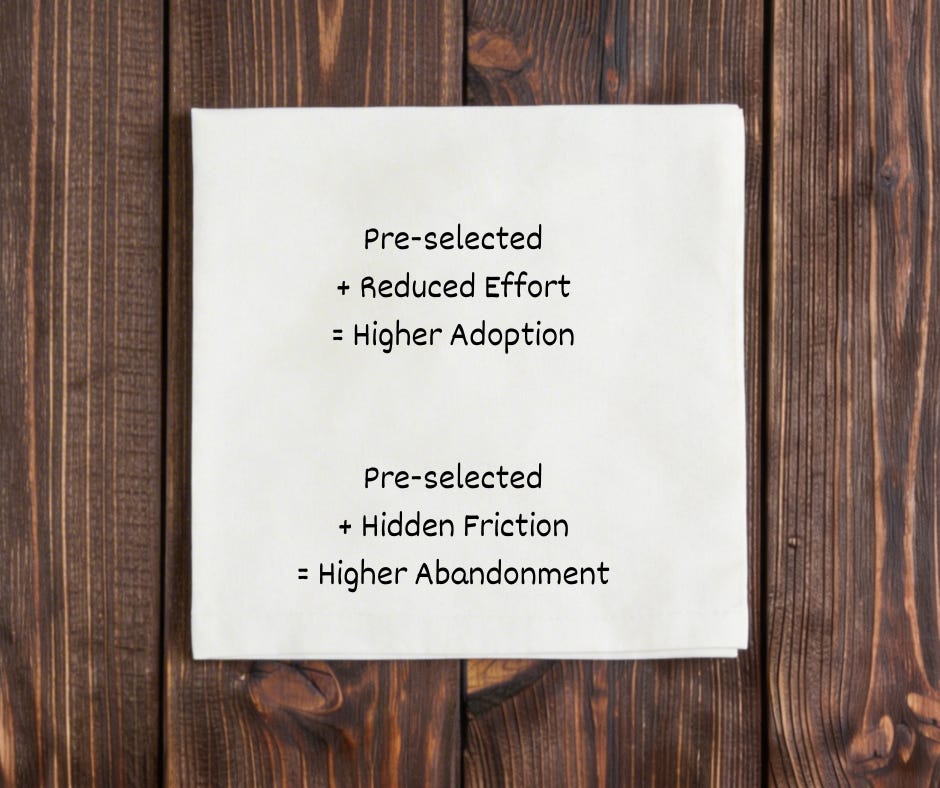
Because human decision-making capacity is limited, people tend to conserve mental energy. When one option is pre-selected, it becomes the easiest route forward. Accepting it requires no comparison, no research, and no additional cognitive load.
In hospitality, this can be seen in pre-ticked email subscription boxes, default shipping options at checkout, or automatically selected pricing tiers. Changing it requires deliberate attention and cognitive effort.
A recent study on choice behaviour found that “ease and endowment” accounted for between 60% and 94% of the total default effect, far outweighing endorsement alone. Most people stick with the default not because they believe it has been recommended, but because changing it requires effort.
Opting out requires interruption and evaluation, even if it only requires a simple mouse click; most participants remained with the default.
In a hotel booking journey, a pre-selected recommended room or default check-in time reduces the number of decisions a guest must actively process. As decision fatigue sets in across multiple screens, many proceed with the suggested option because the path forward is already defined.
In a restaurant setting, a pre-selected side dish within a set menu or a default drinks pairing signals the establishment’s preferred combination. Many diners interpret that configuration as the standard choice.
Several studies illustrate the impact of defaults in hospitality marketing:
When diners were offered a doggy bag by default rather than having to request one, uptake increased from 27% to 74%.
When vegetarian dishes were positioned as the default option, selection increased from 14.03% to 49.3% across all diners.
Structuring the desired outcome as the easiest outcome materially shifts behaviour.
📡 Guests Read Defaults as Signals
When people are faced with a choice, a pre-selected option signals intention. They assume the brand is communicating something: this is recommended, this is the best choice for you, this is what most people select.
Highlighting a “Most Booked Room” or “Best Value” tier increases conversion rates by 18% to 20% compared to neutral lists. Guests interpret the label as social proof, reducing uncertainty.
In restaurants, labelling dishes as “Chef’s Special” or “Recommended” increases overall profitability by 15% to 20%. Technomic research shows that 59% of consumers are more likely to purchase an item labelled “Seasonal” or “Recommended.”
For hospitality marketers, defaults and labels do more than simplify decisions. They communicate standards and shape revenue mix.
But the messaging and defaults must feel credible. If an upgrade or bundled add-on looks engineered purely to increase spend, guests remove it, downgrade, or abandon the booking altogether.
🛡️ Steering Choice While Protecting Trust
Hospitality businesses face a dilemma. They must influence guest behaviour to protect margins, reduce waste, and meet sustainability targets. Overt control risks backlash, abandonment, and long-term trust erosion.
Libertarian paternalism is the principle that behaviour can be steered without removing freedom of choice. The guest can opt out. The default guides the starting point, while the alternative remains visible and accessible.
At Walt Disney World restaurants, fruit and water were set as the default in children’s meals, while fries and soda remained available upon request. Acceptance of the healthier sides ranged between 48% and 66%, resulting in a 21% reduction in calories and a 43% reduction in fat per meal.
At a hotel level, framing matters. A standard in-room message, such as “Help save the environment”, yields a towel reuse rate of 37.2%. When the message instead states that “75% of guests who stayed in this room reused their towels,” reuse increases to 49.3%.
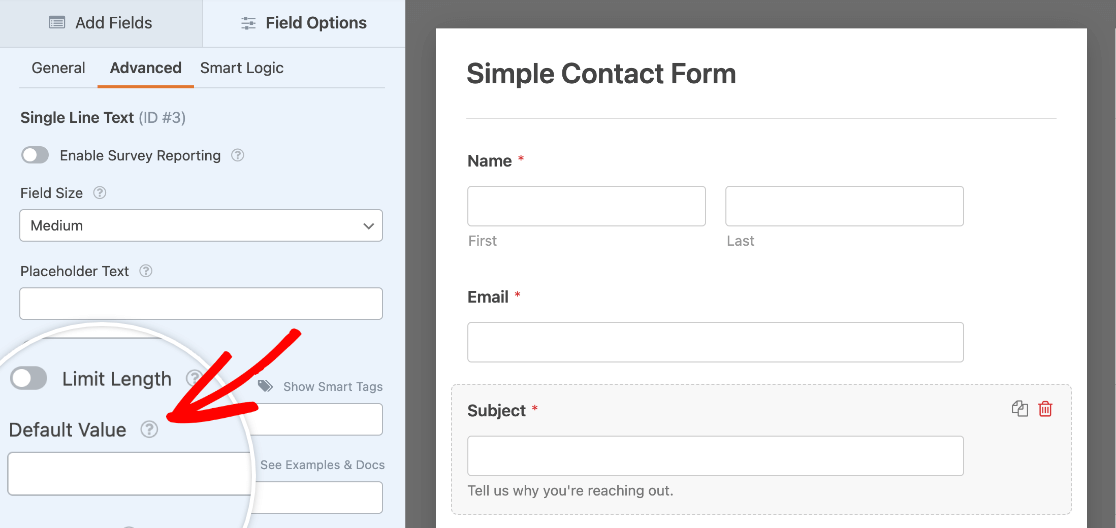
Sustainable housekeeping defaults can be pre-selected during the booking journey, with a simple toggle allowing guests to choose daily, three-day, or on-request service.
Defaults can drive sustainability and profitability, but only while guests can comfortably override them. Remove that override, and guidance becomes coercion.
Defaults can increase adoption by up to 82%, or drive abandonment and complaint risk. The Ethical Upsell Default Framework gives you a clear, five-step recipe to configure booking engines and menus properly, in under three hours. Structured steps. Defined KPIs. Clear guardrails. Drops Tuesday 3rd March

🚫 Default Mistakes in Content Architecture
The very mechanisms that make defaults effective also make them risky when misapplied. In hospitality environments where multiple decisions are layered together, small design choices can compound quickly.
🛑 When Helpful Becomes Overreach
Overusing defaults occurs when multiple decision points are pre-configured in ways that consistently favour the business. Individually, each may appear reasonable. Together, they can feel engineered.
In a hotel booking journey, a mid-tier room may be pre-selected, alongside a flexible rate, breakfast, late checkout, and travel insurance.
In restaurants, premium sides, beverage pairings, or automatic service charges may operate in the same way.
The Baymard Institute reports that 48% of online shoppers abandon their cart due to extra costs that feel unexpected or excessive. In hospitality, where add-ons accumulate quickly, perceived overreach can increase abandonment and dissatisfaction.
PwC’s Global Consumer Insights Survey finds that 63% of consumers say trust influences purchasing decisions. A default increases revenue when it feels helpful. It increases abandonment when it feels engineered.
❓When the Guest Cannot Meaningfully Choose
Defaults become ethically problematic when their effectiveness relies on a lack of awareness rather than genuine preference.
If a guest does not realise that an upgrade, insurance option, or service charge has been pre-selected, the issue is transparency. A choice cannot be meaningful if the guest does not know it has been made.
Separately, if a guest does recognise the pre-selection but changing it requires disproportionate effort, for example, navigating back multiple screens, locating a small toggle, or reconfiguring an entire booking, the issue becomes friction.
In both cases, the guest may proceed with the default. The difference is how they feel about it afterwards.
In practice, this can appear as:
Pre-ticked marketing consent boxes
Automatically applied flexible rates at a higher price point
Bundled extras that require expanding secondary menus to remove
Add-ons hidden behind collapsed sections or low-contrast links
Additional confirmation steps that discourage modification
While alternatives technically exist, they may not be meaningfully accessible.
Businesses sometimes implement profit-maximising defaults that consistently favour the highest-margin configuration. This might include:
Defaulting to fully flexible rates when a non-refundable option would meet the guest’s needs
Pre-selecting premium room categories for price-sensitive segments
Automatically attaching add-ons that increase total cost without increasing perceived value
The issue is not whether the business benefits. The issue is whether the guest can clearly see, understand, and comfortably change the pre-selected option.
If a guest can’t clearly see what’s been selected, or can’t change it without effort, it isn’t a fair default.
🏃♀️Avoidance Is a Design Outcome
Choice architects sometimes implement a default without considering how easily the guest can bypass the entire decision point. When alternatives exist nearby, physically or digitally, the guest does not have to resist the default. They can avoid it altogether.
In a field study conducted in a buffet-style restaurant, vegetarian meals were set as the default at the grill and pizza stations. Guests could still request meat, but they had to actively ask for it. At those stations, vegetarian uptake tripled.
However, overall sales at those stations fell by 30.1%.
Because diners could move freely within the buffet, many simply walked to other stations where meat remained the default. This is the avoidance effect.
When a default increases friction within one pathway, and an easier alternative exists elsewhere, guests often choose the alternative rather than comply. In digital environments, this might mean exiting the booking flow to compare competitors. In physical spaces, it might mean shifting to another counter, another category, or another supplier.
The mistake is not the default itself. The mistake is failing to assess whether the surrounding environment makes avoidance easier than acceptance. A default only works when the cost of leaving is higher than the cost of staying. If the guest can simply walk away, they often will.
📅 In the upcoming VIP Edition
🥄 Free subscribers get the ingredients.
👩🍳 VIP members get the recipe and method.
The Ethical Upsell Default Framework shows you how to configure booking engines and menus to increase conversion without damaging trust.
VIP members can also email me directly with quick implementation questions; and enjoy access to 100+ Hospitality Marketing Resources


Defaults are never neutral. They either reduce friction, reinforce trust, and guide profitable decisions, or they create resistance and erode confidence.
Used well, they protect conversion and shape revenue mix. Used poorly, they compound abandonment and undermine credibility.
The difference is not whether you use defaults. It is how deliberately you design them.
All the best

Dawn Gribble MIH MCIM
Hospitality Marketing Insight
Here’s to thoughtful architecture and stronger margins. 🥂

🧰 The Psychology of Food Presentation

When it comes to dining, taste is undoubtedly the top priority. But did you know how food is presented can also significantly impact customer choices?
❌ The Menu Mistakes Draining Your Margins

Discover how strategic menu engineering improves profitability, buyer decisions, and brand perception—without changing your operations or raising your prices.
❓ Is Your Buyer Journey Costing You Customers?

Map your customer’s journey with strategic tools and emotional insight—ideal for hospitality marketers who want better results.


📚 Sources
Afonso, W., & Mohr, Z., More than a wink and a nudge: examining the choice architecture of online government budget simulations, Behavioural Public Policy (2024)
Ali, N., Lynn, E., Mendes da Costa, D., O’Reilly, P., & Worsdale, R., Tricks of the trade How online customer journeys create consumer harm and what to do about it, Citizens Advice (2026)
Blumenstock, J. E., Callen, M., & Ghani, T., Why Do Defaults Affect Behavior? The American Economic Review (2018)
Bucher, T., Collins, C., Rollo, M. E., McCaffrey, T. A., De Vlieger, N., Van der Bend, D., Truby, H., & Perez-Cueto, F. J. A., Nudging consumers towards healthier choices: a systematic review of positional influences on food choice, Cambridge University Press (2016)
Building Better Booking Systems, The Decision Lab (2026)
Chen, Z., Four-stage framework of tourism decision-making in the social media era, Journal of Hospitality and Tourism Technology (2025)
Demeter, C., Fechner, D., & Dolnicar, S., Progress in field experimentation for environmentally sustainable tourism – A knowledge map and research agenda, Tourism Management (2023)
de Visser Amundson, A., de Vos, J., & Gallicano, R., Go with the flow: How changing the default can drive consumer choice for climate-friendly menu options, Food Quality and Preference (2025)
Ekstrom, V., Digital Choice Architecture in Medical Education: Applying Behavioral Economics to Online Learning Environments, JMIR Medical Education (2026)
Evans, A., The Illusion of Choice – Choice Architecture, FlowState (2025)
Filimonau, V., Lemmer, C., Marshall, D., & Bejjani, G., ‘Nudging’ as an architect of more responsible consumer choice in food service provision: The role of restaurant menu design, Journal of Cleaner Production (2017)
Hollingworth, C., The architecture of choice, The Marketing Society (2013)
Londakova, K., Whincup, E., & Hanna-Amodio, A., How to reduce food waste using three low-cost nudges, Behavioural Insights Team (2023)
McGrath, R., It’s Not Content, It’s Choice Architecture, Thoughtsparks (2026)
Thaler, R. H., & Sunstein, C. R., Libertarian Paternalism, The American Economic Review (2003)
Thaler, R. H., Sunstein, C. R., & Balz, J. P., Choice Architecture, Working paper, University of Chicago (2010)
van der Heijden, K., Social norms can increase towel reuse in the hospitality industry, Green Nudges (2026)
What Ethical Considerations Arise When Using Choice Architecture to Influence Diet?, Sustainability Directory (2024)
WPForms How to Add Default Values for Form Fields (2025)
Ready to go deeper? Expense a Subscription for just £15 a month or £150 for the year. The VIP Edition unlocks advanced strategy, exclusive data and practical playbooks.
Defaults decide revenue before the guest ever thinks they chose anything. When you pre-tick the upgrade, bundle the add-ons, and hide the downgrade, you are testing how much pushback a guest will tolerate before they leave. Some will pay. Some will bounce. Both remember. The real work isn’t adding more defaults. It’s auditing which ones earn their place and which ones don’t. Design it so the helpful option is obvious and the exit is easy. Anything else is short-term money.