



As we look toward June, the hospitality landscape is being shaped by a guest who is paradoxically more reliant on technology but more demanding of grounded and human-led authenticity. While the start of the year carried a sense of momentum, the current sentiment has cooled. This means your June customers are feeling a sense of caution and are significantly more careful with their discretionary spend than they were last quarter
This report provides the high-fidelity intelligence required to navigate this turbulent environment, ensuring your brand remains the logical first choice by aligning your digital presence with new discovery behaviours and authentic human proof.
📄 On the Menu
Strategic Insights
Buyer Behaviour
June 2026 Marketing Dates
Let’s Check In ☕
Join thousands of hospitality leaders getting the exact strategies to drive bookings, demand, and revenue every week.
Here’s a template to expense a subscription

♞ Strategic Insights
This strategic update explores the shifting tension between algorithmic trust and the demand for human authenticity, providing the data-driven frameworks you need to capture the attention of an increasingly selective and context-driven consumer.
⚖️ The New Logic of Consumer Spending
The global tourism market is currently navigating a significant displacement of capital. While geopolitical conflict in the Middle East is projected to result in regional losses between $34 billion and $56 billion this year, the impact is not limited to geography. We are seeing a tightening of disposable income driven by the rising cost of fuel and domestic energy. This creates a dual pressure: it is more expensive for guests to reach a destination, and more expensive to maintain their lifestyle once they return home.
Consequently, guest behaviour is now defined by a “Trade Down to Trade Up” logic. Research shows 59% of Gen Z consumers are actively reducing spend on everyday staples to afford higher-priced lifestyle items. This is not a withdrawal from the market; it is a strategic reallocation. People are buying private-label groceries or using discount retailers specifically to protect their ability to book premium hospitality experiences. The travel sector remains resilient in the face of these overheads, with 34% of consumers planning to spend more in 2026 than they did last year, while 53% plan to spend about the same amount.
However, these guests are becoming highly selective to offset the rising cost of living. They may book a luxury suite or an exclusive excursion while simultaneously cutting costs on mid-range ancillaries that offer little perceived emotional return. The commercial danger lies in the “average” offering. As guests “value engineer” their trips, they seek either the absolute baseline of functional value or the high-end “hero” experience. Venues that sit in the undifferentiated middle risk becoming invisible. You can observe this trend in your own data by looking for high demand for entry-level rooms and top-tier suites, with a stagnation in mid-range bookings. When guests unbundle their stay to protect their luxury moments, the traditional “average guest” model ceases to be a reliable metric for revenue projection.
🕵️♂️ The Fake Review Epidemic
The hospitality sector is currently facing a systemic trust failure. With 89% of consumers relying on reviews for purchasing decisions, trust remains the primary currency of conversion. Yet, this currency is being eroded by a volume of fraudulent content that has become difficult for guests to navigate. This creates a direct commercial threat; when guests cannot verify the truth of an experience, they hesitate to book.
The scale of this issue is significant and accelerating. TripAdvisor rejected or removed more than 2.7 million fraudulent reviews in 2024, a notable climb from 2 million in 2023 and 1.2 million in 2022. While 54% of these removals were due to “review boosting,“ over 39% were attributed to independent member fraud. The arrival of generative AI has further complicated the environment, with 214,000 AI-generated reviews removed last year alone. These automated posts contribute to a “sea of sameness”—polished and grammatically perfect, but lacking the specific, messy details of a real human experience.
Consequently, guests are becoming cynical. They are beginning to discount traditional five-star scores entirely, looking instead for “raw” or “ugly” truths in unedited video or community forums to find evidence of real operations. This is particularly critical as the epidemic extends to malicious sabotage, where independent operators are targeted by coordinated 1-star review attacks designed to damage reputations.
This behaviour change is now mirrored by a move in law. The Competition and Markets Authority (CMA) has moved into a phase of direct enforcement under the Digital Markets, Competition and Consumers Act 2024. The CMA is actively investigating major platforms and brands for practices that mislead the public. Investigations include:
Just Eat: Under scrutiny to determine if the platform inflated restaurant star ratings, providing a misleading picture of quality.
Pasta Evangelists: Accused of offering customers undisclosed discounts in exchange for 5-star reviews on delivery apps.
Feefo: Investigated for allegedly failing to publish negative reviews, preventing a true reflection of business performance.
This legislation makes posting fake reviews, offering undisclosed discounts for 5-star ratings, or manipulating review visibility strictly illegal. With the CMA now authorised to impose fines of up to 10% of global turnover, the integrity of a venue’s digital reputation has moved from a marketing concern to a significant balance sheet risk.
⚠️ Backlash Against Gimmicky Marketing
Consumers are becoming increasingly frustrated with superficial marketing tactics that attempt to mask a lack of value. Recent sentiment analysis regarding major global brands shows a growing rejection of “viral” products designed for aesthetics rather than quality. For many guests, paying a premium for a product that superficially elevates their ego—such as a £6 drive-through coffee—feels increasingly unjustified when the cost of raw ingredients is so low.
This backlash is driving a move toward independent, family-run establishments where the value proposition is grounded in genuine hospitality and better portions. For the same price as a single corporate beverage, guests are finding they can often get a pot of tea and cake with full table service.
This preference highlights a widening “attention gap” where traditional branding and recognition are no longer enough to drive a sale. Among younger demographics, even when a brand is recognised, only 33% of Gen Z express interest in learning more. The focus has evolved from brand status to practical utility and usage occasions.
There is also a significant regulatory risk when marketing gimmicks cross into irresponsibility. The Advertising Standards Authority recently banned a campaign for Fireball whiskey that used a darts-themed double entendre alongside overflowing shot glasses. The ruling stated that the “clever” gimmick breached social responsibility codes by serving as a call to action for excessive drinking.
For operators, the lesson is clear: relying on superficial trends or provocative wordplay is becoming a liability. Success now requires proving worth through substance rather than relying on an “Instagrammable” veneer that guests increasingly view as a cover for poor value.

Do you need the actionable tools and in-depth insights your team needs to increase your return on marketing investment?
🛍️ Buyer Behaviour
Now we explore the growing “attention gap” and the specific cultural triggers that move modern buyers from passive brand recognition to an active booking.
🐕 Pet Economy Opportunity
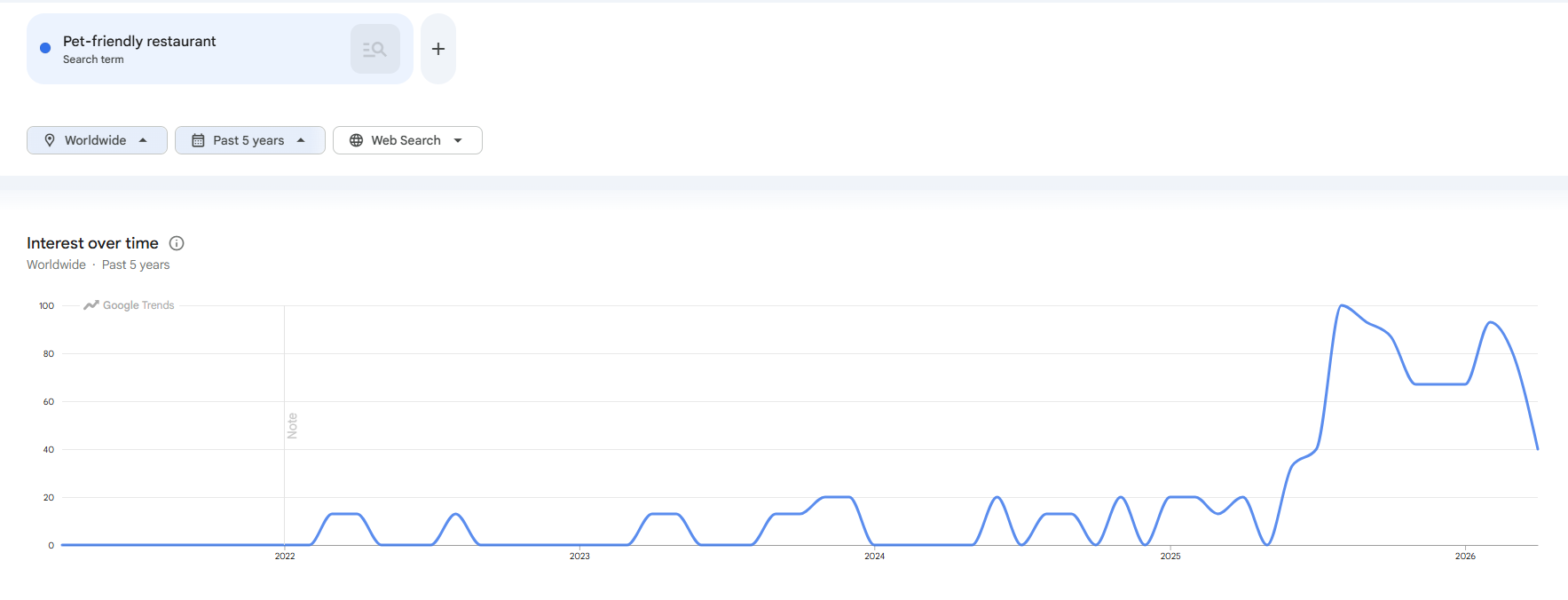
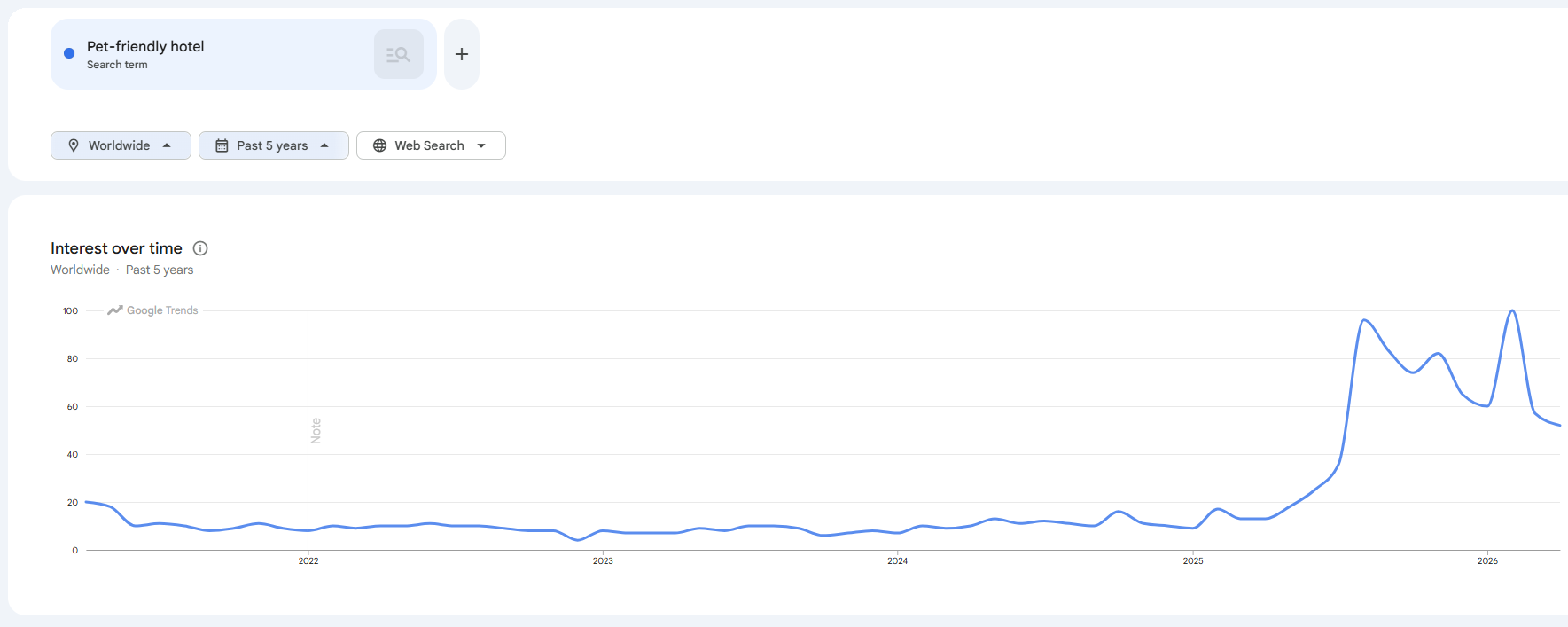
Domestic travel trends are changing, with energy costs remaining a concern for 39% of the market. Guests are choosing stays closer to home. This move supports the staycation pet economy. This sector currently grows at a 9% CAGR.
Data show that 75% of pet owners book only pet-friendly venues. These guests are high-value. On average, they spend 20% more on-site than guests without pets.
If your pet-friendly status is not visible, you lose these bookings before the guest even reaches your website. Search filters on booking platforms will remove your venue from the results. You lose the room revenue and the higher secondary spend on food and beverage.
What to check
Your “pet-friendly” pages have high bounce rates.
Competitors are appearing for “dog-friendly [your location]” searches while you are not.
Your booking engine does not allow guests to add a pet during the initial reservation flow.
🔍 How Guests Find You Now
Artificial intelligence now dominates the start of the travel journey. Many guests use tools like ChatGPT, Gemini, and Claude to find ideas. 69% of AI users use these platforms to discover new ideas, and 75% use them to find recommendations. We see a clear trend where guests trust advice more when they believe it comes from an AI or a large language model. For operators, this means your booking systems must work perfectly, and your pricing must be clearly based on data.
However, you should not let software do all the talking. While guests trust programs to sort information, Google is penalising content made only by AI. Human-written pages are 8x more likely to rank in the number one spot and hold that position in 80% of searches. If you are updating your local SEO or menus, ensure they have a human touch.
🏳️🌈 Building Authentic Inclusion
As the June planning window approaches, it is vital to avoid the “checkbox trap” regarding inclusive marketing. Research proves that genuine inclusion drives a 5% increase in short-term sales and a 16% increase in long-term sales. Brands that build inclusion into their service culture see a 62% higher likelihood of being a customer’s first choice. Your guests are knowledgeable. They can tell the difference between a brand that appears only for June and one that maintains an inclusive culture year-round.
Authentic representation is a significant commercial driver. Featuring LGBTQ+ couples and families in everyday marketing, such as dining or leisure activities, consistently performs better than seasonal rainbow campaigns. This approach can lift short-term sales by 15% and brand equity by 44%. 68% of consumers feel more positive about companies that include LGBTQ+ individuals in their communications as a normal expectation.
Safety is a critical metric for the bottom line. Over 40% of LGBTQ+ travellers cancel trips if they believe a destination or venue is not friendly. You can signal that your venue is safe by highlighting staff training and maintaining partnerships with community organisations throughout the year.
Operational details also matter for conversion. Review your booking forms to ensure they use gender-neutral language. For example, ask for a “partner” rather than a “husband” or “wife.” Use testimonials or content from real LGBTQ+ guests to build a reliable connection.
Finally, consider supporting events outside of June, such as local community gatherings or film festivals. Authentic inclusion is not a seasonal promotion; it is a consistent commitment to your guests.

📅 June 2026 Marketing Calendar
June 1 World Milk Day
June 3 World Cider Day
June 4 National Cheese Day
June 5 National Donut Day
June 7 National Chocolate Ice Cream Day
June 8 World Oceans Day
June 10 National Iced Tea Day
June 12 International Falafel Day
June 13 World Gin Day / National Rosé Day
June 14 National Bourbon Day
June 15 Beer Day Britain (UK)
June 16 World Tapas Day
June 18 International Picnic Day / Sushi Day
June 19 Juneteenth (US) / National Martini Day
June 20 National Vanilla Milkshake Day
June 21 Father’s Day (UK, US, CAN)
June 21 Summer Solstice
June 22 National Onion Ring Day
June 24 National Pralines Day
June 26 National Cream Tea Day (UK)
June 27 National Sunglasses Day
June 28 National Ceviche Day
June 30 Social Media Day

Your VIP Intelligence Package includes:
The June Strategy Worksheet: A downloadable, step-by-step planner to map out your month.
Marketing Campaign Deconstruction: We take apart a successful hospitality campaign to show you exactly how to replicate it.
Mood Board & Aesthetics: A visual guide to the trends winning the attention of the selective spender.
Social Media Trends: The specific content formats, trending audio, and hashtags for June.
AI Prompt of the Month: A ready-to-use framework to automate your content creation.
Food & Beverage Trends: The specific flavours and serves are currently gaining momentum.
The “Do & Don’t” Checklist: A high-speed guide to what to prioritise this month.
Platform Updates: Critical changes to Google, Meta, and TikTok affecting your visibility.

Navigating these changes in consumer behaviour is a constant requirement for any modern operator. We have looked at why guests are now value engineering their budgets and why the middle ground in hospitality has become a commercial risk. Whether you are addressing the fake review epidemic or adjusting for the new discovery funnel, the priority remains the same: substance over veneer.
The data shows that guests are looking for the human proof in your operations to justify their spend. As you review your plans before the next trading month starts, I hope these insights help you focus your resources where they will have the most significant impact on your margin.
All the best

Dawn Gribble MIH MCIM
Hospitality Marketing Insight
Here’s to Your Success 🥂
❓ Got a question about this issue?


📚 Sources
2026 Social Media Benchmarks Report I Emplifi, Emplifi (2026)
Americans Prioritize Comfort and Bonds Over Trendy Vacation Spots, Survey Discloses, Hotel News Resource (2026)
Coley, B., KFC Introduces ‘Value Feast’ to Deliver Bigger Meals at Lower Prices, QSR Magazine (2026)
Convenience as the New Consumer Currency, Mintel (2026)
Goodwin, D., Human content is 8x more likely than AI to rank #1 on Google: Study, Search Engine Land (2026)
Goodwin, D., Yahoo CEO: Google AI Mode is the biggest threat to web traffic, Search Engine Land (2026)
Guru, S. J. G., Foodservice Solutions: Gen Z Eats on the Move: Why Value, Convenience, and Brand Trust Are Reshaping Every Meal Occasion, Foodservice Solutions (2026)
Just Eat under investigation for fake reviews, The Caterer (2026)
Kong, The Top 10 Reasons Customers Leave a Brand or Business, 4Hoteliers (2026)
Lee, A., Google Offers Live Translation to Every iPhone, No AirPods Required, Skift (2026)
Li, S., Tourism impacts in Middle East from Iran War, Oxford Economics (2026)
Logg, J. M., Minson, J. A., & Moore, D. A., Algorithm appreciation: People prefer algorithmic to human judgment, Organizational Behavior and Human Decision Processes (2019)
ltd, R. and M., Pet Friendly Hotel Market Report 2026, Research and Markets (2026)
Meta is switching up its ad transparency labels in-stream, Social Media Today (2026)
Panera, Panera Bread Launches New Energy Refreshers and Frescas, Panera Bread (2026)
Practice, A. S. A., Sazerac UK Ltd, ASA Rulings (2026)
Research Finds Luxury Travel Demand Growing Among Aspiring Travelers, Hotel News Resource (2026)
Snap to Suitcase: The Role of Snapchat in the Travel Journey, Snapchat for Business (2026)
Survey: Travelers Plan More Trips in 2026, AI Use in Planning Rises, Hotel News Resource (2026)
Sweney, M., Five firms including Autotrader and Just Eat investigated over fake review failings, The Guardian (2026)
The Business Case for Dog-Friendly Hospitality: Generate 28% More Annual Revenue, The Roch Society (2025)
The Business of Fandom, Reddit x Sensor Tower (2026)
The Pinterest Men Trend Report: How Gen Z and Millennial men are redefining masculinity through style, substance, and self-care, Pinterest Newsroom (2026)
The state of inclusive marketing in 2025, HubSpot (2025)
Tripadvisor continues fight against fraudulent reviews as incidences increase, PhocusWire (2026)


Marketing effort means nothing if your booking journey leaks revenue. The Hospitality Marketing Hub provides the exact operational tools to fix those leaks today. These frameworks are tested inside active hospitality venues to ensure they protect your margins.
These tools deliver immediate commercial outcomes:
Standardise guest recovery to turn complaints into repeat visits.
Evaluate your digital visibility to capture more direct bookings.
Manage your review responses to protect brand trust and conversion rates.
Measure campaign performance to stop wasting your marketing budget.
Deploy these frameworks before your next seasonal campaign goes live.
The 'Trade Down to Trade Up' logic is such a sharp observation. We’re definitely seeing guests become more selective, prioritizing those high-impact 'hero' moments over the undifferentiated middle ground.