


When did review management become risk management? Why are we being penalised for doing everything right? And what’s the true financial impact of a review attack?
I’m your host, Dawn Gribble, and in this edition of Hospitality Marketing Insight, we’re exploring what happens when review systems are weaponised and start turning against the very businesses they were built to support.
This is no longer reputational damage. It’s revenue loss.
For a restaurant or hotel, a drop of even 0.5 stars on Google or TripAdvisor can lead to a 5–9% decrease in revenue.
In 2026, Google’s local search algorithm penalises businesses that fall below 4.0 stars. Drop to 3.9, and you may vanish from the Local 3-Pack.
When your rating is low, your Cost Per Click (CPC) for ads often skyrockets. Search engines and social platforms charge “low-quality” brands more because users are less likely to click on them.
Even operators doing everything right are seeing consequences they didn’t cause.
📄 On the Menu
⚠️ Why Reviews Now Create Risk
💣 What Review Bombing Looks Like in Practice
💸 Review Extortion and Digital Blackmail
⚔️ When Competitors Weaponise Reviews
💰 Paying for Positive Reviews
👀 Why Some Fake Reviews Are Harder to Spot
✍️ How Review Language Is Engineered
🏛️ How Review Platforms are Responding
🗂️ How Guests Interpret Review Scores
📉 Why Good Operators Are Vulnerable
🗝️ The Review Risk Management Playbook – VIP Exclusive
Let’s Check In ☕

Managers spend an average of 3–5 hours per week dealing with review disputes, reporting fake accounts, and responding to trolls. For a high-level manager, that’s thousands in lost time that should be spent on guest experience. And for good reason.
Brand equity now depends on positive guest experience in reviews, which are the dominant factor in hotel selection at 51%, outweighing location at 48% and price at 42%. Trust is fragile: 63% of consumers will lose confidence in a business after reading mostly negative written reviews.
33% of restaurant-goers will not eat at an establishment with a 3-star rating. A drop from 4.5 to 4.1 can drive customer loss before guests ever reach the door. At that threshold, venues are filtered out of shortlists and top results — a collapse insiders describe as a “death blow” to demand.
This is why small changes in rating have outsized commercial consequences.
Studies indicate that a 1% increase in a hotel’s online reputation score leads to a 0.89% increase in ADR, a 0.54% increase in occupancy, and a 1.42% increase in RevPAR.
Google reviews function as a direct ranking signal. Listings with 4+ star ratings receive 3× more clicks than those with lower ratings.
⚠️ Why Reviews Now Create Risk
Review systems were meant to reward great service. But in 2026 they’ve become a high-stakes pressure point, where small volumes of negative activity can trigger ranking loss, visibility suppression, and sudden drops in bookings that take months to reverse.
Competitors are manipulating review velocity and keywords to distort local search. Scammers are threatening coordinated one-star attacks to extract money or freebies. Guests are learning they can use the threat of a bad review to force discounts, upgrades, or refunds.
This is how review systems are being actively abused — and why some risks are far more dangerous than others.
💣 What Review Bombing Looks Like in Practice
Review bombing is a coordinated effort by a group of people, or a single person using multiple accounts, to flood a product, service, or business with a high volume of negative reviews in a very short time. The goal is simple: to tank the overall rating and damage the target’s reputation or visibility.
Review bombing is usually triggered by a viral event or a controversial policy — for example, a “no kids” policy at a café or a misunderstanding with a staff member. It can involve hundreds of people who have never visited the property, leaving 1-star reviews.
A recent case involved a micro-influencer who was invited to a restaurant for a promotional shoot. After being insulted by the chef and told her following was “worthless,” she left in tears and shared the experience on TikTok. The post went viral. Within 72 hours, she had gained 180,000 new followers and triggered a wave of backlash against the business.
The restaurant was review-bombed across Google, TripAdvisor, and OpenTable. Reviews were suspended, bookings collapsed, and the venue was forced to close. The chef was dismissed, and the business entered a complete rebrand. Between lost revenue, reputational damage, and rebranding costs, the impact is likely to run into six figures, all stemming from one unmanaged incident.
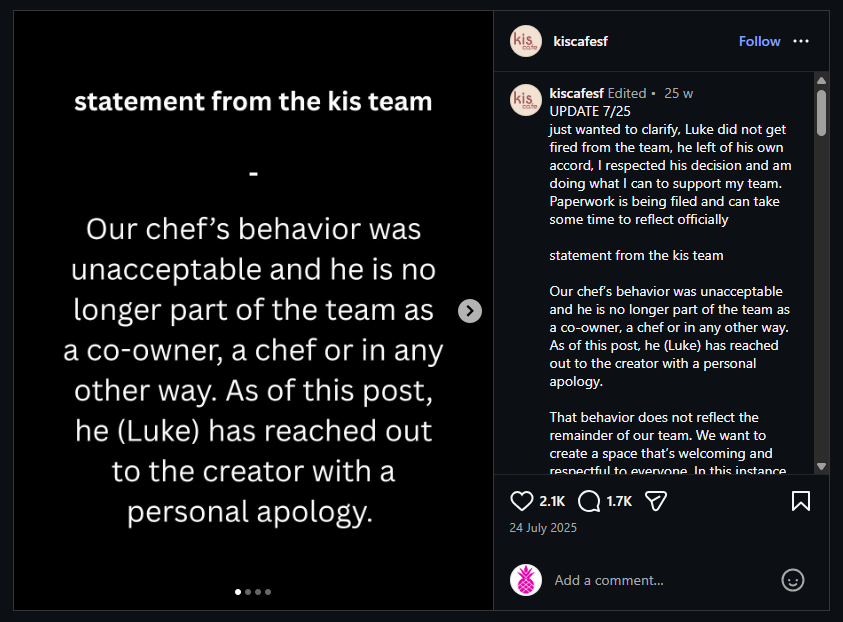
Individual interactions now carry disproportionate weight. One poorly handled moment can escalate beyond the original exchange and create brand damage that is costly to reverse.
The use of generative artificial intelligence (AI) tools has lowered the barrier to entry for bad actors, making it easier to generate large numbers of realistic but fake reviews quickly and cheaply.
💸 Review Extortion and Digital Blackmail

Review extortion is a criminal scheme where scammers use the threat of a review bomb to demand money, gift cards, or free services. It’s a form of digital blackmail.
A scammer posts a wave of 1-star reviews, then contacts the owner via WhatsApp, email, or Telegram. They claim responsibility and offer to remove the reviews in exchange for a “ransom” — often in cryptocurrency or gift cards.
If the owner refuses, the scammer may escalate the attack, doubling the number of fake reviews or targeting the business’s other locations. Unlike standard review bombing, which is often driven by anger or protest, extortion is purely transactional.
Some guests attempt extortion face-to-face. A diner or hotel guest may demand a free meal or room upgrade and make the threat explicit: “Give me this, or I’ll leave a scathing review on TripAdvisor.”
In many cases, malicious reviews are then used to support financial disputes, often to justify chargeback fraud. A guest stays at a hotel or eats a meal, then posts a 1-star review claiming “food poisoning” or “bedbugs.” They use the review as evidence in a credit card dispute. The business loses the revenue, absorbs the cost of labour or ingredients, and pays a chargeback fee — usually $25 to $100 per incident.
Frequent chargebacks and repeated public health claims can also trigger a rise in liability insurance premiums, with some businesses seeing increases of 15–20% after sustained review-related incidents.
At this point, the damage is no longer limited to reviews or refunds. It begins to affect the wider risk profile of the business. And this is only one side of the problem.
Turn guest reviews into high-converting marketing hooks.
Instead of guessing what copy will persuade a guest to book, mine the exact vocabulary your past guests use in real reviews. The AI Review Miner is a done-for-you team workshop kit with copy-and-paste AI prompt scripts and editable presentation decks to extract raw guest voice into compelling headlines.
⚔️ When Competitors Weaponise Reviews
Reviews were designed to reflect guest experience. Increasingly, they are being used as a competitive weapon. In hospitality, some competitors are no longer competing on service, price, or experience. Instead, they manipulate review systems to make their businesses appear more trusted, more popular, or more relevant than they really are.
These practices don’t just inflate one venue’s reputation. They distort the environment for everyone else, shifting attention, clicks, and bookings away from operators who are playing by the rules.
💰 Paying for Positive Reviews
Incentivised reviews involve offering free items, discounts, or upgrades in exchange for positive ratings. When competitors do this at scale, they can artificially inflate visibility while distorting the baseline ranking systems use to judge everyone else.
For businesses operating legitimately, this creates two risks. First, genuine performance can appear weaker by comparison, even when service levels are strong. Second, platforms trained to detect incentive patterns often respond bluntly, flagging suspicious activity across entire categories or locations.
Operators should avoid this practice entirely. Even limited or well-intentioned incentives can trigger enforcement actions, review suppression, or listing penalties that are difficult to appeal once applied. Google uses sophisticated algorithms to detect fake engagement, which can lead to your profile being permanently removed.
👀 Why Some Fake Reviews Are Harder to Spot
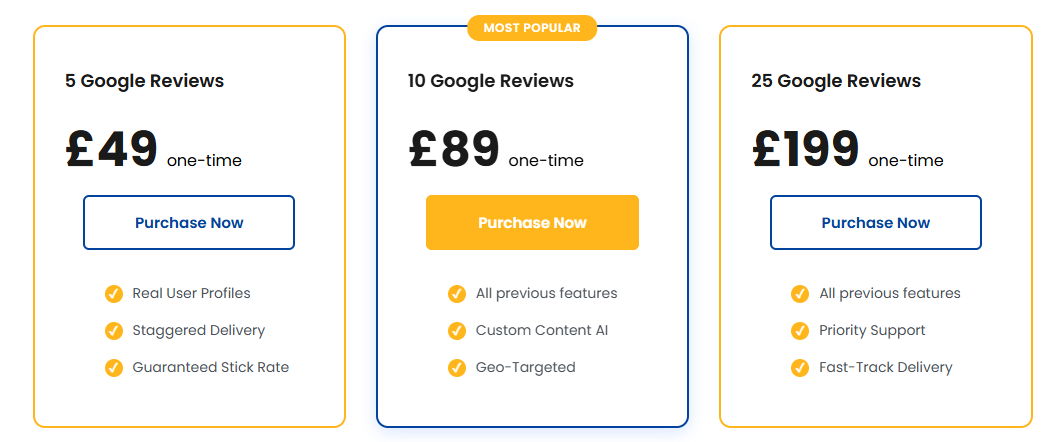
In review drip buying, competitors pay for fake reviews to be added gradually over time, rather than all at once. The goal is simple: to make the reviews look real and avoid the obvious spikes platforms might question.
When this happens, the competitor appears consistently active and well-reviewed, even if guest experience hasn’t changed. For nearby or similar venues, this can mean fewer clicks, fewer bookings, and growing pressure to explain why another business seems to be “doing better” online.
Operators should not attempt to copy this behaviour. Buying fake reviews, whether slowly or in bulk, carries serious risk, and penalties are often applied after the activity has stopped, when reversing the damage is hardest.

✍️ How Review Language Is Engineered
Keyword stuffing in reviews happens when competitors pay for fake reviews that repeatedly include specific phrases designed to influence search results. Examples include comments such as ‘best steakhouse in London’, ‘top hotel near Heathrow Terminal 5’, or ‘number one brunch spot in Ottawa’, even when the reviewer has never visited the venue.
When these phrases appear again and again, the business can start to appear more relevant for those searches, drawing attention and clicks away from nearby operators who have done nothing wrong. Increasingly, this content is also ingested by AI-powered search and summary tools, which treat repeated language in reviews as descriptive signal. From the outside, it looks like genuine customer opinion. In reality, demand is being quietly redirected.

🙏 This complimentary edition of Hospitality Marketing Insight is made possible by VIP subscribers.
Our readership spans across 80+ countries
🏛️ How Review Platforms Are Responding
In 2026, the response to malicious hospitality reviews moved beyond simple flagging to active containment. Platforms now classify review extortion as a security risk, rather than a customer service problem.
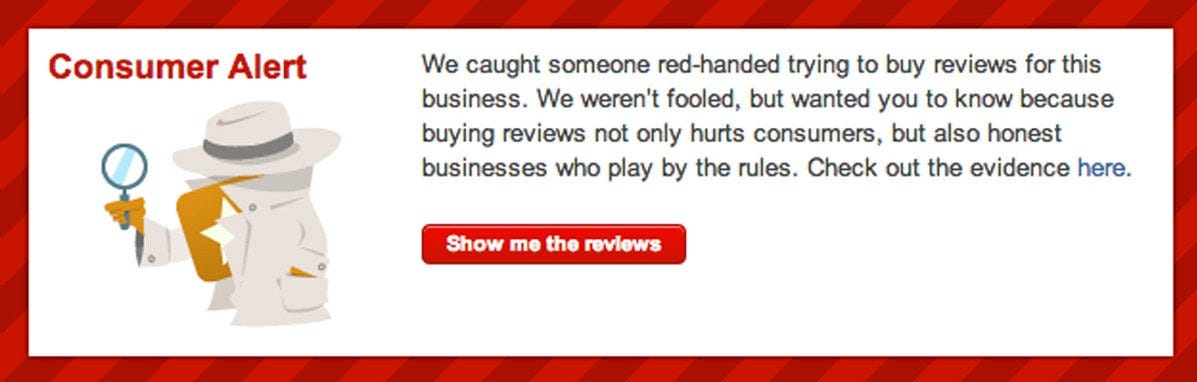
Yelp, Google, and others place large warning labels on businesses they suspect of cheating. This “digital scarlet letter” can cause an immediate 30–50% drop in enquiries.
If Google detects an unnatural spike in one-star reviews (the signature of a review bomb), it can freeze new reviews on that listing while an investigation takes place.
Yelp may add a “Public Interest Notice” or “Suspicious Review Activity” banner to listings under attack, especially after a viral controversy, flagging that the wave of one-star reviews may not be genuine.
Under new legislation, including the UK’s Digital Markets, Competition and Consumers Act (DMCCA) and parallel FTC rules in the US, platforms — including your website — must implement reasonable and proportionate measures to stop fake reviews. If they don’t, they’re now exposed to penalties. If a UK business or platform allows a proven fake or extortion-based review to remain live, it can be fined up to 10% of its global turnover.
These changes protect platforms first, not venues.
🗂️ How Guests Interpret Review Scores
Review scores are where operators underestimate damage, because guests don’t read ratings the way teams do.
Guests do not interpret review scores as a smooth scale. They read them in bands. Small numerical changes can trigger large shifts in trust, filtering, and willingness to click.
The table below shows how the same rating is interpreted by hotel guests and restaurant customers, and why drops that feel minor internally can have outsized commercial impact.
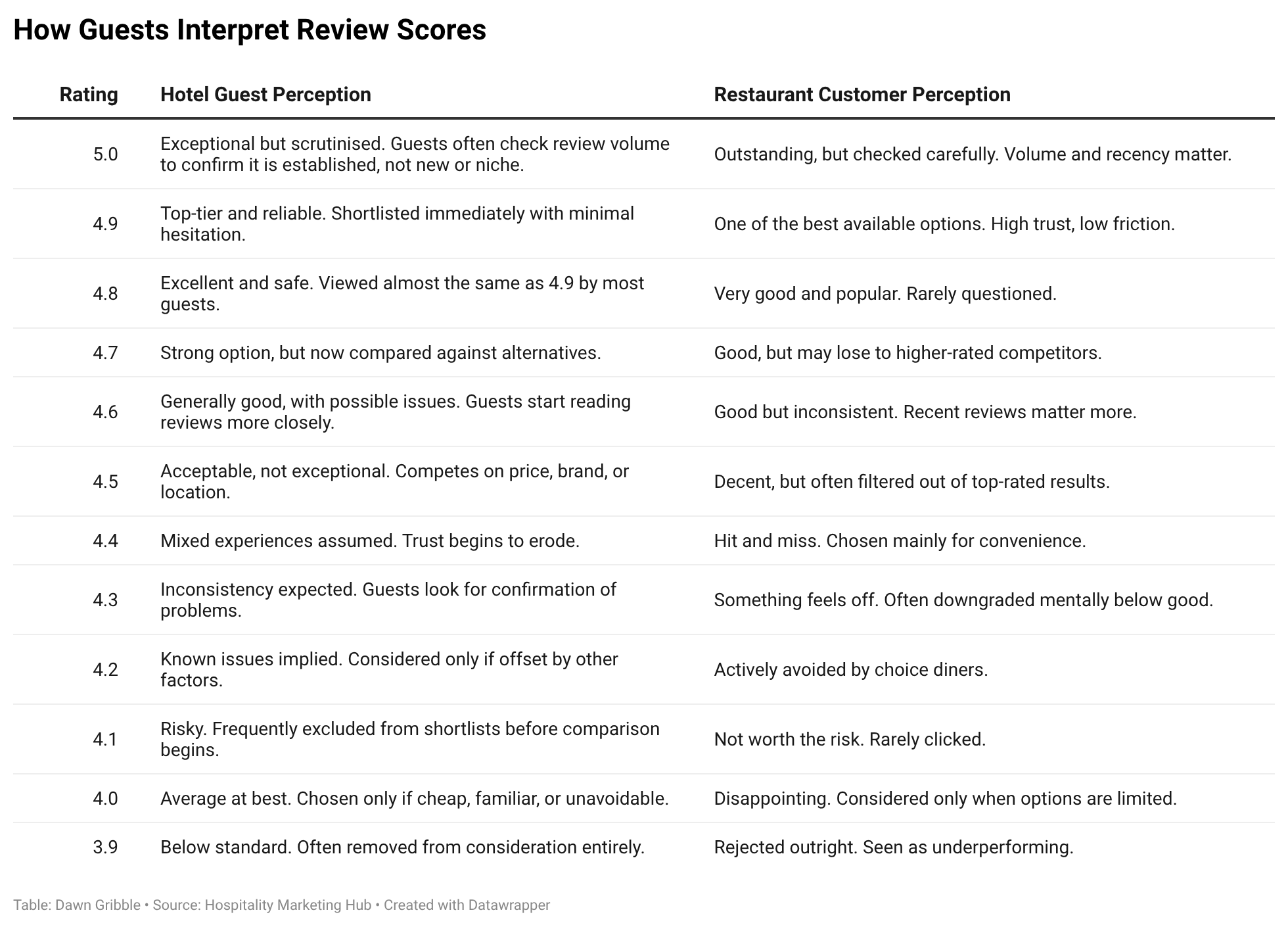
Perception Zones
5.0 to 4.8
Automatic trust. These venues are shortlisted immediately and rarely questioned.4.7 to 4.5
Active comparison. The venue is considered, but weighed against alternatives on price, location, or brand.4.4 to 4.3
Scrutiny. Guests assume inconsistency and start looking for confirmation of problems in recent reviews.4.2 to 4.1
Avoidance. The venue is filtered out unless there is a strong reason to override concern.3.9 and below
Rejection. The business is excluded before menus, photos, or availability are even checked.
This is why review manipulation is so effective and so dangerous. Damage does not happen gradually. It happens at thresholds. A small drop can move a business from trust to scrutiny, or from scrutiny to exclusion, without anything changing operationally. By the time teams notice a slowdown in bookings or enquiries, the decision has already been made upstream.
When reviews are weaponised, the loss occurs before a guest ever reaches the door.

📉 Why Good Operators Are Vulnerable
While review detection systems are designed to protect hospitality operators, their fallibility can inadvertently cause significant harm. As platforms rely more heavily on AI for Trust and Safety, the risk of false positives is now a primary concern for business owners. Legitimate reviews are being incorrectly flagged as fake.
When a system is tuned too aggressively, it can filter out genuine positive reviews from real guests. This results in a stagnant profile where your rating fails to improve despite excellent service.
If a venue has a particularly busy Saturday and receives a sudden surge of legitimate reviews from a large group booking, the algorithm might flag it as an unnatural spike. The platform may then place a review freeze on the profile, preventing any new reviews for weeks, often during peak trading periods.
Worse, a business may not even know it is being penalised. A platform can quietly deprioritise a venue in search rankings if its AI detects a pattern it believes is incentivised, even when it is not. This can lead to a sudden and unexplained drop in bookings.
Repeated false positives can result in permanent removal from Google Maps or TripAdvisor. For a local venue, that can be the end of its digital visibility. At this stage, the question is no longer whether reviews matter, but how much damage you can absorb before intervention becomes unavoidable.
Most operators don’t lose visibility because they ignore reviews. They lose it because they respond to the wrong type of review in the wrong way at the wrong moment. Once suppression is triggered, there is no appeal process, only recovery time. The hardest part isn’t responding. It’s knowing what you’re dealing with before you act.
When reviews turn hostile, the response is the risk.
Most visibility loss I see doesn’t come from silence. It comes from well-meaning replies written under pressure — saying too much, escalating publicly, or locking in the wrong narrative.
The Hospitality Review Response Pack gives teams a small set of pre-approved responses designed to reduce exposure, keep language neutral, and prevent avoidable mistakes when emotions are high.
This isn’t about sounding polished. It’s about not making a bad situation worse.
🗝 The Review Risk Management Playbook – VIP Exclusive
When reviews turn hostile, missteps cost money. Delayed responses, the wrong response, or following bad advice can erode bookings and visibility long after the incident.
The Review Risk Management Playbook shows you how to classify what you are dealing with, decide what to do next, and avoid the common mistakes that make things worse. Prevent irreversible visibility loss caused by well-meaning responses. The aim is simple: protect revenue, protect visibility, and stop wasting time on the wrong moves.
Published Thursday
These patterns are not obvious when you’re inside the day-to-day of running a hotel or restaurant, and they’re rarely explained clearly. Taking the time to understand them is already a strategic advantage.
Join us on the Substack app. In subscriber chat, you can ask questions and get a clear answer. In Notes, I share short practical guidance that you can apply the same day
On Thursday, the VIP Edition: The Review Risk Management Playbook covers how to classify review issues, respond safely, and avoid the actions that escalate risk.
All the best
Dawn Gribble MIH MCIM
Hospitality Marketing Insight
Here’s to Your Success 🥂
📚 Sources
Anderson, C. K., The Impact of Social Media on Lodging Performance, Unspecified publication (2025)
Business Profile restrictions for policy violations, Business Profile restrictions for policy violations, Google Business Profile Help (2025)
Digital Markets, Competition and Consumers Bill: Supporting documentation, Digital Markets, Competition and Consumers Bill: Supporting documentation, GOV.UK (2023)
Embarrassed_Year4720, How to Remove Bad Reviews from Google My Business, Reddit (2026)
FTC publishes final rule banning fake consumer reviews and testimonials, FTC Publishes Final Rule Banning Fake Consumer Reviews and Testimonials, Hogan Lovells (2025)
Google My Business Support! | Scam Alert for Business Owners, Scam Alert for Business Owners, Facebook (2025)
Google Review Management 2026: Tools, Strategies & Templates, Google Review Management 2026: Tools, Strategies & Templates, Shapo (2025)
Gribble, D., Handle Reviews Like a Pro With EASE and TIP, Hospitality Marketing Insight (2025)
Illustrious_Gur718, Anyone Else Getting Hit With a Wave of Bad Reviews Lately?, Reddit (2025)
Influencer Goes Viral After Claiming Chef Had an Aggressive Confrontation with Her. Now, the Restaurant Is Closing, Influencer Goes Viral After Claiming Chef Had an Aggressive Confrontation with Her. Now, the Restaurant Is Closing, People (2025)
MARKIE (Director), Restaurant Responds With CCTV Footage After Food Influencer Posts Negative Review, YouTube (2025)
News, T. H., Google Launches New Maps Feature to Help Businesses Report Review-Based Extortion Attempts, The Hacker News (2025)
Paget, S., Local Consumer Review Survey, BrightLocal (2025)
Prohibited & restricted content, Prohibited & Restricted Content, Google Maps User Generated Content Policy Help (2025)
Report negative review extortion scams on your Business Profile, Report Negative Review Extortion Scams on Your Business Profile, Google Business Profile Help (2025)
Review Bombing: When Extortion Comes to Your Door, Review Bombing: When Extortion Comes to Your Door, LinkedIn (2025)
Rulemaking: Use of Consumer Reviews and Testimonials, Use of Consumer Reviews and Testimonials, Federal Trade Commission (2024)
Schwartz, B., With Negative Review Extortion Scams on the Rise, Use Google’s Report Form, Search Engine Land (2025)
Schwartz, B., Google Incentivized Reviews Require Proper Identification, Search Engine Roundtable (2025)
Schwartz, B., Google Deleting Local Reviews More Than Ever, Search Engine Roundtable (2025)
Tripadvisor Help Centre, Tripadvisor Owner Help Centre, Tripadvisor (2025)
Tripadvisor’s 2025 Transparency Report reveals strong review submissions and improved fraud detection, Tripadvisor’s 2025 Transparency Report, Tripadvisor MediaRoom (2025)
Viral post claims an influencer left a restaurant crying. Now the California establishment has temporarily closed amid backlash, Viral Post Claims an Influencer Left a Restaurant Crying, Yahoo News (2025)
Yelp Releases 2024 Trust & Safety Report, Yelp 2024 Trust & Safety Report, Yelp (2025)
This is the part a lot of operators don’t realise until it’s already hurting. Reviews aren’t just feedback anymore. They’re infrastructure. And when that infrastructure turns on you, the damage shows up fast and quietly.
What stood out to me is how small drops trigger big consequences. Not because service changed, but because the system flips how guests see you before they ever click through. By the time bookings slow, the decision’s already been made somewhere else.
I also appreciate how clearly you lay out that this isn’t about “handling reviews better.” It’s about knowing what kind of situation you’re actually dealing with before you respond. Good intentions can make things worse when the rules have changed.
This is uncomfortable to read, but necessary.
We think the reviews should have a smaller circle - people you know - and then a wider audience. So you can decide which opinion matters.
But thank you Dawn, for a wonderful article!