


How did hospitality marketing change in 2025? What should we expect in 2026? And what do we need to do now?
🌞 Hello and Welcome To Hospitality Marketing Insight, I’m your host, Dawn Gribble, and this week we’re exploring the forces and behaviours in 2025, and what that means for your success in 2026.
Over the past year, guests have been presented with more information, earlier and in tighter proximity, than ever before. Prices, reviews, photos, policies, comments, and platform-generated summaries now appear together before a venue is seriously considered. This has narrowed tolerance for ambiguity and raised the cost of inconsistency.
Marketing is now judged not by its visual appeal but by how well it performs when compared to other factors influencing the decision.
📄 On the Menu
🤔 How Hospitality Buyers Assess Risk Before Booking
🛠️ How Platforms Reshaped Discovery, Planning, and Decisions
⭐ 5 Rules for Hospitality Marketing in 2026
Let’s Check In ☕

👉 The full breakdown is best read online - Continue Reading Here
When times are hard and funds are tight, people want to know they’re making the most of their money. The perceived cost of getting a decision wrong now feels materially higher than it used to. As a result, information-seeking has shifted from inspiration to risk reduction.
So it’s no surprise that 2025 became the Year of Validation.
🤔 How Hospitality Buyers Assess Risk Before Booking
Before committing, hospitality buyers actively check for four things: price, reputation, vibe, and experience. They want to feel confident enough in the cost to proceed and avoid buyer’s remorse.
That cost may be financial, through non-refundable deposits and dynamic pricing. It may be emotional, through the risk of ruined celebrations or embarrassment. It may be social, through recommending the wrong place to others. It may be practical, through wasted time, childcare, or travel.
❓Why Buyers Now Check Before They Commit
Over the past decade, buyers have repeatedly encountered reviews that feel scripted, venues that look nothing like the photos, menus that do not match pricing or portion reality, greenwashing, award-winning claims with no context, influencer hype followed by disappointment, and rebrands that promise change but fail to deliver anything new.

On top of this, buyers are navigating fake reviews, review bombing, keyword-stuffed titles, and outdated Google photos. While AI adds to the confusion, inventing dishes and even tourist attractions.
Using official figures and self-reporting from major e-commerce and review platforms, the World Economic Forum estimates that around 4% of all online reviews are fake.
When translated into economic impact, that small percentage carries significant weight. Fake reviews are estimated to influence $152 billion in global online spending, not because they are subtle, but because they are effective.
The incentive is straightforward. The return on investment for soliciting fake reviews remains high. Research shows that a single additional star on a restaurant’s Yelp rating can increase revenue by 5% to 9%, making manipulation commercially attractive.
That incentive has accelerated with automation. The Transparency Company reports that AI-generated reviews are growing at 80% month-on-month since June 2023, increasing both the volume of low-quality signals and the difficulty of distinguishing genuine experience from manufactured reassurance.
Buyers have learned a simple rule. Marketing sets expectations. Validation confirms what is actually true. This is not a rejection of hospitality; it is a loss of trust in the signals that once indicated quality. When validation fails, buyers leave the journey because they feel uneasy, uncertain, mentally overloaded, and reluctant to commit.

🛠️ How Platforms Reshaped Discovery, Planning, and Decisions
Across social, search, and video, platforms are redesigning their experiences to keep discovery, planning, and decision-making in one place. They are increasingly competing to offer the most complete collapsed customer journey, functioning as a single destination rather than a step on the buyer journey.
📍Google Search and Maps Updates Affecting Hospitality Decisions
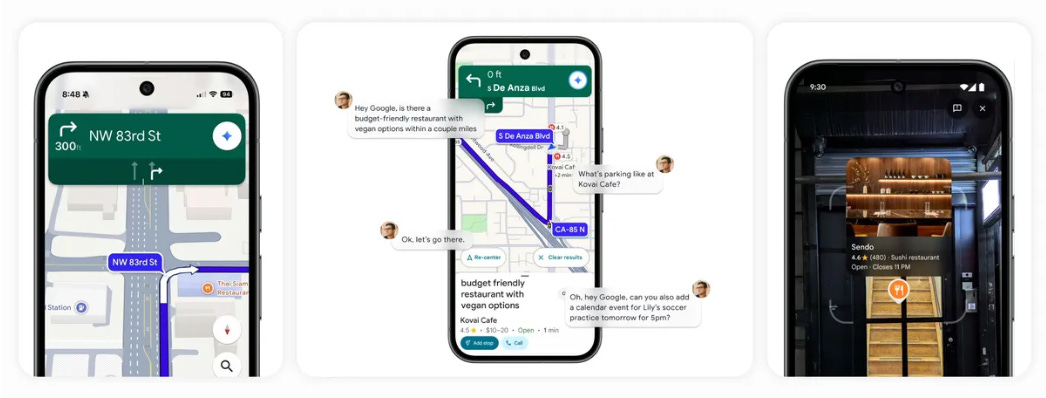
In 2025, Google made a series of changes that materially altered how hospitality decisions are made inside Search and Maps. The most visible was the broader rollout of AI Overviews across local, travel, food, and hospitality queries. These summaries now answer common questions directly in Search, reducing the need to click through to individual websites. Following this rollout, Google reported a 30–34% decline in organic clicks, with the sharpest drops affecting top-ranking results.
Google Maps now plays a central role in immediate booking and dining decisions. It has surpassed dedicated travel sites in influencing where people go next. 76% of people who perform a “near me” mobile search visit a business within 24 hours, and 28% of those searches result in a purchase or booking. Customers are 2.7× more likely to trust a business with a complete Google Business Profile, and businesses with complete information receive 70% more location visits than those without.
Gemini-powered navigation was added to Maps, giving people clearer, more reliable guidance on routes and timing so they can decide whether a visit makes sense before setting off. For hotels, price-tracking alerts were enabled directly within local results, allowing users to monitor price changes without leaving the platform. Google also expanded the visibility of popular times, wait times, and visit duration data across Maps and Business Profiles, giving users clearer expectations before arrival.
At the same time, Google tightened how trust signals are displayed and governed. Google Business Profile introduced clearer labels for incentivised reviews, increasing transparency around how feedback is generated. Review services summary boxes were added and made more prominent within local listings. Google also strengthened its tools and guidance around negative review extortion scams, making it easier for businesses to report and address abusive behaviour.

❤️Instagram Updates Affecting Hospitality Discovery and Evaluation
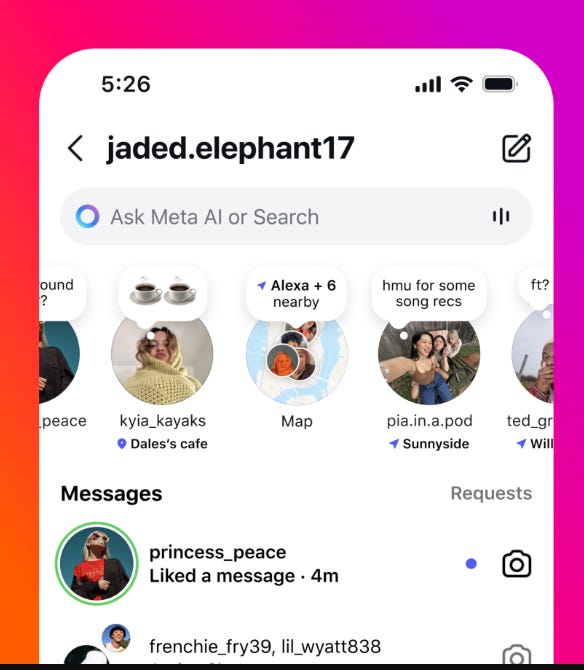
Instagram has fully transitioned from a photo-sharing app to a visual discovery engine. 46% of Gen Z and 35% of Millennials now prefer searching on Instagram and TikTok over traditional search engines for local recommendations.
Meta has openly acknowledged that Instagram is increasingly used as a search engine, particularly for food, travel, and local experiences. The search functionality has been expanded, allowing users to search by keywords across captions, bios, and content, in addition to usernames and hashtags. Location-based search results were also made more prominent.
Instagram is testing AI-generated summaries to support search. The platform is reading captions, audio, and metadata to categorise content, whether or not the user ever consumes it fully. Distribution is throttled for posts identified as overly promotional or repetitive, particularly brand-led content that fails to generate meaningful interaction.
Instagram confirmed that saves, shares, and time spent now carry more weight than likes, signalling that the platform prioritises content people return to.
Clearer labels were introduced for paid partnerships and sponsored content, and scrutiny of influencer promotions increased, particularly where incentives are not properly disclosed or claims are misleading.
Instagram continued to expand in-app shopping and product tagging, including for travel and experience-based content, letting users explore options and take action without leaving the app.
🎶 TikTok Updates Affecting Hospitality Search and Booking
As of 2025, 84% of users watch travel content monthly and are 2.6× more likely to book after searching on TikTok compared to other platforms.
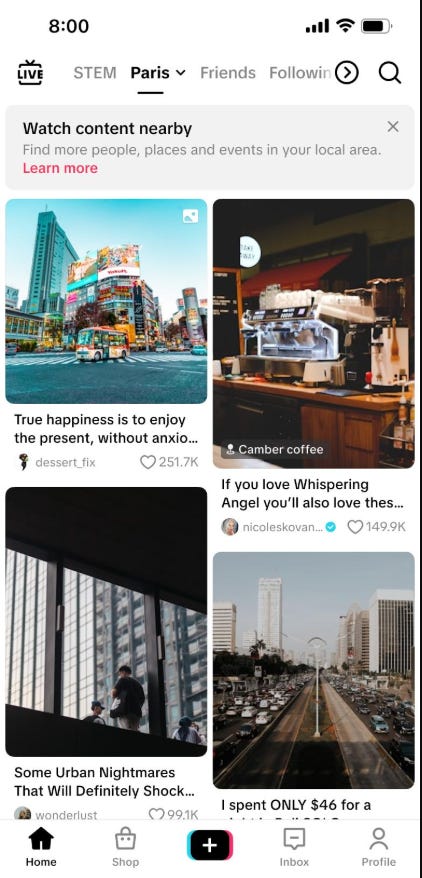
TikTok’s search feature has been upgraded so people can actively discover places using keywords for food, travel, hotels, and local experiences. Location-based queries have become easier to surface, meaning restaurants, hotels, and attractions can now be found deliberately, not just stumbled across in the feed.
TikTok’s “Nearby” feed, launched in parts of Europe, prioritises content based on location rather than popularity, capturing local discovery behaviour that has traditionally belonged to Maps and review platforms. Affiliate and commission-based bookings were rolled out for creators in travel and hospitality, and price, availability, and booking links were integrated directly into videos.
TikTok has confirmed that users rely heavily on comments to judge whether an experience is accurate, good value, or exaggerated. To support this, recommendation systems were adjusted to prioritise first-hand experience over promotional content, and new reporting and enforcement tools were introduced to deal with deceptive or inflated claims, while watch time, rewatches, and completion rate now matter more than follower count.
TikTok Travel and booking integrations were expanded, allowing users to book hotels and experiences without leaving the app. TikTok’s integration with Booking.com turns travel content into live inventory. Booking happens inside the platform, not after a long chain of clicks.
👥 Facebook Group Updates Affecting Local Recommendations
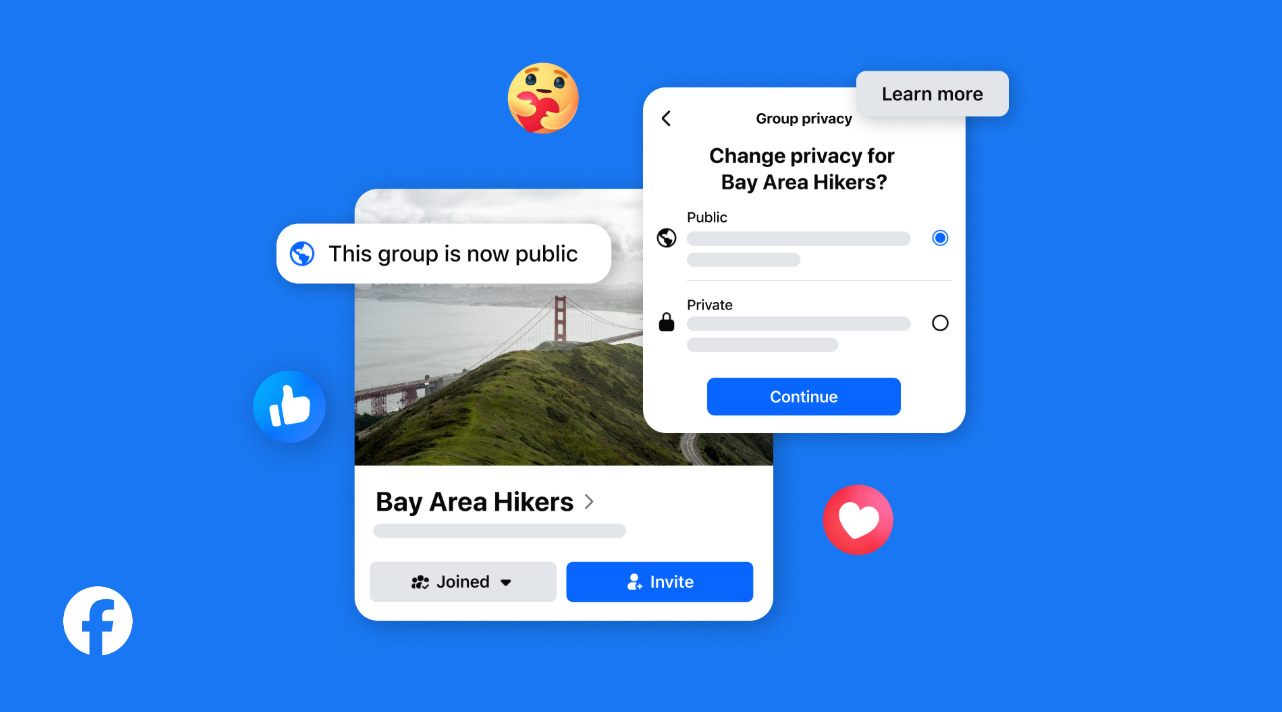
Organic reach for brand Pages has settled at a historic low of 2–6%, while Public Groups have received a significant algorithmic boost. In 2025, posts within Groups began receiving 30–60% organic reach and are now actively pushed into “For You” feeds of non-members based on location and intent.
Facebook increased the distribution of Group content in the main feed, particularly for local and interest-based Groups, while reducing the relative visibility of Page posts in local discovery contexts. As a result, conversations inside Groups are more likely to surface when people are actively looking for recommendations. This applies specifically to public Groups, where content can travel beyond the member base.
At the same time, Groups continue to be positioned as community spaces rather than broadcast channels. The algorithm increasingly favours peer experience and first-hand recommendations over promotional messaging. Posts from members carry more weight than brand-led responses or marketing updates.
This has changed the risk profile for businesses participating in Groups. Repetitive promotional posting, especially without community endorsement, now carries a higher likelihood of suppression or removal. Businesses that treat Groups as distribution channels rather than shared spaces are more likely to lose visibility than gain it.
Facebook Groups have become places where credibility is built or eroded through other people’s experiences, not through brand claims.
⭐ 5 Rules for Hospitality Marketing in 2026
1. Validation Happens Before Contact, Not After
Buyers now decide whether to trust you before they enquire, book, or follow up.
They arrive having already checked reviews, comments, photos, menus, and peer opinion across multiple platforms. Marketing no longer initiates belief. It is judged against what buyers have already seen. Anything that does not hold up under inspection creates hesitation long before conversion metrics register a problem.
2. Platforms Are Decision Environments, Not Traffic Channels
Search and social platforms are no longer optimised to send people elsewhere. They are designed to answer questions, provide reassurance, and facilitate decisions within the platform itself. Content that relies on clicks, redirects, or handoffs introduces friction and is increasingly deprioritised.
3. Consistency Now Carries More Weight Than Creativity
Inconsistent information is a risk signal. Differences between listings, menus, photos, hours, pricing, tone, or responses do not confuse buyers. They slow them down. That hesitation often shows up as saving, scrolling, or abandoning, not as complaints.
4. Operational Reality Is Part of the Marketing Surface
Wait times, service quality, staff sentiment, and real guest experience are surfaced through Maps, comments, reviews, and video. Platforms increasingly prioritise these signals because they reduce buyer risk.
5. Deprioritisation Is a Strategic Requirement
Every channel, format, and message that does not actively support validation increases noise, inconsistency, and effort leakage. Spreading activity thin creates false confidence while quietly weakening the signal. The ability to decide what to stop has become as important as deciding what to invest in.
📅 Why has hospitality marketing become harder to navigate so quickly?
Taken together, these updates show platforms positioning themselves as assisted decision engines. They are filtering content by location, interpreting it through AI, and collapsing the transaction path. Saves, shares, dwell time, repeat viewing, and depth of interaction will matter more than headline reach numbers.
Marketing that works in 2026 will be searchable, locally grounded, and ready to support action, empowering people to make confident decisions in a complex digital world.
Join me on Thursday for the VIP edition, which delivers the actionable frameworks to navigate this complexity without wasting resources or damaging your reputation.
You’ll discover
Exactly what to deprioritise as buyer validation becomes the dominant decision-making behaviour
How to stabilise your marketing footprint when platform inconsistency now creates immediate guest hesitation
Where your marketing efforts still compound value and where they’re silently leaking revenue
Practical frameworks and checks you can hand to your team that actually get used (not filed away)

That’s it for this week. I hope you’ve enjoyed the newsletter. I look forward to serving you again next week.
All the best
Dawn Gribble MIH MCIM
Hospitality Marketing Insight
Here’s to Your Success 🥂
Ready to go deeper? Enjoy a Subscription for just £10 a month or £100 for the year. The VIP Edition unlocks advanced strategy, exclusive data and practical playbooks.


📚 Sources
30 Hotel And Airbnb Experiences That Were The Opposite Of What Was Promised, Bored Panda (2025)
40+ TikTok Travel Statistics [2025 Update], Hotelagio (2025)
About Popular Times, Wait Times and Visit Duration Data, Google Business Profile Help (2025)
Ask Google to Call Local Businesses for You, Google (2025)
Express, A., Using TikTok as a Search Engine, Adobe Express (2025)
Fake Online Reviews Cost $152 Billion a Year. Here’s How E-Commerce Sites Can Stop Them, World Economic Forum (2025)
Google, Google Maps Navigation With Gemini Is Rolling Out Everywhere Gemini Is Available, Google (2025)
Gribble, D., Hospitality’s Most Serious AI Mistakes, Hospitality Marketing Insight (2025)
Heathera, New Facebook Update Gives Group Admins More Flexibility While Protecting Member Privacy, Meta Newsroom (2025)
High Cost of Review Fraud, Ask Transparency (2025)
Instagram Adds Option to Draw on DM Chats, Social Media Today (2025)
Instagram API Updates for Insights, Content Management, and Collaboration, Meta for Developers (2025)
Karanb, Instagram Empowers Creators to Go Global With Local Voice Translations and Fonts, Meta Newsroom (2025)
Kong, H., TikTok Just Rolled Out a Feature That Could Disrupt the Industry, 4Hoteliers (2025)
Krunal, 57 Latest Local SEO Statistics (New 2025 Data), Wiserreview (2025)
Lee, A., Google Is Building Agentic Travel Booking, Plus Other Travel AI Updates, Skift (2025)
Luca, M., & Zervas, G., Fake It Till You Make It: Reputation, Competition, and Yelp Review Fraud, N/A (2025)
MartinezAutor, T., Top Instagram Food Trends and Statistics for 2025, Toast (2025)
New AI-Powered Tools to Scale Creator and Brand Partnerships, Meta for Business (2025)
New Ways for Friends and Families to Discover, Share, and Connect on TikTok, TikTok Newsroom (2025)
Schaal, D., TikTok Users Can Now Book Hotels via Booking.com, Skift (2025)
Schwartz, B., Google AI Overviews Continue To Drive Clicks Downwards, Search Engine Roundtable (2025)
Schwartz, B., Google Incentivized Reviews Require Proper Identification, Search Engine Roundtable (2025)
The Latest AI News We Announced in November, Google (2025)
TikTok Insights: Research Tool, TikTok For Business (2025)
TikTok Launches Nearby Content Feed in Europe, Social Media Today (2025)
TikTok Officially Launches Its Bulletin Boards Feature, Social Media Today (2025)
TikTok Shares Pointers on Successful AI Adoption for Marketers, Social Media Today (2025)
Yosephian, N., Engineer, S., & Console, S., Streamline Your Search Console Analysis With the New AI-Powered Configuration, Google Search Central Blog (2025)
This really hit home. What stood out to me is how much of this comes down to trust, not tactics. People aren’t “shopping” the way they used to. they’re checking, comparing, and deciding long before they ever reach out.
It makes sense why so many things feel harder now. If someone doesn’t feel confident or clear early on, they just move on without saying a word. No drama. No feedback. They’re gone.
I also appreciate how you framed this as less about selling harder and more about removing friction. When things feel consistent and easy to understand, people relax. And when they relax, they’re more willing to choose you.
hospitality will never be out of business!