



In an article for Hospitality Net, Dr Rocio Montero argued that hotel revenue management has become data-rich but “psychology-poor.” Modern pricing algorithms drive aggressive rate fluctuations, yet operators routinely overlook fundamental behavioural economics—specifically loss aversion. Behavioural science shows that guests feel the sting of a price hike twice as intensely as the joy of a discount.
Can this same psychological blind spot be distorting other commercial choices?
Here is how to map behavioural economics across the five stages of the guest journey to protect your rates and convert covers without discounting.
Let’s Check In ☕

🧠 The Psychology of Decision Making
By understanding the factors influencing consumers’ decision-making processes, motivations, and behaviours, hospitality marketers can tailor their strategies to attract and retain customers more efficiently.
The Hospitality Buyer Journey
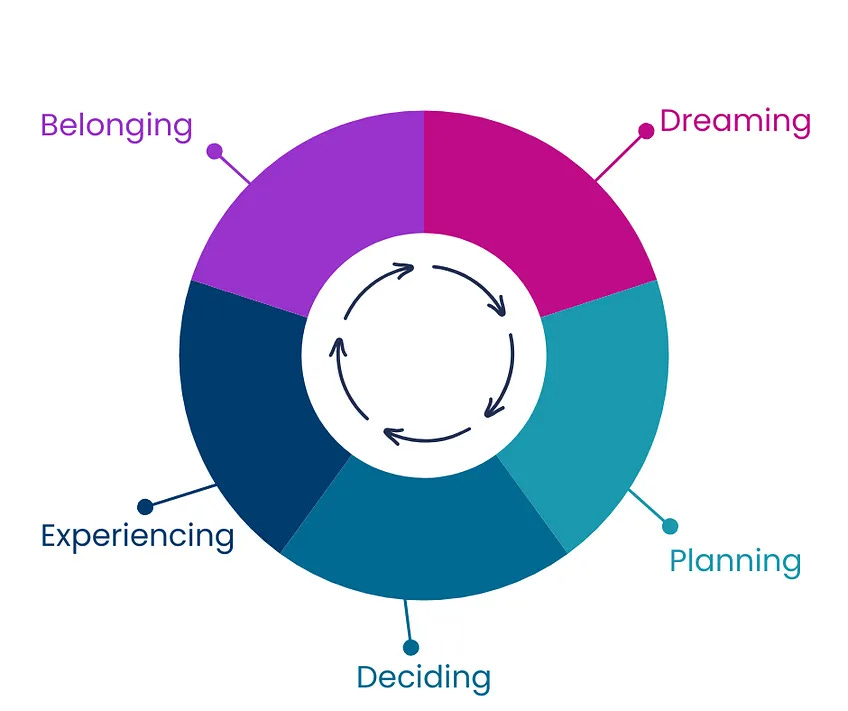
✨ Dreaming
Long before people book, the brain relies on predictive processing—running mental simulations to imagine how an experience will feel. Guests do not daydream about physical square footage or a wooden restaurant table; their subconscious previews feelings of pure relief, quiet, or celebration.
Marketing’s job at this stage is building mental availability—ensuring your property is the first brand that pops into their head when a specific craving hits. For hotels, this means showing morning light across fresh sheets and quiet views, framing spaces as emotional sanctuaries rather than clinical room inventory. For restaurants, it means capturing the sizzle of a pan and the ambient energy of a full dining room rather than flat, static food photos.
The cost of doing nothing is invisibility, leaving you forced to pay heavy commissions to third-party booking sites once intent matures. The consequence of getting it wrong—pushing sterile imagery or early discount banners—shatters the mental simulation completely. It triggers premature price sensitivity, snapping guests straight out of emotional daydreaming and directly into analytical price-checking, permanently damaging your pricing power.
📋 Planning
During the planning stage, guests compare venues to ensure they get proper value for their money. Buyer psychology is driven by risk reduction and social proof: buyers look to peer reviews and transparent details to reassure themselves they are not making a costly mistake.
When operators present too many bespoke options, they trigger the paradox of choice—excessive choices stall commitment rather than encourage it. Marketing’s job is applying the framing effect to make the best choice obvious. In a hotel, this means spotlighting a curated default such as “Our Most Popular Weekend Stay” instead of twenty confusing package variations. In a restaurant, it means anchoring the menu with signature dishes or a set menu rather than a sprawling list of unguided options.
The cost of doing nothing is losing buyers to competitors who present their value more clearly. The consequence of getting it wrong is decision paralysis: when choosing feels complicated or risky, guests abandon the booking.
💳 Deciding
At the point of decision, the card is in hand, but conversion hangs by a thread. Guests rarely evaluate room rates or menu prices in isolation; they look for psychological reference points to justify the spend. Guests rarely evaluate rates or menu prices in isolation; they rely on psychological reference points to judge value. A premium steak or top-tier suite acts as an anchor that signals kitchen competence and operational quality across your entire business. At the same time, how your options are sequenced creates a default path, quietly guiding which selection feels like the most natural, sensible choice.
Marketing must support this commitment using the psychological principle of chunking. Instead of dumping an uncurated list of options in front of the buyer, chunking breaks information into small, intuitive sections—such as “Family Meal Deals”, “Lighter Bites”, or curated stay packages. This dramatically cuts the mental processing required to compare options, transforming a potentially stressful transaction into a guided journey where higher-value choices feel obvious and safe.
Getting this wrong kills conversion right at the point of commitment. In a hotel, confronting a guest at checkout with aggressive cancellation policies written in defensive legal jargon creates an instant trust deficit, making you look like a rigid merchant rather than a welcoming host. In a restaurant, an unstructured menu crowded with dozens of competing options triggers decision paralysis, driving diners away from your high-margin signature dishes straight to the safest, cheapest plate on the page.
🎟️ December 2026 Hospitality Marketing Toolkit

Social media platforms and search engines have been rolling out major technical updates that directly impact hospitality booking flows and visibility. This VIP edition breaks down the essential channel settings and campaign transitions needed for the month ahead. Inside, you will find our ranked top five technical priorities, twenty AI-optimised discovery questions, platform updates across Google and Meta, and the complete Q5 content calendar.
Did You Miss the December VIP Toolkit?
Stop watching online travel agents and competitor menus poach the direct revenue your team worked tirelessly to earn. VIP members just unlocked the December Marketing Toolkit to take back control of their bottom line:
Keep your direct booking visibility: The urgent Google fix to stop guests being funnelled to costly third-party sites.
Get cited by AI search first: The exact structured prompts so ChatGPT and Perplexity send high-spending diners and guests directly to you.
Cash in on impulse spend: Sell £150+ vouchers and party tickets directly in-feed on TikTok with zero checkout drop-off.
Protect your hard-earned reputation: The steps to prevent Google from freezing your guest reviews during busy trading periods.
Eliminate content panic: The ready-made campaign schedule to secure profitable January and summer bookings while you focus on service.
You deserve to keep the revenue your property generates. Stop leaving your margins to chance.
🍷 Experiencing
In the Experiencing stage, the guest decides whether the reality justifies the money they spent, and whether you deserve their loyalty. Psychologically, their brain is running expectancy disconfirmation—measuring every physical detail against the mental picture your marketing painted. Having committed their money, guests naturally want to believe they made a smart choice. They actively scan their surroundings for proof that validates their decision, looking for cues that confirm the quality, warmth, and standards you promised.
Marketing must not vanish the moment the booking is confirmed. Its job is to guide the guest smoothly from expectation to reality. Clear, helpful pre-arrival communication answers practical questions and removes arrival anxiety before they even leave home. On-site, thoughtful menu descriptions, staff recommendations, and clear visual cues draw attention to the care behind your food and service. This continuous guidance reassures guests that they are in good hands, encourages them to spend with confidence, and sets the stage for genuine loyalty.
The cost of going silent or overpromising is severe. When the real-world experience fails to match the online hype, that mental benchmark collapses, and guests switch from enjoying themselves to hunting for faults. In a hotel, radio silence after the booking confirmation, followed by a tired bedroom that looks nothing like the polished website photos, triggers instant buyer’s remorse, leaving the guest resentful over every pound spent. In a restaurant, overselling an intimate artisan meal only to drop diners into a noisy room with an unguided, chaotic menu leaves them feeling misled—prompting them to order defensively and vow never to return.
🤝 Belonging
In the Belonging stage, the guest decides whether your venue was merely a convenient transaction or a place they actively identify with, return to, and champion to others. Buyer psychology at this point is driven by reciprocity—the natural human instinct to give something back when someone treats us with genuine care or unexpected generosity. When a venue consistently goes above and beyond, guests do not simply walk away satisfied; they feel an emotional pull to return the gesture through repeat visits, enthusiastic word-of-mouth, and public reviews.
Marketing supports this stage by turning a single transaction into an ongoing relationship. Instead of treating departure as the end of the road, marketing keeps the cycle of reciprocity moving by continuing to offer value after the bill is settled. Thoughtful, personal follow-ups, genuine recognition of loyalty, and exclusive access to seasonal previews or private events make the guest feel like a valued insider. This ongoing generosity deepens their emotional investment, making future visits feel like coming back to their own space.
The cost of going cold after the bill is paid is permanent customer churn. When you treat guests as closed files the second they leave, you kill off advocacy and force your business to spend heavily acquiring strangers to fill the gap. In a hotel, following a great stay with nothing more than an impersonal, automated email demanding a five-star review turns an emotional connection back into a cold transaction, wiping out on-site goodwill. In a restaurant, letting a brilliant meal fade into radio silence—or reducing the relationship to generic bulk discount emails—strips away any sense of community, leaving diners to drift to the next opening down the road.

🔒 Inside this week’s VIP intelligence briefing
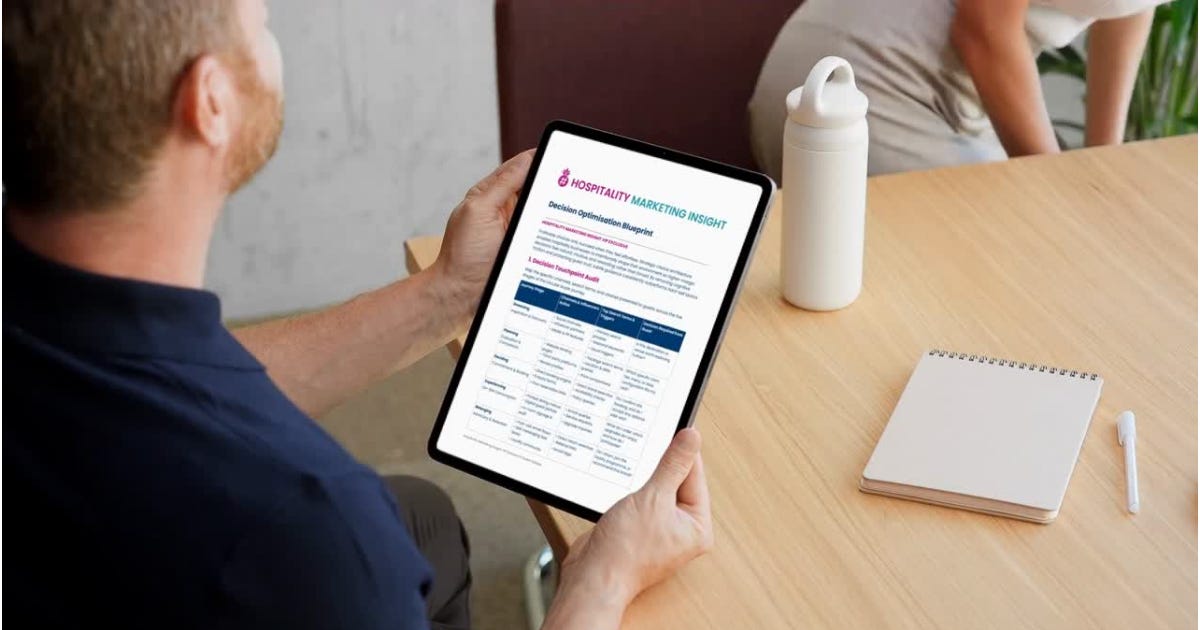
Stop watching your hardest-won guests settle for your lowest-margin rooms and covers.
When your booking journey leaves value to guesswork, guests naturally retreat to the cheapest rate on the screen—or bounce straight to an OTA. That is not a market refusing to spend; it is a presentation that failed to make your best experience irresistible.
Access your Decision Optimisation Blueprint below to reframe your offer, take back control of your guest journeys, and protect the revenue your property deserves.
That’s it for this edition. I hope you’ve enjoyed the newsletter. I look forward to serving you again soon.
Here’s to your success! 🥂

Dawn Gribble MIH MCIM
Hospitality Marketing Insight
P.S. Still wondering why guests leave your booking engine right at the payment screen? It is almost never the total cost alone; it is the unexpected psychological friction introduced in the final two clicks. If you want us to put your entire digital guest experience under the microscope and show you exactly where conversions are dropping off, book a forensic Customer Experience Audit today, or get in touch directly via DG Consulting.
📚 Sources & Resources
Blanchard, T., Are We Rational? The Decoy Effect and Social Information, Cognitive Wonderland (2025)
Boto-García, D., & Baños-Pino, J. F., Social influence and bandwagon effects in tourism travel, Annals of Tourism Research (2022)
Filoni, S., From Lookers to Bookers—How to Increase Hotel Direct Bookings, Hospitality Marketing Hub (2026)
Gounares, A., The Meat Moat, Thoughtful Bits (2026)
Gribble, D., The Psychology of Social Proof, DG Consulting (2023)
Gribble, D., 💡 The Role of Consumer Psychology in Hospitality Marketing, Hospitality Marketing Insight (2023)
Gribble, D., ❌ The Menu Mistakes Draining Your Margins, Hospitality Marketing Insight (2025)
Gribble, D., The Role of Consumer Psychology in Hospitality Marketing, Hospitality Marketing Hub (2025)
Gribble, D., 📌 The TikTok Playbook for Hospitality Leaders, Hospitality Marketing Insight (2025)
Gribble, D., 📌 Your Marketing Looks Fine. That’s the Problem. Hospitality Marketing Insight (2025)
Gribble, D., 📌 Why Brand Communities Have Become a Commercial Advantage in Hospitality, Hospitality Marketing Insight (2026)
💥 The Power of Influence in the Hospitality Industry, Hospitality Marketing Insight (2026)
Montero, R. (2026, September 24). Hotel Optimize Prices but Ignore the People Paying Them. Hospitality Net.