


Where is AI giving guests the wrong information? How are these mistakes affecting trust and visibility? And what should hospitality leaders focus on in 2026?
🌞 Hello and welcome to Hospitality Marketing Insight. I’m your host, Dawn Gribble, and this week we are looking at the AI mistakes that shaped hospitality in 2025. This newsletter explores what these incidents tell us about guest behaviour, visibility, trust and risk, and what operators need to understand as we move into 2026.
📄 On the Menu
🍕 False Deals and Fabricated Menu Items
🌄 AI Inventing Locations and Experiences
📢 Misleading Advertising and AI-Detected Breaches
🤮 AI Rewrite Errors on Delivery Platforms
🚫 AI-Generated Evidence and Refund Fraud
Let’s Check In ☕
👉 The full breakdown is best read online. Continue reading here

🚨 The Moment AI Interfered With Hospitality
In 2025, most discussions about AI focused on jobs and disruption. Very few focused on the mistakes AI was already making on behalf of operators.
A shift manager at a family restaurant found herself facing an unhappy guest holding up their phone. “Your AI listings say you have two for one tonight. Why are you not honouring it?” No such offer existed. But the guest was convinced. Staff were left trying to unpick a promise they never made.
Across town, a hotel duty manager opened their inbox to a compliance warning about a “£28 room” that was not actually available. The advertising team had not run anything new, but the regulator’s AI monitoring system had flagged price claims that did not match real availability and was prepared to take enforcement action. The hotel was caught off guard.
Different businesses. Different pressures. The same underlying pattern. 2025 was the year AI did not simply enter hospitality. It interfered with it.
It created offers that never existed.
It rewrote menus without warning.
It blurred reality.
It flagged compliance issues at scale
It even helped guests manufacture evidence.
None of this came from operators pushing AI too far. Most of it came from platforms they didn’t control, systems that auto-generated content, and large language models (LLMs) that sounded authoritative even when they were wrong.

📉 The Mistakes That Shaped 2025
Across restaurants, hotels, delivery platforms and review sites, operators encountered similar problems. These are the AI mistakes that mattered most this year.
🍕 False Deals and Fabricated Menu Items
At a family-run pizzeria in Wentzville, Missouri, the team were already juggling orders, timings and a busy shift when they were met with something they could not prepare for: a stream of frustrated customers demanding specials and menu items that had never existed.
Diners arrived at Stefanina’s Pizzeria, expecting offers that AI listings presented as fact. Some believed they could buy a large pizza for the price of a small one. Others insisted they had seen a “buy one, get one free” deal that the restaurant had never promoted.
The owners released a public statement to clarify the situation, but only after staff spent hours explaining and calming unhappy visitors. Their Facebook post asked customers not to rely on AI-generated listings, making it clear that the business had no control over these fabricated offers.
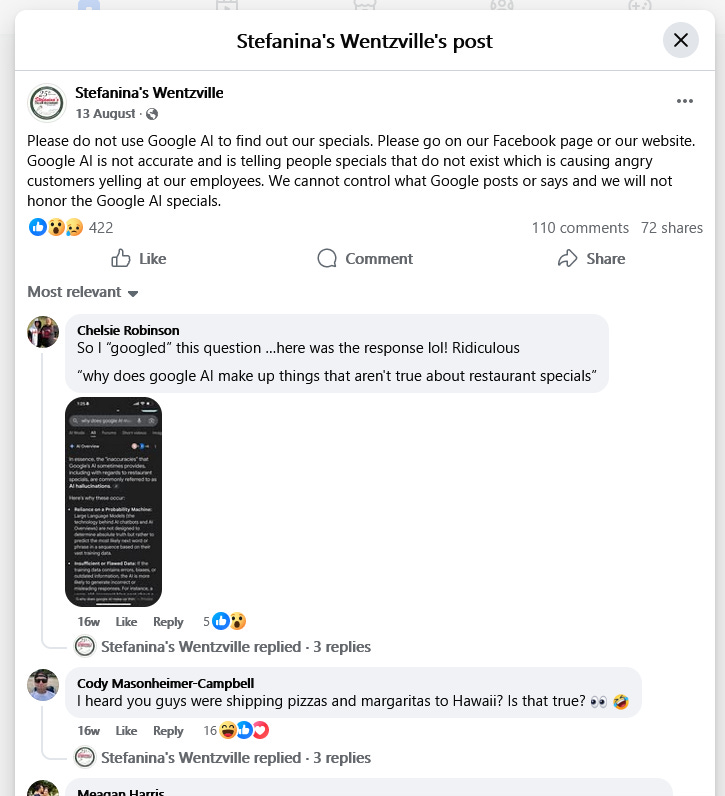
These invented deals were classic AI hallucinations. AI produced confident, plausible-sounding information that was not based on real data. This often happens when information is pulled from incomplete or mismatched sources, so it fills the gaps with assumptions.
For operators, each misunderstanding creates real pressure. Time is lost, staff workloads increase, service slows, and guest trust takes a hit. Diners who leave frustrated often share their disappointment online, which extends the damage long after the initial incident ends.
If you want the leadership view on where these errors are likely to escalate next year, Thursday’s VIP briefing will cover the signals to watch.
🌄 AI Inventing Locations and Experiences
An elderly couple in Malaysia set off on what they thought would be a memorable day trip. They travelled more than 300 km from Kuala Lumpur to Perak, excited to see the scenic cable car ride they had discovered in a viral video. When they arrived at the destination, they asked at a nearby hotel for directions, where they were told the truth. The attraction did not exist.
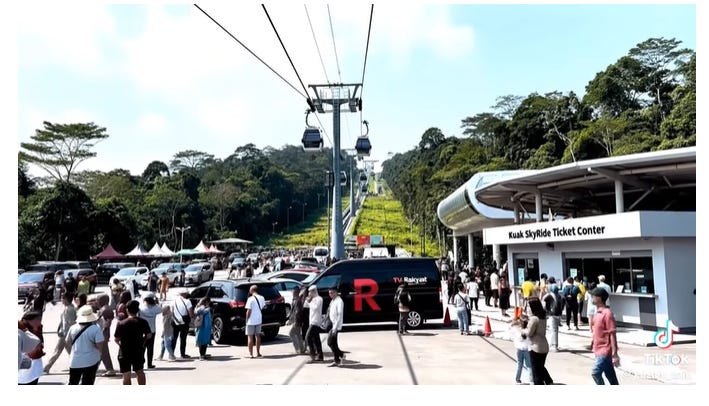
The entire video had been produced by AI. It looked convincing, with a presenter styled as a news reporter, “tourists” giving interviews, and even a ticket counter that appeared legitimate. Every detail was designed to look real enough to trust.
The couple were left tired, disappointed and confused about how something so polished could be fabricated. The woman expressed her frustration that anyone would “lie” about such things, because the content looked credible and the interviews seemed genuine.
The incident highlights a growing challenge for the hospitality industry. When AI can generate realistic scenes, stories and locations, it becomes harder for guests to distinguish truth from invention.
Authorities stepped in and issued a public advisory, urging people to verify viral content before making plans. Important to remember that AI-generated misinformation not only affects businesses. It shapes guest expectations long before they arrive and can influence demand, travel decisions, and trust in the wider visitor economy.
📢 Misleading Advertising and AI-Detected Breaches
In November 2025, several major hotel providers, including Travelodge, Accor, Hilton and Booking, were formally warned by the UK’s Advertising Standards Authority. The failure was in the accuracy of the price claims, not the messaging. The advertised rates did not reflect what guests could reliably book.
The mistake was consistent across brands. Low “from” prices such as “From £28,” “From £68,” or “From £9,” were promoted without enough rooms actually being available at those price points. Large percentage discounts were also advertised without clear evidence that the reductions were widely applicable.
The detection did not come from human review. It was uncovered by the ASA’s AI-driven monitoring system, which scanned hundreds of thousands of adverts, cross-checked availability and date ranges, and flagged where claims did not meet the CAP code (Committee of Advertising Practice).

The companies involved were banned from running these adverts again and were required to ensure that a meaningful proportion of rooms were genuinely available at the prices being promoted.
As regulators are now using AI to identify inaccuracies at scale. Marketing teams must be consistent across platforms, accurate at the time of publication and backed by verifiable availability.
🤮 AI Rewrite Errors on Delivery Platforms
A restaurant called Royal Roll Express, listed on a popular delivery platform, discovered that its appetiser “Chicken Pops” had been given a disturbing description. Instead of a simple menu summary, the listing described the symptoms of chicken pox. The unappetising description read “small, itchy, blister-like bumps.”
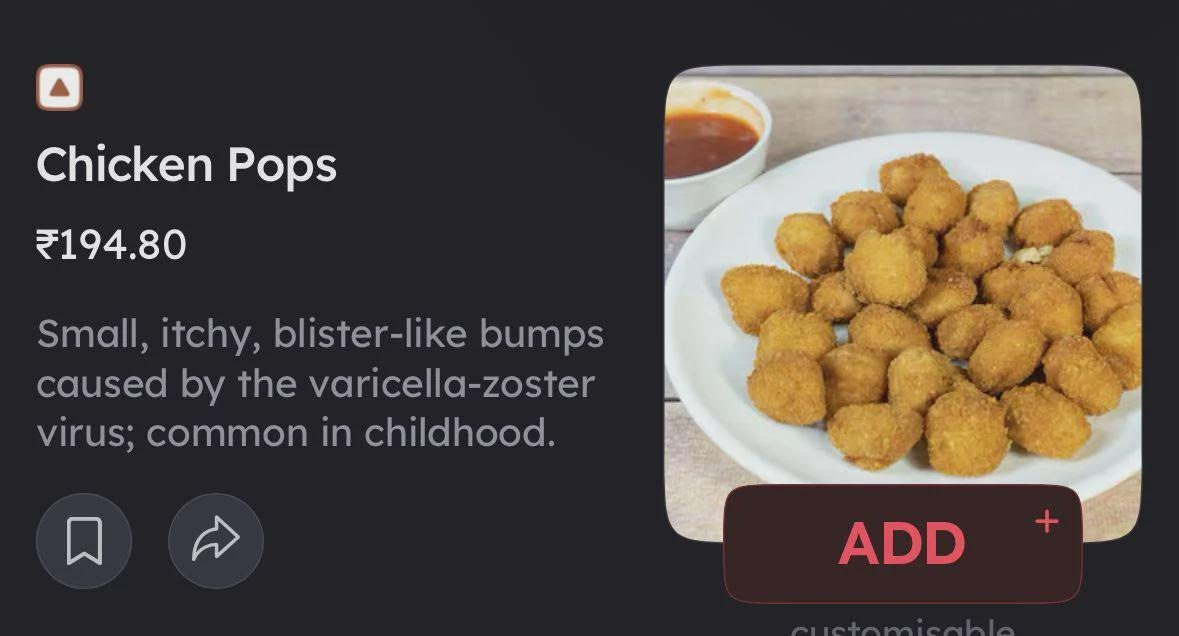
The mistake appears to have come from the AI system misreading the name and generating a definition based on the medical condition rather than the food item. Incidents like this reveal a growing issue on third-party platforms. When restaurants do not supply detailed descriptions, some services automatically generate them with AI, and the results can be wildly inaccurate.
The error gained public attention because of how absurd it looked, but for the restaurant, the impact was not humorous. It damaged the perception of quality and professionalism, and it also reflected poorly on the platform hosting the listing.
Leaders who want a clearer lens on how these patterns affect discovery and trust in 2026 will find the full VIP breakdown on Thursday useful.
🚫 AI-Generated Evidence and Refund Fraud
A Mumbai bakery called Dessert Therapy encountered a customer who requested a refund of Rs 1,820 for a damaged cake ordered through a delivery platform. The customer provided a photograph as evidence, but the bakery quickly noticed that the image was not real. It was an AI-generated picture of the cake.
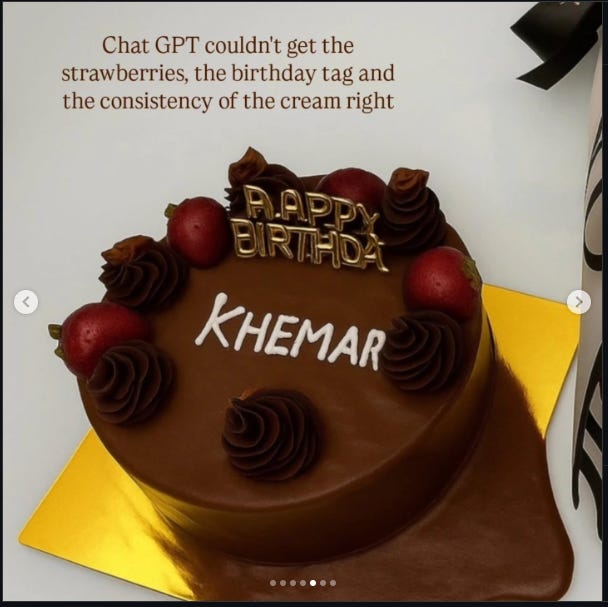
In an Instagram post, they called out the customer and uploaded the ‘evidence’ she had submitted. They identified the fraud by spotting small inconsistencies in the visual details. The birthday tag read “Appy Birthda,” and the cream had an overly smooth, artificial appearance that did not match how real icing behaves.
Cases like this create direct financial pressure. A fraudulent refund claim is a loss that cannot be absorbed easily, especially for small businesses. The wider implication is more concerning. AI-generated images and reviews make it harder for both guests and operators to trust what they see online. When false evidence circulates, platforms must invest in detection tools, and legitimate feedback becomes harder to separate from fabricated content.

This is the complimentary edition of Hospitality Marketing Insight, brought to you by Dawn Gribble and made possible through the support of our VIP subscribers.
↳ Upgrade to a VIP subscription to unlock 90+ playbooks and frameworks, the daily news round-up in subscriber chat, in-depth AI marketing reports, and expert trend analysis for hotels, restaurants, and hospitality brands.
📅 VIP Editions are published every Thursday.

🌐 What This Signals for 2026
In 2025, inaccurate AI-generated information spread rapidly across trusted platforms, causing confusion for operators and revealing profound changes in marketing performance and guest behaviour expected in 2026.
1. Trust becomes a primary driver of conversion
Guests are now exposed to listings, summaries, reviews and price claims that may not be accurate. When information varies from platform to platform, guests look for the business that feels the most consistent and transparent. Trust is becoming a competitive advantage.
2. Accuracy affects visibility more directly
Search engines, delivery platforms and regulators are using AI to detect inconsistencies automatically. This changes how operators are found online. Content that is accurate, aligned and up to date is now more likely to appear in AI summaries and search results.
3. Operators inherit risks from systems they do not control
Listings, menus, reviews, maps, summaries and price claims are increasingly created or adjusted by AI without operator involvement. This means reputational risk can originate from outside the business. The task in 2026 is understanding where information flows from and where it is being rewritten.
4. Guest expectations form long before they reach your business
The Malaysia case shows how convincingly AI can create places, offers or experiences that do not exist. Guests may arrive with assumptions shaped by content the operator has never published. The result is pressure on teams, especially during busy service.
5. Scrutiny increases as AI is adopted by regulators and platforms
As seen in the ASA example, regulators now identify inaccuracies at scale. Price claims, availability messaging and promotional language must align across channels. It is no longer safe to assume an error will go unnoticed.
Hospitality marketing in 2026 rewards clarity, consistency and accuracy. The operators who perform best will be those who understand how their information is being interpreted, summarised and surfaced by systems they do not directly control.

📅 Coming Up in this week’s VIP Edition
⭐ The AI oversight lens for 2026
⭐ Accuracy risks that matter most
⭐ Where information is being rewritten
⭐ Questions leaders should use for review
⭐ The signals that show trust is at risk

Thank you for reading this week’s edition. I hope the insights help you navigate the AI landscape that shaped 2025 and the signals to watch as we move into 2026. I will see you on Thursday for the VIP breakdown.
All the best
Dawn Gribble MIH MCIM
Hospitality Marketing Insight
Here’s to Your Success 🥂
Ready to go deeper? Expense a Subscription for just £10 month or £100 for the year. The VIP Edition unlocks advanced strategy, exclusive data and practical playbooks.

📌 How AI Search Is Reshaping Hospitality Buyer Journey in 2026

How is AI changing how guests discover, book, and spend? Which 2025 updates are driving visibility and marketing in 2026? And what risks must operators manage as AI becomes essential?
📌 What to Fix Before 2026

Are your 2026 content standards high enough? Where are your quality gaps hiding, and what should you fix first to protect guest trust?
📌 2026 Hospitality Trends That Drive Revenue

🌞 Hello and Welcome to this week’s Special Expert Edition of Hospitality Marketing Insight

📚 Sources
Accor (UK) Ltd, ASA | Committee of Advertising Practice (2025)
Al-Sibai, N., Restaurant Uses AI for Menu, Accidentally Describes Appetizer in Way So Disgusting That We May Never Recover, Futurism (2025)
Advertising Codes, ASA | Committee of Advertising Practice (2025)
Booking.com BV, ASA | Committee of Advertising Practice (2025)
Butlins Skyline Ltd, ASA | Committee of Advertising Practice (2025)
Dessert Therapy on Instagram: “This had to be done! @swiggyindia @zomato”, Instagram (2025)
Elderly Couple Tricked by AI-Generated Tourist Trap, Travel Weekly Asia (2025)
Hilton Worldwide Ltd, ASA | Committee of Advertising Practice (2025)
Hotel Firms Warned Over Misleading Ads After AI-Driven Investigation, Pinsent Masons (2025)
Mumbai Bakery Calls Out Customer Who Shared AI-Generated Image To Claim Refund, NDTV Food (2025)
Practice, A. S. A. | C. of A., Restaurants Shouldn’t Use AI for Description, Reddit (2025)
Stefanina’s Wentzville: “Please Do Not Use Google AI to Find Out Our Specials”, Facebook (2025)
Travelodge Hotels Ltd, ASA | Committee of Advertising Practice (2025)
The shift from operators being caught off-guard by AI hallucinations to regulators deploying AI at scale to detect those same errors is wild. What used to be embarassing edge cases (fake menu items, inveted locations) are now structural compliance risks tracked by automated monitoring. The Chicken Pops / chicken pox mixup is absurd but the bigger probem is operators inheriting reputational damage from platforms they dont even control.