


Part of our Hospitality Marketing Fundamentals series for operators navigating trust, demand, and growth under pressure.
Why have brand communities become a commercial advantage in hospitality? How do they compound value over time while reducing spend, and what happens when community behaviour moves beyond brand control?
🌞 Hello and Welcome To Hospitality Marketing Insight, I’m your host, Dawn Gribble
This week, we’re examining brand communities not as a marketing channel, but as an operational reality. In a market where buyers validate earlier, trust less, and decide faster, communities have become one of the few places where certainty still forms.
When they work, they stabilise demand, reduce reliance on incentives, and extend the impact of loyalty.
When they fail, the consequences show up in operations, cost, and risk long before they appear in reports.
This edition unpacks where the value comes from, how it compounds, and the lesser-known risks operators inherit the moment guests start organising without permission.
📄 On the Menu
The Commercial Case for Community
How Community Stabilises Demand
The Risks Most Brands Miss
Let’s Check In ☕

👉 The full breakdown is best read online. Continue Reading Here
💰 The Commercial Case for Community
How do you tie community activity to revenue? This is usually the first question operators ask. And rightly so. But before we talk about community performance, we need to make a clear distinction between brand audience and brand community because they are not the same thing.
Confusing the two is where many community strategies fall apart.
An audience follows you. They subscribe, like, view, scroll. The relationship is largely one-directional. You broadcast, they consume. Attention is the currency.
A community interacts. Members participate, recognise one another, and share a sense of identity and norms linked to the brand. The relationship is multi-directional. Value is created between members, not just between brand and individual.
From a commercial perspective, community members are materially more valuable.
Around 70% of community members are more likely to choose a brand hotel, even when cheaper alternatives exist, and they deliver approximately 24% higher lifetime value. According to Marriott’s 2024 Earnings Report, 72% of hotel room nights are booked by loyalty programme members.
Across hospitality community programmes spend an average of 22.4% more per stay, contributing to an average 8.3% year-over-year increase in revenue, while social-first restaurants show a 14.1% revenue advantage over their competitors.
Brands that invest in community building outperform those that rely solely on reach.
If you’re building or managing a brand community, the VIP edition covers what to put in place to make this work commercially, and what mistakes to avoid before they start costing you.

📊 How Community Stabilises Demand
In last week’s newsletter, we defined 2025 as the Year of Validation, shaped by rising buyer risk, declining trust in marketing signals, and platforms collapsing discovery, comparison, and decision-making into a single moment.
As a result, hospitality decisions are now made earlier and with less tolerance for ambiguity. In this environment, buyers look for signals that reduce risk before they ever engage directly with a brand. Brand communities create certainty in a category defined by uncertainty, as buyers validate price, reputation, experience, and peer opinion before committing, and they already exist whether you build them or not.
👥 Trust Is Now Built Inside Communities
Trust is now built in public, but it is earned in smaller, higher-signal spaces where buyers compare notes before they commit.
Research shows that Gen Z trust community sites (48%) significantly more than social media platforms (36%), and 82% of community site visitors say they welcome brand participation when the value exchange is clear.
Trust is built through visibility into peer experience, programme mechanics, and how other members navigate benefits, redemptions, and expectations. For the brand, this creates a consistently engaged, self-selecting audience that reduces uncertainty and stabilises demand within the loyalty ecosystem.
When platform reach is unreliable, and buyers validate earlier, an opt-in community becomes a way to stabilise demand, reduce uncertainty, and concentrate attention into a space you can actually manage, rather than chasing visibility you cannot control.
While brand Facebook Pages typically reach around 8% of followers, the Marriott Bonvoy Insiders group sees roughly 33% of its members active on any given day, generating over one million engagements across posts, comments, and reactions. In 2024, community members accounted for 73% of U.S. room nights and 66% of global room nights, anchoring demand to a known, repeat audience.
The private group has over 251,000 members, heavily weighted toward Platinum, Titanium, and Ambassador Elite tiers, and operates as an opt-in space for programme knowledge, first-hand stay experiences, and expectation-setting outside of hotel stays. It is moderated by Marriott’s social and community teams and designed for peer discussion and education, with direct service resolution handled through established customer care channels.
🧠 How Community Reduces Decision Risk
Authenticity has become a commercial advantage because buyers trust lived experience over brand narrative, and communities are where that lived experience is publicly negotiated.
Subreddits, forums, Substack chats, Discord servers, and social media groups reveal real experiences and real frustrations. Alongside criticism, these spaces surface reassurance-seeking behaviour, peer correction, expectation-setting, and first-hand clarification from people who have already paid the price of getting it wrong or right.
Common patterns include members cross-checking mixed reviews, correcting outdated information, comparing recent experiences, sharing workarounds and tips, and signalling when spend feels justified or inflated.
A good example of this is the r/Hilton subreddit, an unofficial forum created in 2014 that remains highly active more than a decade later, with around 144,000 weekly visitors and over 2,500 weekly contributions. Discussions span loyalty tier strategy and points redemptions, renovation updates, benefit edge cases, service failures, and property-specific advice.

Conversations move fluidly between guest questions, employee responses, peer corrections, and first-hand accounts, often surfacing more current and practical guidance than official channels.
In one thread, a member posted a detailed account of their stay at the Waldorf Astoria Costa Rica to counter mixed sentiment circulating elsewhere. Their message was blunt. Ignore the old reviews. The food and service were spectacular. The spending was justified.
For someone sitting on the fence about an expensive booking, that kind of peer-to-peer clarity does more work than any polished testimonial ever could.
Here, the community reduces decision risk not by amplifying praise, but by allowing honest consensus to form in public. For hospitality brands, it can sometimes be uncomfortable. For guests, it is decisive.
📈 Activated Communities Compound Value Over Time
One of the clearest benefits of a brand community is its ability to drive repeat behaviour without escalating incentive spend. When participation and progress are visible, recognition creates non-price reasons to return, such as status, access, and continuity. For the brand, this translates into higher repeat frequency, longer engagement tails, and reduced reliance on discounts to maintain momentum.
Inside communities, status operates as an intrinsic motivator. Recognition from the brand and peers carries more weight than financial incentives because it reinforces identity. This is why most communities prioritise visibility over payout.
According to the 2025 CMX Community Industry Report, 67% of communities use public recognition as their primary reward mechanism. Far fewer rely on cash. Only 21% pay members financially, while the majority invest in status markers such as access, badges, or acknowledgement that can be seen by others.
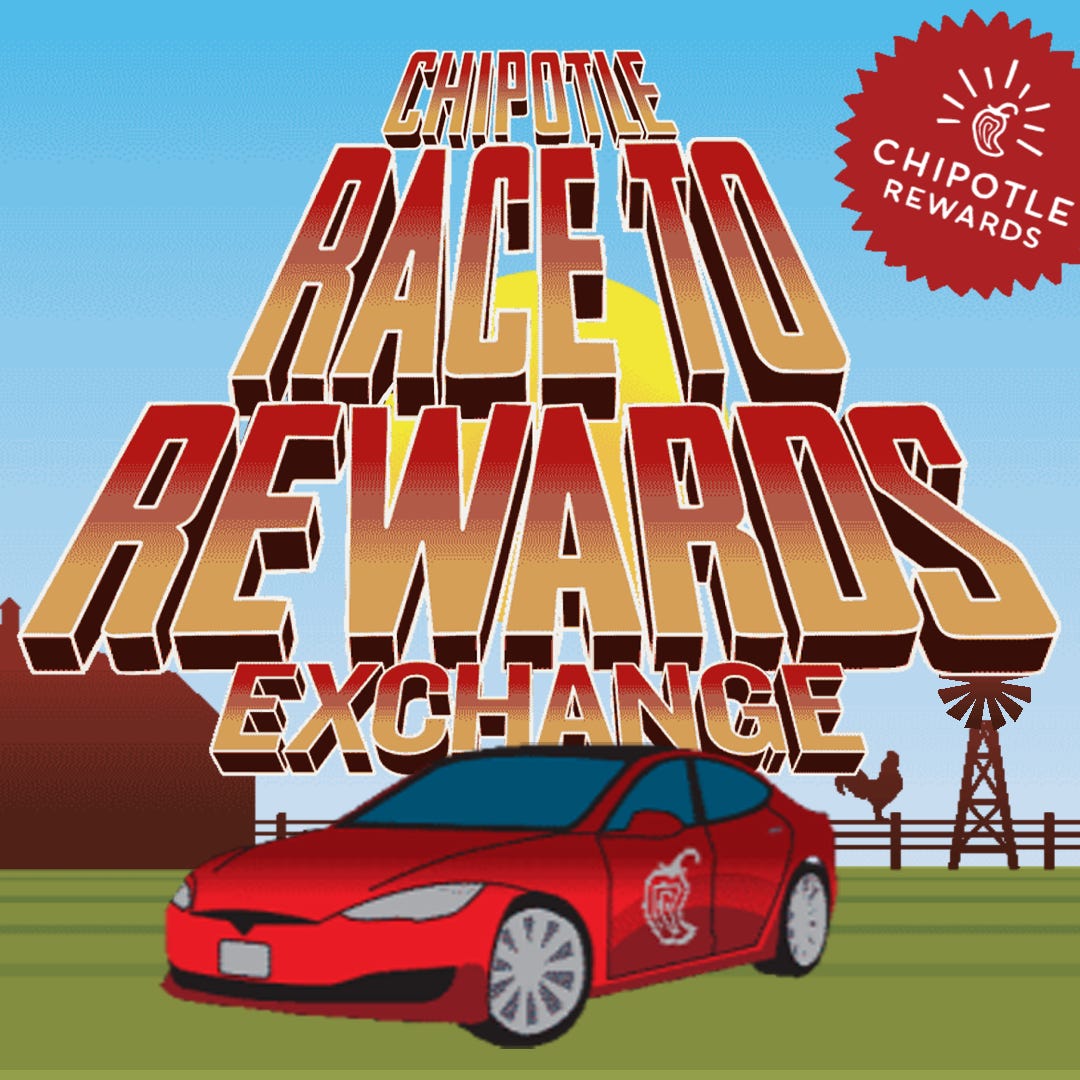
Chipotle, a US-based fast-casual restaurant brand with more than 20 million loyalty members, introduced Race to Rewards as part of a broader effort to re-energise participation in its brand community. Rather than offering incremental discounts, the brand launched a short, time-bound online racing game that anyone could play, but only rewards members could fully benefit from.
Over a 48-hour window, players raced through a branded environment, earning points and seeing their position on a public leaderboard at the end of each run. Performance was visible. Ranking was explicit. Prizes were secondary to placement.
The impact was immediate. The campaign generated 2.1 million plays, drove 71,000 new rewards sign-ups in two days, and held attention for an average of more than 17 minutes per player, later being recognised as an award-winning activation for its ability to turn loyalty participation into sustained engagement.
Crucially, the status signals did not disappear when the campaign ended. Players carried them into Discord spaces, continuing to compare scores, share strategies, and assert standing among peers. The brand stopped prompting. The social hierarchy remained intact.
Similar mechanics are now visible across other consumer brands that treat recognition as a structural lever rather than a promotional tactic. Wendy’s operates inside identity-led spaces such as Twitch, Discord, and gaming environments where its audience already gathers, showing up as a peer presence rather than a broadcaster. Wingstop creates social currency by framing flavour launches as limited drops, rewarding high-signal fans who generate cultural momentum with exclusive kits unavailable to the wider public. Taco Bell treats its most engaged customers as contributors, offering access to test kitchens, live experiences, and subscription-based passes that formalise repeat behaviour into recognised status.
In hospitality, IHG applies the same principle through milestone-based rewards, allowing guests to choose benefits that reflect what they personally value and enabling Diamond Elite members to transfer points, extending recognition beyond the individual stay. In each case, the incentive is not the reward itself, but the signal it sends about belonging, visibility, and standing within the group.
What this means is that repeat behaviour can be sustained through recognition rather than incentives. When status is visible and understood by peers, engagement persists without constant reactivation. For the business, this shows up as higher repeat frequency, stronger retention, and lower ongoing marketing pressure, reducing dependence on discounts that stop working the moment they are withdrawn.
In practice, brand communities convert recognition into durable commercial value, extending the impact of loyalty well beyond any single campaign or offer.
The benefits of brand communities compound precisely because they operate in public. That visibility is also what introduces risk. When communities are not actively governed, the same forces that build trust can just as quickly undermine it.
Inside the VIP, we break down how community issues surface first in behaviour, and what operators can do about it.
📅 New VIP strategy editions are published every Thursday.
❌ The Risks Most Brands Miss
As we’ve seen, building a brand community creates substantial value, but it also introduces risk.
The most damaging issues rarely appear at launch and often surface only after behaviour begins to change. Below are three lesser-known risks that can quietly erode impact if left unmanaged.
🚨 The Cost of Growing Too Fast
When more people join than the community can meaningfully serve, its value starts to dilute. Participation thins, recognition stops carrying weight, and the community can still look active without influencing behaviour. As growth accelerates, it also becomes harder to understand what high-value members want, or do not want, weakening the signals the community was meant to provide.
Community dilution often goes unnoticed until its effects begin to surface in performance metrics, such as booking or order frequency, spend per guest, or length of stay.
In 2024, hotel loyalty membership grew by 14.5%, reaching 675 million members, according to CBRE analysis of major global hotel programmes. Over the same period, average room nights per member fell by 3.5%, suggesting that growth in membership does not automatically translate into deeper engagement.
When community buyers disengage quietly at this scale, the impact extends beyond margin, eroding yield protection and increasing reliance on paid acquisition to replace lost demand.
A strong community can absorb disruption before it reaches frontline teams. A diluted community does the opposite. Without credible voices to steady expectations, complaints escalate faster, pushing issues into service channels and increasing cost just as confidence begins to weaken.
👎 How Inconsistent Enforcement Destroys Community
One of the fastest ways to break a brand community is inconsistent moderation. Communities forgive mistakes, but they organise around unfairness.
In any brand-owned community, moderators set the tone, whether they intend to or not. Who gets warned? Who gets removed? Whose complaints are taken seriously. Which posts are quietly shut down?
Members watch these decisions closely. Over time, they form a view of whether the space is safe or whether speaking up carries risk.
When enforcement feels unjust, the community contract breaks. Members stop trusting the space as a place to raise issues honestly. They may still care about the brand, but they no longer believe the brand will treat them fairly in public.
A well-documented example comes from a large international hospitality brand with a private group for its most loyal customers. The group was positioned as a place for insider access, support, and open discussion. When a high-value member repeatedly raised service failures, the response was not to address the underlying issues, but to block the member from the group and flag their account for “complaining too much. Similar situations have occurred across multiple global hospitality brands.
That action had two effects. The immediate loss was potential future revenue from that guest. The second was more damaging. The guest took their experience to a public Facebook group created specifically to document negative experiences with the brand’s official community.
This is where the risk compounds. Unofficial communities do not form because people enjoy complaining. They form because people want to warn each other.
Anger travels faster than advocacy. People share warnings more readily than praise. When a brand community fails through perceived unfairness, years of marketing spend stop delivering returns.
🔥 When Communities Turn Against You
Not all communities work in a brand’s favour. When engagement turns into coordination outside brand control, risk compounds faster than internal teams can respond.
Backlash communities form when customers realise others are experiencing the same problems and begin comparing notes in public. They do not need an official group, a moderator, or a brand invite. They organise through comments, video replies, hashtags, and shares, accelerated by platform algorithms.
A restaurant chain fell victim to negative community impact when concerns about inconsistent portion sizes evolved from isolated complaints into a viral video pattern and, ultimately, shareholder litigation. Customers began posting videos scrutinising portion sizes. High-reach creators amplified the trend, encouraging others to document their own experiences and pressure staff in real time.
As the videos spread, employees and locations were named publicly. Staff reported being filmed at close range, challenged during service, and treated as if they were on trial. Social platforms amplified the most confrontational clips, while attempts by leadership to reassure customers were widely mocked and further fuelled distrust.
The situation culminated in a shareholder class action lawsuit alleging that leadership had misled investors about portion practices. Although the case was dismissed in December 2025, the company still absorbed legal costs, operational retraining across hundreds of locations, and higher food costs after committing publicly to “re-emphasising generous portions”.
You do not need to build a community for community behaviour to reshape your business. Backlash communities form around friction, not loyalty. They move faster than internal processes and surface in operations, staffing, and safety before they ever appear in performance reports. For hospitality operators, the lesson is not about portion sizes, but about how quickly unmanaged public coordination can turn everyday inconsistencies into systemic risk.
Brand communities fail quietly, through dilution, uneven enforcement, and unmanaged public coordination, often before metrics react. Community is no longer a marketing asset. It is an operating environment. Managed well, it compounds value. Managed poorly, it accelerates cost and shifts control elsewhere.

📅 Coming Up in this week’s VIP Edition
We’ll break down five common community mistakes that carry real commercial cost. These are the moments where the community stops driving value and begins exposing the brand to risk.
Get the foundational strategy required for communities to regulate and grow themselves, including:
How to design groups that scale without constant brand intervention
Which social platforms or private hubs are best suited to different community goals
How to engage niche groups and build recognition without looking like a spammer
Practical engagement and re-engagement tactics, including gamification that sustains participation rather than inflating noise
We’ll also look at where community platforms are heading, and what the rise of closed-loop spaces across WhatsApp, Reddit, Facebook Groups, and YouTube means for brands trying to balance growth, governance, and control.
Community behaviour is already shaping demand, trust, and risk around your brand. The VIP edition covers what operators need to do to prevent the community from becoming a liability.
Brand communities are no longer a supporting channel. They are already shaping demand, trust, and risk earlier than campaigns, pricing decisions, or performance reports ever can. They reduce decision risk by giving people a place to compare notes, test assumptions, and validate spend in spaces you do not fully control.
When they are activated deliberately, communities compound value over time and lower the cost of maintaining demand. When they are allowed to grow without relevance or governed inconsistently, they stop converting attention into impact. Growth does not equal engagement. Inconsistency does not just hurt performance. It breaks the community itself.
And whether you invest in one or not, communities about your brand will form. In Facebook groups, on Reddit, in private chats. The question this year is not whether community matters, but whether you are shaping it intentionally or reacting to it after the fact.
If you want to move from theory into execution, the VIP edition landing on Thursday goes deeper into how to apply this thinking in practice. That’s where we get specific about what to activate, what to govern, and what to leave alone.
All the best
Dawn Gribble MIH MCIM
Hospitality Marketing Insight
Here’s to Your Success 🥂

📚 Sources & Resources
Bank of America, State of the Restaurant Industry Report: Data & Statistics, Bank of America (2025)
Chipotle Mexican Grill x Race to Rewards, Chipotle Mexican Grill x Race to Rewards, The Shorty Awards (2025)
Demopoulos, A., ‘Stop shoving phones in our face’: Chipotle staff are sick of TikTokers trying to catch them ‘skimping’, The Guardian (2024)
Gierran, R., Hotel Loyalty Program Statistics & Trends for 2025, OysterLink (2025)
Hotel Loyalty Programs Continue to Prove Their Value: Key findings from 675 million members, Hotel Loyalty Programs Continue to Prove Their Value: Key findings from 675 million members, CBRE (2025)
Marriott Bonvoy Insiders, Marriott Bonvoy Insiders, Facebook (2025)
Selyukh, A., Chipotle is ‘re-emphasising generous portions’ after social-media complaints, NPR (2024)
Social Identity Theory In Psychology (Tajfel & Turner, 1979), Social Identity Theory In Psychology, Simply Psychology (2023)
Social media and restaurant marketing, Social media and restaurant marketing, Deloitte Digital (2025)
The Independent, Chipotle wins lawsuit over its portion sizes after social media slams ‘skimpy’ meals, The Independent (2025)
The distinction between audience and community is where most brands quietly lose the plot.
Broadcasting scales attention. Communities scale consequence, good and bad, which is why governance matters more than growth.